

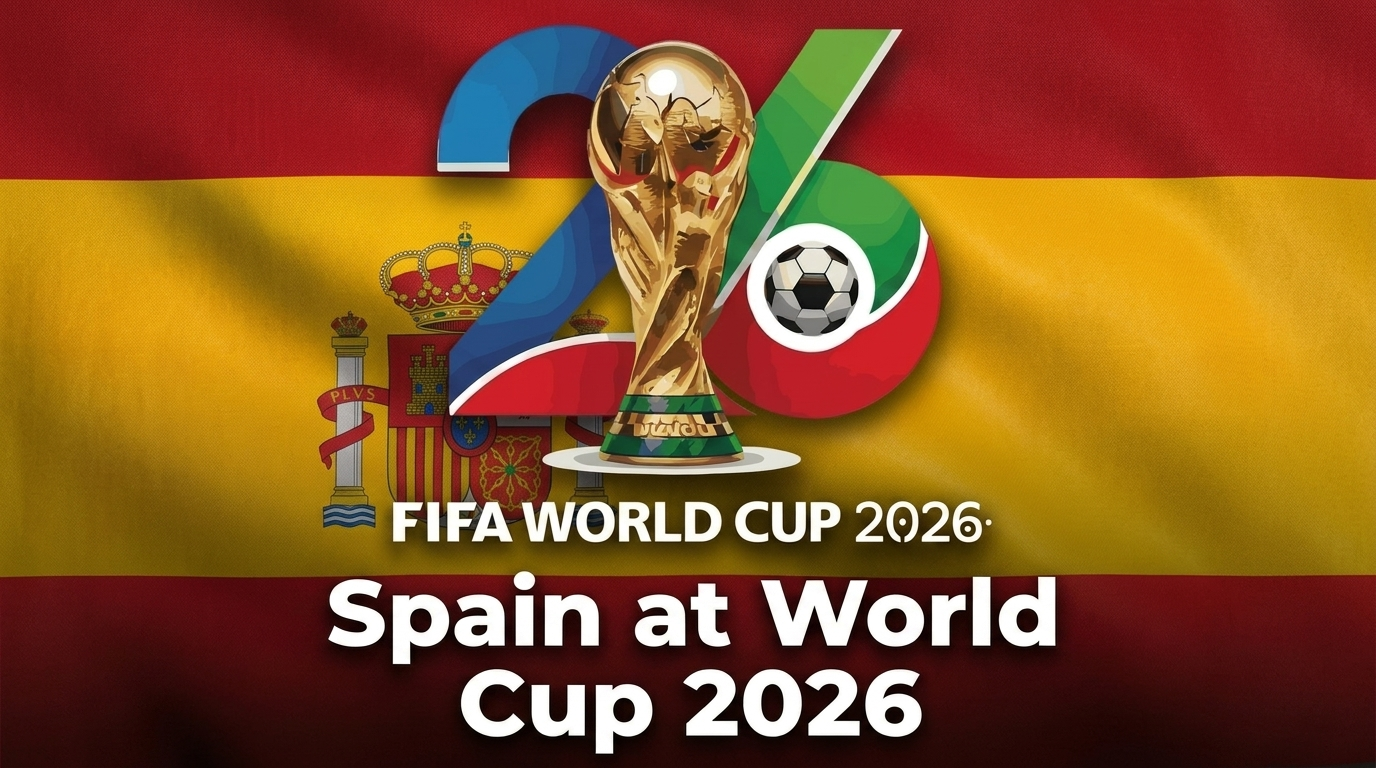
 Spain arrive at the 2026 World Cup as the world’s number one ranked nation, defending European champions and the outright tournament favourites at 9/2 with every major UK bookmaker. The case for Spain is built on the most comprehensive combination of individual talent and collective tactical sophistication in international football: Lamine Yamal at 18 producing the most prolific season of his career, Rodri back from ACL injury and reclaiming his status as the world’s finest defensive midfielder, Pedri as the most technically assured central playmaker in the tournament field, and a back four structured around two of the most accomplished ball-playing defenders in Europe. Luis de la Fuente guided Spain to the Euro 2024 title – becoming the first Spain manager since Vicente del Bosque to win a major tournament – and has continued to evolve the squad’s dynamic in ways that make the 2026 edition more complete than the one that lifted the trophy in Berlin. This is the comprehensive guide to Spain at World Cup 2026. For the full tournament overview, visit our World Cup 2026 hub, and for the complete group-by-group breakdown, see our World Cup 2026 groups guide.
Spain’s Road to the World Cup: Dominant, Untroubled, First in Europe
 Spain’s path through UEFA qualifying was the most dominant produced by any European nation in the 2026 cycle by the measure of goals scored relative to group difficulty. Drawn in Group E alongside Türkiye, Bulgaria and Georgia – a group that included a side in Türkiye who were genuinely competitive – Spain produced a series of scorelines that sent the clearest pre-tournament warning to the field. The standout result was a 6-0 demolition of Türkiye in Istanbul – Mikel Merino scoring a hat-trick as Spain’s superior physical and technical qualities overwhelmed a side that had drawn them 2-2 in an earlier encounter. They scored four against Bulgaria, four against Georgia, and finished as Group E winners with a goal difference that comfortably exceeded any other European qualifier. Spain clinched first place with a fixture to spare and arrived at the tournament draw in Washington DC as the most complete team in the field on qualifying evidence alone.
The March 2026 warm-up period provided the single most anticipated piece of pre-tournament news: Rodri, the 2024 Ballon d’Or winner who had been absent since his ACL injury in September 2024, returned to start in Spain’s 3-0 friendly victory over Serbia. Spain had 72 per cent of the ball and were never really pushed in Villarreal, with Mikel Oyarzabal scoring twice before Víctor Muñoz added a debut goal on introduction. Rodri’s return – combined with Yamal’s health recovery from a groin procedure that sidelined him briefly in November 2025 – means Spain travel to North America with their strongest possible squad available, arguably for the first time since Rodri’s injury changed the competitive landscape at the Euros.
Luis de la Fuente: The Tactician Who Reinvented Spain
Luis de la Fuente replaced Luis Enrique as Spain’s manager in December 2022 and rapidly established a tactical identity distinct from his predecessor’s more possession-obsessive approach. Where Enrique demanded positional play at near-Guardiola intensity, De la Fuente preserved the technical sophistication while adding vertical speed – a willingness to play forward quickly when the opportunity presented itself, rather than recycling possession until the ideal opening emerged. The result is a Spain side that averages approximately 65-68% possession in major matches but transitions to attack with a pace and directness that no possession-based side under previous managers achieved. In the Euro 2024 final against England, De la Fuente’s second-half tactical adjustments – bringing on Dani Olmo to create overloads in England’s defensive lines – produced the breakthrough that Spain needed to win the tournament.
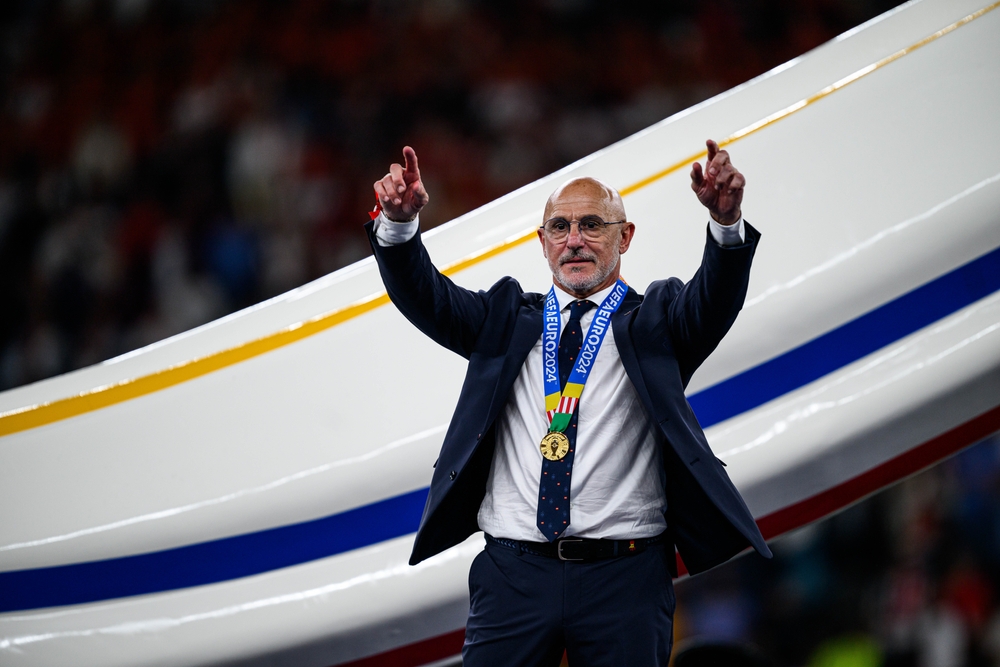
His tactical system at the World Cup is expected to be a 4-3-3 or 4-2-3-1 depending on the specific opponent. Rodri’s return gives De la Fuente the midfield anchor he needs and frees Pedri and the attack-minded players to take chances. The double pivot of Rodri and Zubimendi – or Rodri and Fermín López in more attacking modes – provides the structural protection that allows Yamal and Nico Williams to operate in genuine one-versus-one situations rather than having to track back defensively. Spain’s set-piece routine – with Oyarzabal as primary penalty taker and Pedri directing corners – has been among the most efficient in European football over the past two seasons. Against Saudi Arabia in the second group game, Spain beat them 1-0 in their last World Cup meeting (2022) before the famous upset, but arrived at that fixture with their full squad – something they now carry into this tournament as confirmed.
Spain World Cup 2026 Squad: Key Players
| Position | Player | Club | Caps | Int’l Goals |
| GK | Unai Simón | Athletic Club | 40+ | 0 |
| RB | Dani Carvajal | Real Madrid | 70+ | 4 |
| CB | Pau Cubarsí | Barcelona | 10+ | 0 |
| CB | Dean Huijsen | Real Madrid | 10+ | 1+ |
| LB | Marc Cucurella | Chelsea 🏴 | 30+ | 1 |
| DM | Rodri | Manchester City 🏴 | 60+ | 6+ |
| CM | Pedri | Barcelona | 45+ | 4+ |
| CM | Martín Zubimendi | Arsenal 🏴 | 25+ | 2+ |
| RW | Lamine Yamal | Barcelona | 30+ | 10+ |
| ST | Mikel Oyarzabal | Real Sociedad | 35+ | 18+ |
| LW | Nico Williams | Athletic Club | 30+ | 6+ |
Lamine Yamal – The Phenomenon Born Every 50 Years
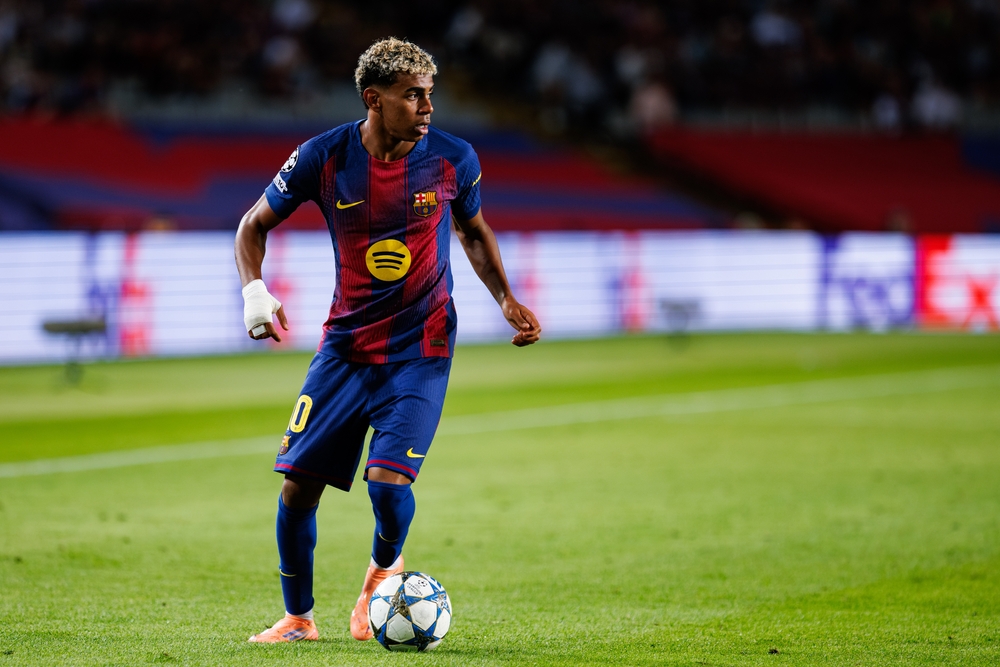
Lamine Yamal turns 19 during the tournament (born 13 July 2007 – meaning he will be 18 years old for all three group-stage matches) and arrives at his first World Cup having already registered 15 goals and 11 assists in the 2025-26 La Liga season – the finest individ ual campaign produced by any winger in Spanish football in recent memory at his age. His Champions League record adds a further dimension: goals and assists in elimination-round matches against Inter Milan and others demonstrate that the big-game stage does not reduce him but elevates him. Inter’s manager Simone Inzaghi described him as “a phenomenon born every 50 years.” At the Euro 2024 final he was 16 years old and was the tournament’s standout player. At 18, at his first World Cup, he is already being discussed as the most complete wide player in international football. The key for De la Fuente is protecting him from fatigue across an eight-match tournament – Yamal’s groin procedure in November 2025 was a warning that managing his load requires care even at 18.
Rodri – The Ballon d’Or Anchor Who Makes Spain Unbreakable
Rodri’s return from his ACL injury – which kept him absent from October 2024 through to March 2026 – is the single most consequential fitness development in the entire World Cup 2026 build-up. When Rodri plays for Spain, they do not lose: his record at the time of injury was 36 matches unbeaten. The March camp brought Rodri’s first Spain start since 2024 following his ACL recovery. He provides what no other midfielder in the tournament can replicate: the ability to simultaneously screen two defensive channels, complete 95%+ of his passes under pressure, and dictate the tempo of Spain’s transitions from defence to attack. Without him – as Spain’s 2024-25 club season at Manchester City demonstrated – his deputies, capable as they are, do not reach the same structural certainty. With him, Spain’s defensive block is impenetrable. The 2024 Ballon d’Or winner at his best is the most important single player in tournament football.
Pedri – The World’s Most Elegant Central Midfielder
Pedri González has been operating at the very highest level since breaking through at Barcelona under Ronald Koeman in 2020, and at 23 arrives at the 2026 World Cup with a portfolio that includes the Euro 2020 Young Player of the Tournament, a Champions League winner’s medal, and a record in Spain’s midfield that has made him the most consistent creative force in the national team’s recent history. His passing accuracy in central areas – routinely above 93% in competitive matches – and his ability to receive under pressure, turn and play into the final third in a single fluid motion gives Spain an attacking axis that opponents cannot replicate. Alongside Rodri’s defensive anchor, Pedri’s creativity represents the best midfield partnership available to any team in the tournament.
Mikel Oyarzabal – Spain’s Quiet Match-Winner
Mikel Oyarzabal is Spain’s most underrated player and the most direct beneficiary of Rodri and Yamal’s presence drawing defensive attention. Oyarzabal has scored in eight of his last eight international appearances and arrives at the tournament as both Spain’s designated penalty taker and their primary central attacking threat. His movement into the penalty area – arriving late, taking up positions that central defenders lose track of when reacting to Yamal’s runs from the right – produces the goal-scoring opportunities on which Spain’s tournament outcomes will depend. He is available at approximately 33/1 for the Golden Boot, a price that undervalues his role as penalty taker and in-form finisher in a Spain side that will score goals in every fixture of their tournament campaign.
Spain’s Strengths and the One Risk That Concerns Us
Strengths: Spain’s primary structural strength is depth at every position without dependence on a single player. If Yamal is unavailable or off-colour, Nico Williams and Dani Olmo provide comparable width. If Rodri is managed carefully – as De la Fuente has indicated he will be in early group games – Zubimendi and Fermín López maintain the midfield’s technical quality even if the defensive screening drops marginally. Spain’s pressing system, built on short pressing traps in the mid-block and rapid recovery of second balls, produces turnovers in dangerous areas against any opponent who tries to play through them. Their xGA (expected goals against) over the past two major tournaments has been the lowest of any finalist. Spain average approximately 67% possession in their most recent ten competitive matches, and in Group H they face no side capable of sustaining comparable ball retention – meaning their technical advantages will be expressed fully throughout the group stage.
The one risk that concerns us: Spain’s route to the final keeps them on the same side of the draw as Brazil, Argentina and potentially England. The semi-final path, if all seeds progress, could feature a final-four clash with France – a team that beat Spain in the Euro 2024 semi-final and carries quality comparable to La Roja across every position. De la Fuente’s side have never lost to a top-tier opponent in a major tournament final, but their vulnerability to France’s direct pressing and Mbappé’s individual brilliance is the single scenario where Spain’s collective dominance can be destabilised. Additionally, Carvajal’s long-term fitness coming back from his own ACL injury carries uncertainty about his 90-minute availability across eight matches in 39 days. The right-back position is Spain’s one structural weakness – and it is the channel Mbappé would specifically target in a knockout-round encounter.
Spain’s Qualifying Campaign: The Most Prolific Group Winners in Europe
| Match | Date | Score | Scorers (ESP) |
| Bulgaria vs Spain | Sep 2025 | 0-3 | Oyarzabal, Cucurella, Merino |
| Turkey vs Spain | Sep 2025 | 0-6 | Merino 3, Pedri 2, Torres |
| Spain v Georgia | Oct 2025 | 2-2 | Pino, Oyarzabal |
| Spain v Bulgaria | Oct 2025 | 4-0 | Merino 2, Chernev (og), Oyarzabal |
| Georgia v Spain | Nov 2025 | 0-4 | Oyarzabal, Zubimendi, Torres |
| Spain v Türkiye | Nov 2025 | 2-2 | Olmo, Oyarzabal |
Group E final standings (confirmed): Spain P=6, W=? D=? L=0, GF=approx 20+, GA=approx 4, qualified as group winners. Spain’s goals-scored total in Group E was the highest of any four-team group in European qualifying. Mikel Merino’s hat-trick in the 6-0 away win at Türkiye was the stand-out individual qualifying performance across all 12 European groups.
Spain’s World Cup History: One Title, Five Decades of Excellence
Spain’s World Cup record does not match their status as the world’s dominant club football nation across the past two decades, which makes the 2010 triumph all the more significant. After failing to progress beyond the quarter-finals in every edition from 1950 to 2006, Vicente del Bosque’s generation finally delivered in South Africa – a 1-0 victory over the Netherlands in extra time, Andrés Iniesta’s winning goal in the 116th minute, the finest team of their generation completing the Grand Slam of European Championship, World Cup and European Championship (2008-2012). Before 2010, Spain’s best World Cup finish was fourth place at the 1950 tournament in Brazil. In 2014, as defending champions, they lost all three group-stage matches – one of the tournament’s greatest collapses. In 2018 they lost to Russia on penalties in the Round of 16; in 2022, they lost to Morocco on penalties in the quarter-finals, a result that still informs their preparation for 2026’s knockout rounds.
| Year | Stage | Exit |
| 1950 | 4th place | – |
| 1966-1998 | Quarters or earlier | Consistent under-performance relative to club quality |
| 2010 | Champions 🏆 | 1-0 v Netherlands (aet) – Iniesta |
| 2014 | Group stage | Lost all three; defending champions eliminated |
| 2018 | Round of 16 | Russia (pens) – de Gea missed three |
| 2022 | Quarter-final | Morocco (pens) – Busquets era’s final match |
Group H: Cape Verde, Saudi Arabia and Uruguay – An Ideal Draw
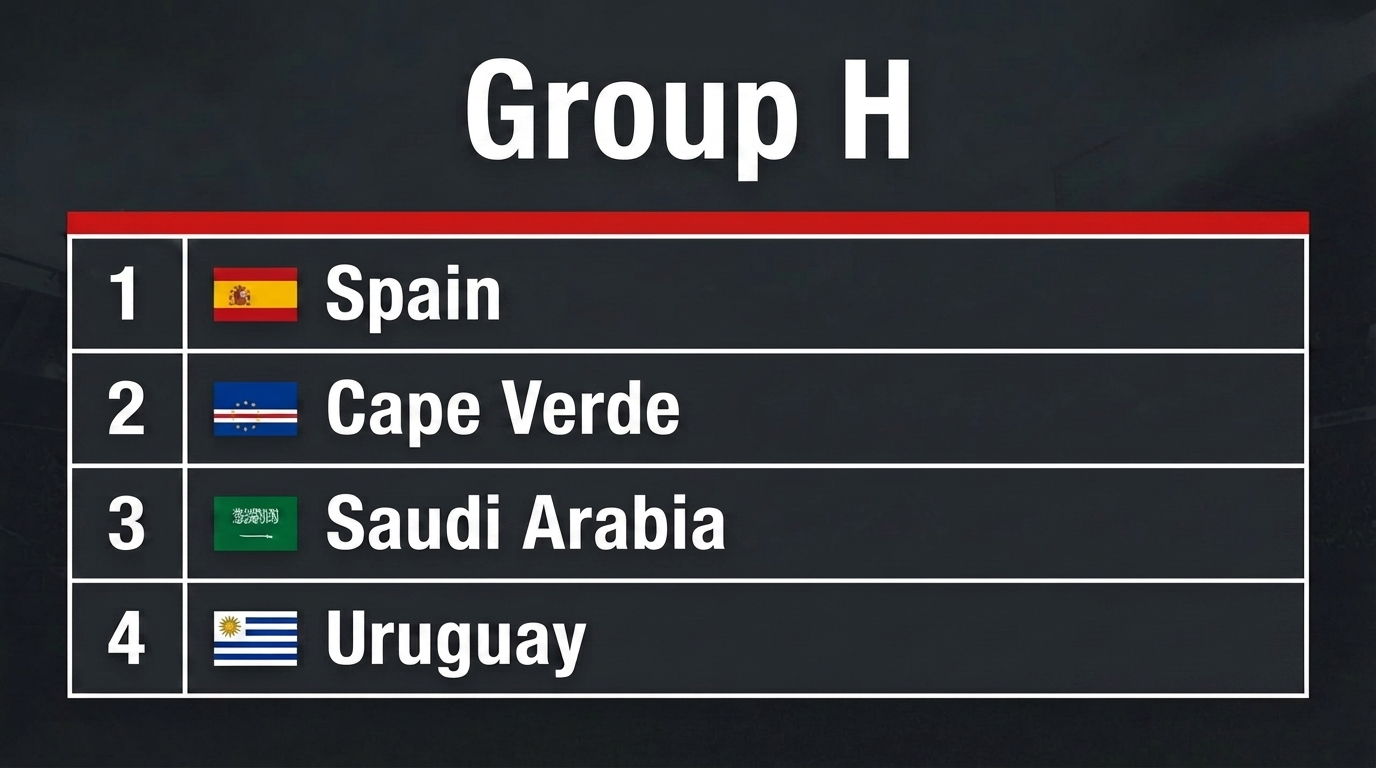
Spain’s Group H draw is the most favourable received by any of the top four seeds. Cape Verde – making their tournament debut – and Saudi Arabia represent two fixtures where Spain are expected to win comfortably, and Uruguay under Marcelo Bielsa, while always competitive, carry the weight of an ageing squad and internal tensions that have surfaced across their CONMEBOL qualifying campaign. Spain are priced as heavy favourites, implying roughly an 80% chance to win the group. The group fixtures at Atlanta Stadium – where Spain face Cape Verde and Saudi Arabia – and then the final match against Uruguay in Guadalajara give De la Fuente the option to rest key players in the opener or closing fixture once qualification is secured. For full group analysis, see our World Cup 2026 groups guide.
| Match | Date | BST KO | Venue | Spain odds |
| Spain v Cape Verde | 15 Jun 2026 | 17:00 | Mercedes-Benz Stadium, Atlanta | 1/14 |
| Spain v Saudi Arabia | 21 Jun 2026 | 17:00 | Mercedes-Benz Stadium, Atlanta | 1/8 |
| Spain v Uruguay | 27 Jun 2026 | 01:00 | Estadio Akron, Guadalajara | 4/6 |
Spain World Cup 2026 Odds and Our Prediction
Spain at 9/2 is the market’s primary selection and the price that best reflects the tournament’s most complete squad in the most favourable structural position. The implied probability at 9/2 is approximately 18.2%, which our editorial team considers accurately reflective rather than generous – Spain are the top-ranked team in the world, carry the deepest squad in the field, and have drawn both the easiest group of any top seed and a bracket that delays a clash with France or England until the semi-finals at the earliest. For UK bettors, the two Premier League-connected angles – Rodri at Manchester City, Zubimendi at Arsenal, Cucurella at Chelsea – add familiarity to the case for Spain investment.
| Market | Odds (approx.) | Our verdict |
| Spain to win World Cup | 9/2 | Deserved favourites – fair price, not generous |
| Spain to win Group H | 4/9 | Certainty – may as well back at any price for fun |
| Spain to reach semi-finals | 5/4 | Strong – bracket is highly favourable |
| Oyarzabal Golden Boot | 33/1 | Best long-shot value in Spain’s camp |
| Yamal Golden Boot | 16/1 | Each-way value – 15 La Liga goals in 2025-26 tells the story |
| Spain v Uruguay – Spain win | 4/6 | The only group game with genuine competitive interest |
The combination of Yamal’s best-ever season form, Rodri’s confirmed return to fitness, De la Fuente’s growing tactical sophistication and a tournament draw that keeps the most dangerous opponents away until the very late stages makes Spain’s position at the head of the market entirely justified. Whether Rodri can sustain his Ballon d’Or level across eight competitive matches after a 17-month absence from top-level football is the only genuine concern. If he can, Spain are the team to beat. For the full World Cup 2026 odds across every market, see our World Cup 2026 odds guide.