


Scotland are back. After 28 years of hurt, false dawns, gut-wrenching near-misses and a national conversation that had quietly begun to accept that the Tartan Army might never walk out at a World Cup again, Steve Clarke’s side sealed their place at the 2026 tournament with one of the most dramatic nights in Scottish football history – a 4-2 defeat of Denmark at a roaring Hampden Park on 18 November 2025. Scott McTominay’s overhead kick in the third minute. Kenny McLean’s injury-time winner. The Hampden eruption. For supporters who waited through four consecutive failed campaigns, through the pain of 1998 in France, through Euro 2020 and Euro 2024 campaigns that raised and then dashed hope, the final whistle against Denmark was one of the great moments in Scottish sport. Now the question shifts: what can Scotland actually achieve at a World Cup for the first time since Ally McCoist and Craig Burley played in a group with Brazil in Saint-Étienne? This complete guide covers everything ahead of Scotland’s 2026 World Cup campaign – squad, tactics, Group C opponents, qualifying record and our honest predictions. For full tournament context, visit our World Cup 2026 hub.
Scotland at the World Cup: Back After 28 Years
 The wait since France 1998 has been a defining feature of Scottish football’s national conversation. Eight World Cup appearances across 1954 to 1998, and not one of them ended in progression past the group stage – Scotland’s history at the tournament is a chronicle of near-misses and goal differences that mocked their efforts. In 1974 they were the only unbeaten side eliminated in the group stage. In 1978, a Archie Gemmill wonder-goal against the Netherlands in their final group match came too late. In 1982, they scored five goals and still failed to progress. The pattern was so consistent it became a Scottish sporting identity: qualify, show quality in moments, and leave early.
The qualification drought from 2002 to 2022 – five consecutive failed campaigns – deepened the wound. And then, in November 2025, the generation of Andy Robertson and Scott McTominay delivered what no Scotland side had managed in nearly three decades. Scotland’s eventual 4-2 win over Denmark ensured they will play at a World Cup finals for the first time since 1998. Clarke’s side had won Group C – finishing ahead of Denmark, the side that had led the group for most of the campaign – and earned automatic qualification rather than having to navigate play-offs. The significance for Scottish football cannot be overstated. For the first time since the Tartan Army descended on Saint-Étienne in 1998, Scotland will be playing on a World Cup stage, and doing so alongside England in the same tournament for the first time since that same edition.
Steve Clarke: The Manager Who Delivered the Impossible
Steve Clarke, 62, is the manager who achieved what Alex McLeish, Craig Levein, Gordon Strachan and Alex McLeish again could not – he took Scotland to a major tournament. In fact, he took them to three: Euro 2020 (delayed to 2021), Euro 2024, and now the World Cup. Clarke’s record across his Scotland tenure is the most successful in the nation’s modern history as measured by tournament qualification, and it has been built on a combination of tactical pragmatism, squad harmony and the ability to extract maximum performance from players who fall short of elite individual quality but function collectively at a higher level than their individual parts suggest.
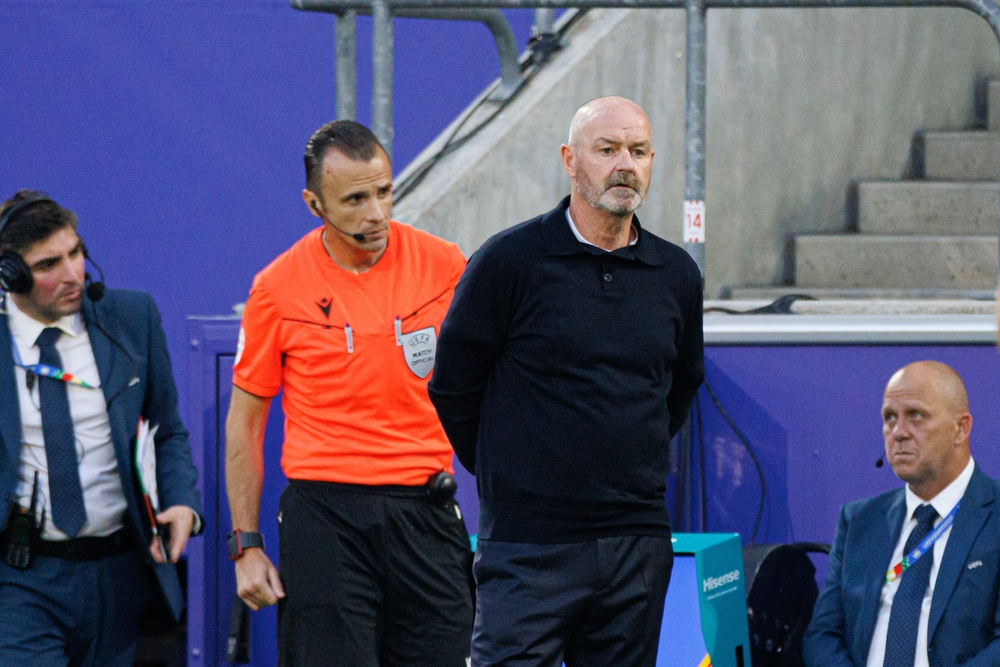
Clarke favours a 3-5-2 or 3-4-3 system depending on the opponent, built around wing-backs who provide the primary attacking width and a deep-lying defensive block that is exceptionally difficult to break down. Scotland ranked among the hardest teams to score against in UEFA World Cup qualifying – conceding just three goals across six group-stage matches – and their defensive structure under Clarke has been the foundation on which everything else is built. His tactical approach will be tested severely in Group C, where Brazil’s attacking movement and Morocco’s clinical transition football require Clarke to set his side up in a way that absorbs pressure while finding moments to hurt opponents on the break.
The question mark over Clarke is attacking output. Scotland’s goal-scoring record in qualifying – 13 in six matches – is modest for a group winner, and the forward options beyond McTominay’s box-to-box contributions are limited. Che Adams and Lyndon Dykes are the established striker options, but Adams has scored in only four of his last 27 Scotland appearances and Dykes is similarly inconsistent in front of goal. The arrival of Lawrence Shankland in the squad – the Hearts captain who scored 11 goals in 21 games before injury – could provide the focal-point striker threat that Scotland have lacked, if he arrives at the tournament fit and firing.
Scotland’s Squad: Key Players for the World Cup
Andy Robertson – Captain, Leader, Liverpool’s Left Back

Andy Robertson is Scotland’s most decorated player and the undisputed heart of the squad. The Liverpool captain brings Champions League experience, Premier League title medals and an intensity in both the dressing room and on the pitch that sets the standard for every player around him. As Scotland’s left wing-back under Clarke’s system, his ability to deliver into the box, defend in transition and drive the team forward with his sheer force of personality is irreplaceable. At 32, this is Robertson’s first and almost certainly his only World Cup, and that emotional weight will be worn proudly on behalf of an entire football nation.
Scott McTominay – The Icon Who Made History
Scott McTominay sealed his place in Scottish football history with the bicycle kick opener against Denmark that set Scotland on their way to qualification. His career transformation since leaving Manchester United for Napoli has been one of football’s outstanding recent stories – Antonio Conte identified him as a box-crashing No. 8 who could operate just behind the striker, a role in which his physicality, aerial ability and late arrivals into the penalty area have made him consistently dangerous. McTominay now has 14 goals in 69 appearances for his country and was nominated for the Ballon d’Or – the first Scottish male player to receive such recognition since Ally McCoist in 1987. He arrives at his first World Cup as the squad’s most marketable player and its most decisive match-winner.
John McGinn – The Engine of the Midfield
John McGinn is the player Steve Clarke trusts most when the match matters most. The Aston Villa captain brings Champions League experience from his Villa Park years and a combination of pressing intensity, passing range and tactical discipline that has made him indispensable across Clarke’s entire tenure. McGinn’s workload in Clarke’s system is extraordinary – he covers more ground than virtually any other Scotland player and combines defensive screening with progressive ball-carrying in a way that few midfielders at international level can sustain across a tournament. At 30, this is his peak tournament. Scotland’s chances of causing a group-stage upset depend heavily on McGinn being fit, sharp and performing at his very highest level across three matches.
Billy Gilmour – Technical Excellence in the Deep Position
Billy Gilmour has emerged as Scotland’s most technically gifted central midfielder – the player through whom Clarke’s possession-building flows when the team has the ball. His career trajectory from Chelsea to Brighton and then Brighton to Napoli has taken him through two of European football’s most sophisticated tactical environments, and the technical imprint is visible in his ability to turn in tight spaces and play passes under pressure that most international midfielders would not attempt. In Scotland’s qualifying campaign he was a consistent performer alongside McGinn and McTominay in the midfield three. His partnership with McTominay at Napoli means they arrive at the tournament with club-level understanding that translates directly into international performance.
Ryan Christie – Creative Output from the Right
Ryan Christie has been Steve Clarke’s most reliable creative player in attack across the qualifying cycle, contributing goals and assists from the right side of a forward line or midfield three. His 14-goal record in 69 appearances understates his contribution in terms of chances created, and his experience at Bournemouth in the Premier League brings the tactical awareness needed to operate against the sort of defensive structures Morocco and Brazil will employ. Christie’s delivery from wide areas – crosses and cut-backs into the penalty area – will be Scotland’s primary source of goal-creation in the two opening group fixtures.
Group C: The Hardest Draw Any Group-Stage Qualifier Received
Scotland’s Group C draw is brutal by any objective measure. Brazil and Morocco – the reigning South American giant and the 2022 semi-finalists – are two of the most defensively organised and tactically coherent sides in the field. Haiti, Scotland’s opening opponents, are the only winnable fixture in the group and a result against them is not merely desirable but essential: lose to Haiti and Scotland’s tournament is effectively over before any of the headline matches arrive. For the full tactical breakdown of each opponent and the complete fixture details, see our World Cup 2026 Group C guide.
| Match | Date | BST KO | Venue | TV | Scotland odds |
| Scotland v Haiti | 14 Jun 2026 | 2:00am | Gillette Stadium, Boston | BBC/iPlayer | 4/7 |
| Scotland v Morocco | 19 Jun 2026 | 11:00pm | Gillette Stadium, Boston | ITV/ITVX | 5/2 |
| Scotland v Brazil | 24 Jun 2026 | 11:00pm | Hard Rock Stadium, Miami | BBC/iPlayer | 15/2 |
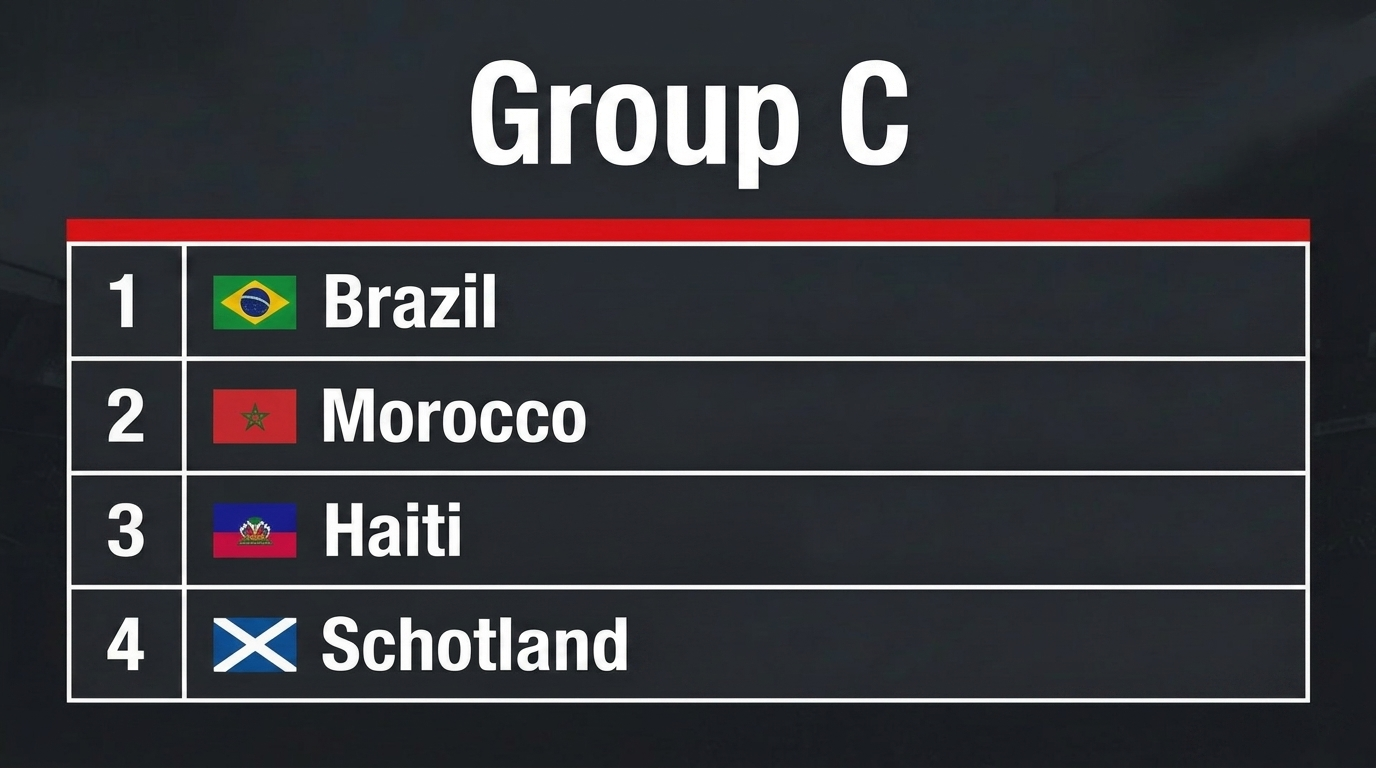
The 2am BST kick-off against Haiti on 14 June is the standout scheduling challenge for Scottish supporters – a middle-of-the-night start in the UK that requires either staying up or recording for those watching at home. The BBC will show it live on iPlayer. The Morocco fixture nine days later is the most tactically interesting of the three: a Scotland win there would represent one of the tournament’s great upsets and would leave Brazil as a dead-rubber group closer regardless of outcome. The realistic scenario is a win against Haiti, a creditable performance against Morocco and a defeat to Brazil – and whether that is enough to reach the Round of 32 as one of the eight best third-placed finishers across all 12 groups.
Scotland’s Qualifying Campaign: How They Made History
A sensational final-day win against Denmark in front of a packed Hampden Park took Scotland to their first World Cup since 1998, with manager Steve Clarke having also spearheaded his side’s progress to the finals of EURO 2020 and 2024. Captain Andy Robertson and John McGinn, Scott McTominay and Billy Gilmour all bring Champions League experience to a side who ally defensive resilience with attacking efficiency. Clarke’s group – Greece, Belarus and Denmark – was competitive throughout, with the final qualification match a genuine winner-takes-all occasion at Hampden.
| Match | Date | Score | Scorers (SCO) |
| Denmark v Scotland | Sep 2025 | 0-0 | – |
| Scotland v Belarus | Sep 2025 | 2-0 | Adams, Volkov (og) |
| Scotland v Greece | Oct 2025 | 3-1 | Christie, Ferguson, Dykes |
| Belarus v Scotland | Oct 2025 | 2-1 | Adams, McTominay |
| Greece v Scotland | Nov 2025 | 3-2 | Doak, Christie |
| Scotland v Denmark | 18 Nov 2025 | 4-2 | McTominay, Shankland, Tierney, McLean |
Scotland’s victory was not without drama after twice being pegged back by their visitors – the second time after Brian Riemer’s side had been reduced to 10 men. The fact that Scotland won 4-2 despite Denmark playing with ten men for a significant portion of the match underlines both the character in the squad and the quality of McTominay’s individual contributions on the night. Group C final standings: Scotland P=6 W=3 D=1 L=1, qualified as group winners ahead of Denmark.
Scotland’s World Cup History: Eight Times, Never Beyond the Group Stage
Scotland’s World Cup record is a study in glorious near-misses. Eight appearances. Zero round-of-sixteen qualifications. The 1974 campaign in West Germany produced one of the most agonising eliminations in tournament history – Scotland were the only unbeaten side at the tournament and still went home, undone by Zaire beating Yugoslavia in a separate group match. The 1978 tournament in Argentina brought Archie Gemmill’s brilliant individual goal against the Netherlands – perhaps the finest goal scored at any World Cup by a British player – but Scotland still crashed out in the group stage, needing a two-goal margin of victory they could not achieve. In 1986 and 1990 Scotland exited in the groups, and in 1998 in France – their last appearance before 2026 – Burley’s red card against Morocco and a 3-0 defeat effectively ended their campaign in the second match.
| Year | Host | Group exit? | Notable |
| 1954 | Switzerland | Group | First World Cup; lost both matches |
| 1958 | Sweden | Group | Lost all three; Jim Baxter era approaching |
| 1974 | West Germany | Group | Unbeaten but eliminated – only such case |
| 1978 | Argentina | Group | Gemmill goal vs Netherlands; still out |
| 1982 | Spain | Group | Scored 8 goals; still eliminated |
| 1986 | Mexico | Group | Lost to Denmark and West Germany |
| 1990 | Italy | Group | Lost to Costa Rica; beat Sweden |
| 1998 | France | Group | Opened vs Brazil; Burley red card vs Morocco |
Scotland 2026 Odds and Our Honest Predictions
Scotland are available at approximately 500/1 to win the World Cup outright with leading UK bookmakers. That price reflects reality: Scotland have never won a World Cup knockout match, carry the hardest group draw of any qualifier in the field, and face Brazil in their final group fixture. However, in betting terms, the more relevant markets for Scotland supporters are the group progression options and the individual match markets.
| Market | Odds (approx.) | Our verdict |
| Scotland to win World Cup | 500/1 | Rank outsiders |
| Scotland to qualify from Group C | 12/1 | Unlikely but not impossible |
| Scotland to advance as best 3rd place | 7/2 | Best speculative bet – needs Haiti win + point |
| Scotland to beat Haiti (Match 1) | 4/7 | Must-win – confident selection |
| Scotland to beat Morocco (Match 2) | 5/2 | The scots remain outsiders |
| McTominay anytime scorer vs Haiti | 7/4 | Strong each-way value – his record in Scotland shirt is exceptional |
| Scotland vs Brazil – over 1.5 goals | 4/7 | Likely – Brazil’s attack will test defensive solidity |
Our honest prediction: Scotland beat Haiti, draw or narrowly lose to Morocco, lose to Brazil. A total of four to five points may or may not be sufficient for one of the eight best third-place finishes depending on results elsewhere. The most valuable Scotland bet in our assessment is backing them to advance as one of the eight best third-place teams at approximately 7/2 – a price that reflects the realistic, if optimistic, ceiling for this squad in the tournament’s most difficult group. For all the latest odds across every Scotland and tournament market, see our World Cup 2026 odds guide.
Scotland’s return to the World Cup stage after 28 years is one of the great stories of the 2026 tournament regardless of what follows in North America. The Tartan Army will fill every Scottish supporter’s pub in Boston and Miami, the nation will stay up until 2am to watch Haiti, and the sound of a Hampden Park that erupted in November 2025 will travel across the Atlantic. Whether it is coming to Scotland – as it might arguably for the first time – or whether Clarke’s side make it the summer of a generation, this tournament will be remembered as the one where the Tartan Army finally came back.