


There is a specific symmetry in the story of the Socceroos at the 2026 World Cup that deserves to be properly acknowledged. Tony Popovic, Australia’s current manager, was the defensive cornerstone of the 2006 Socceroos side that reached the round of sixteen in Germany – the most celebrated period of Australian football in the men’s game. In 2026, if Australia advance beyond the group stage, Popovic will become the first Australian in football history to participate in a FIFA World Cup both as a player and as a manager – a distinction that encapsulates how much has changed, and how much has remained constant, in Australian football across twenty years. The Australia World Cup 2026 squad is in transition: Graham Arnold’s departure after a winless start to the AFC qualifying campaign was followed by Popovic’s remarkable rehabilitation – five wins, four draws and just one defeat in the subsequent qualifying matches, culminating in a composed 2-1 victory away at Saudi Arabia that sealed their sixth consecutive World Cup place. Group D alongside the USA, Paraguay and Türkiye is formidable, and the Socceroos are genuine outsiders for knockout qualification. But Australia have reached the round of sixteen in two of their last four tournaments, and Popovic’s disciplined, organised football has an established capacity to exceed the market’s pre-tournament assessment. For the full outright picture, visit our World Cup 2026 betting hub.
Australia’s Road to the World Cup
 Australia’s journey to the 2026 World Cup was one of the qualifying campaign’s most dramatic mid-cycle stories. Under Graham Arnold – the manager who had guided them to the 2022 round of sixteen and their most successful World Cup campaign in a generation – the Socceroos made a dismal start to the AFC Third Round: a loss at home to Bahrain and a goalless draw in Indonesia left them with a single point from two matches. Arnold resigned on 20 September 2024, citing the pressure and uncertainty of the situation. Three days later, Tony Popovic was appointed, and everything changed.
What followed was, by any measure, one of the more impressive mid-campaign managerial recoveries in recent international football. Popovic went unbeaten across the remaining eight qualifying matches – five wins and three draws – taking Australia from potential non-qualifiers to second place in AFC Group C behind Japan, with 19 points from 10 matches total. The high points included a 1-0 victory over Japan in Perth before a passionate crowd of 57,226 (ending Japan’s qualification-clinching momentum before Australia’s own place was secured), and the decisive 2-1 win away at Saudi Arabia in Jeddah on 10 June 2025, where Mitch Duke and Connor Metcalfe scored to confirm qualification with authority despite the Saudis needing to win by five goals to overtake them. It was the clearest possible statement of tournament composure from a squad that had looked uncertain just twelve months earlier.
Manager & Tactics: Popovic’s Back-Three System and the Afghanistan of Group D
Tony Popovic is one of Australian football’s most admired tactical minds – a former centre-back who earned 58 international caps across a career spanning 1995 to 2006, and whose management career has produced domestic success at three different Australian clubs. His 2014 AFC Champions League title with Western Sydney Wanderers confirmed that he could translate club-level organisational intelligence into continental-competition results, and his appointment as Socceroos manager in September 2024 represented Football Australia’s confidence that this specific combination of experience and tactical coherence was the right response to the Arnold-era underperformance.
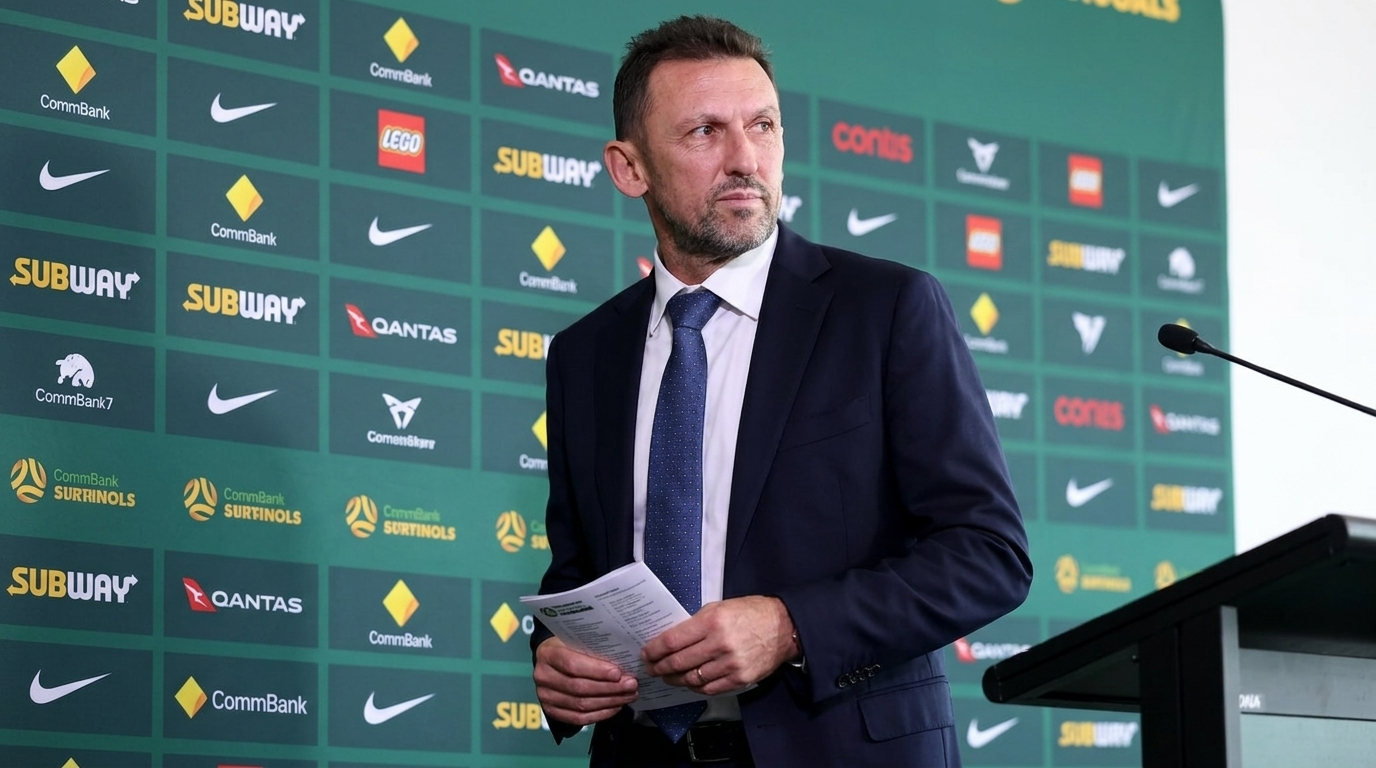
Popovic’s preferred formation is a 3-4-2-1 or back-five structure that provides defensive solidity through a three-man central defensive line, disciplined wing-back coverage – Jordan Bos overlapping on the left, Nestory Irankunda providing explosive pace on the right – and a midfield built around Riley McGree’s technical link-up work and Jackson Irvine’s combative, ball-winning energy. The system prioritises defensive organisation above all else in the first phase of play, with the back three absorbing pressure and the wing-backs providing the primary sources of width and attacking transition. This produces low-scoring, tactically competitive matches in which Australia’s physical resilience and collective discipline compensate for the deficit in individual quality that separates them from the top fifteen nations in world football.
The key tactical question heading into Group D is how the back-three system holds against the USA’s central play under Mauricio Pochettino – who has specifically designed USMNT’s system to exploit the spaces behind teams that deploy wing-backs. Australia’s match against the United States in Seattle on 19 June is the group’s defining fixture for the Socceroos and where the quality differential is most apparent. The Türkiye match in Vancouver on 13 June – against an opponent that qualified through the UEFA play-offs and carries genuine quality – is the other significant tactical test that will define whether Australia advance or exit in the group stage as they have done in three of their last five appearances.
Squad & Key Players
Australia’s squad blends experienced veterans of the 2022 World Cup campaign with the emerging young talent that Popovic has introduced across the qualifying period. The concentration of experience is significant: Mat Ryan as captain has been Australia’s first-choice goalkeeper for over a decade, and multiple outfield players carry over 60 international appearances that give Popovic’s system its collective competence under pressure.
| Position | Player | Club | Age |
| GK | Mat Ryan (c) | AS Roma | 32 |
| GK | Joe Gauci | Port Vale | 24 |
| CB | Harry Souttar | Leicester City | 26 |
| CB | John Souttar | Rangers | 28 |
| CB | Kye Rowles | DC United | 26 |
| WB | Nathaniel Atkinson | Melbourne City | 25 |
| WB | Jordan Bos | Feyenoord | 24 |
| MF | Jackson Irvine | FC St. Pauli | 31 |
| MF | Riley McGree | Middlesbrough | 26 |
| MF | Connor Metcalfe | St Pauli | 23 |
| MF | Cameron Devlin | Hearts | 27 |
| MF | Aiden O’Neil | New York City | 24 |
| FW | Nestory Irankunda | Bayern Munich | 20 |
| FW | Mitch Duke | Macarthur FC | 33 |
| FW | Mohamed Toure | Norwich City | 22 |
| FW | Craig Goodwin | Adelaide United | 33 |
Mat Ryan – Goalkeeper (Captain), AS Roma
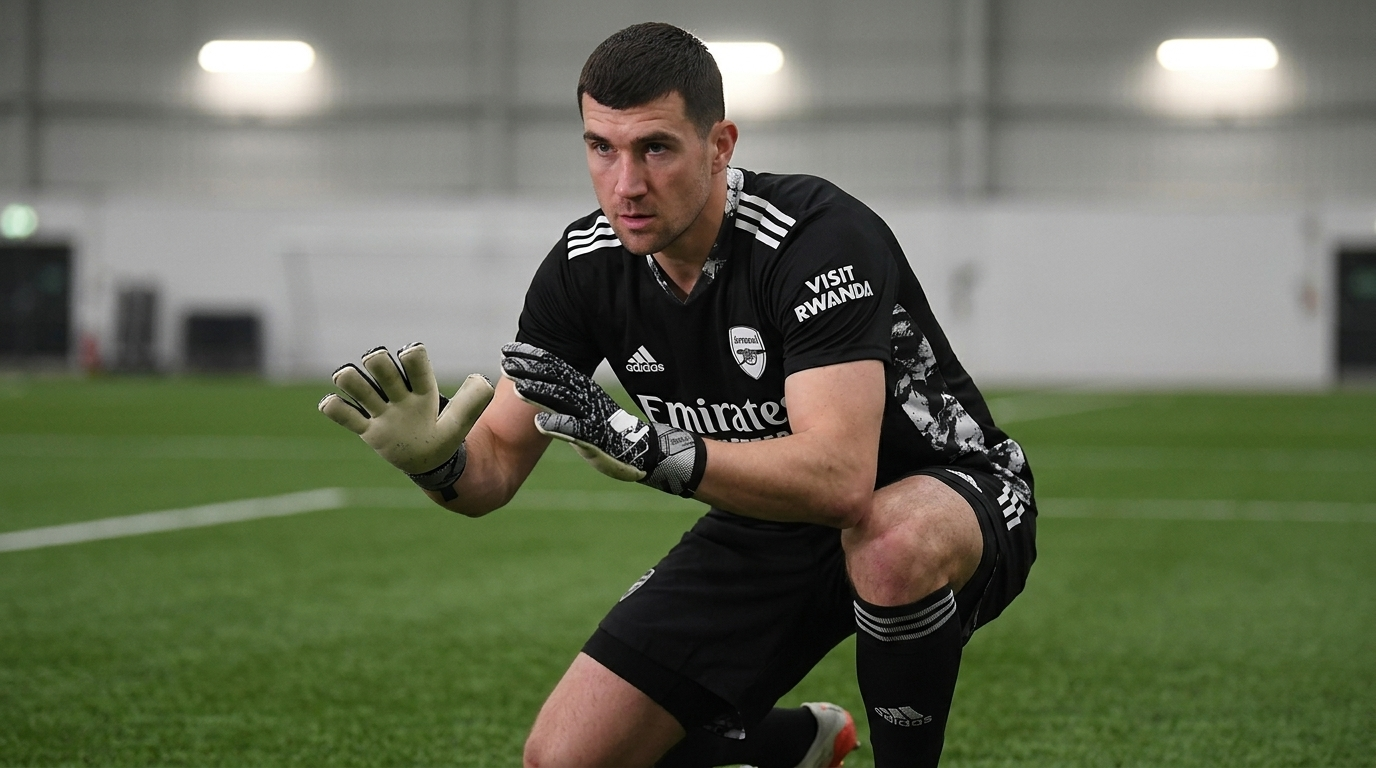
Australia’s most capped goalkeeper and the longest-serving captain in the current squad, Mat Ryan has been the Socceroos’ first-choice between the posts since 2012 and brings a level of elite club-level experience – English Premier League seasons at Brighton, Crystal Palace and Arsenal, Champions League football at Real Sociedad, Italian football at Roma – that no other player in the squad can match. His commanding presence and organisational authority provide the defensive foundation from which Popovic’s entire back-three system operates. At 32, this may be his final World Cup, and the combination of experience and continued elite-club involvement makes him the squad’s most straightforwardly indispensable player.
Jackson Irvine – Midfielder, FC St. Pauli
The St. Pauli midfielder is Australia’s most technically complete central midfielder – a box-to-box player whose energy, aerial ability and capacity to carry the ball from deep positions into advanced areas give Popovic’s midfield the dynamic quality that the back-three system requires in transition. Recent foot surgery has raised fitness concerns that make his availability for the tournament’s opening fixture against Türkiye on 13 June the most pressing squad health question Popovic faces heading into the tournament. When Irvine is fit and at his best, Australia’s midfield has the ball-winning and progression capacity to compete with Group D’s other sides; when he is absent or limited, the midfield balance is compromised.
Nestory Irankunda – Forward, Bayern Munich
The 20-year-old winger is Australia’s most exciting emerging talent and the player Popovic has built the right-sided width of his attacking system around. His explosive pace in behind defensive lines, his ability to take on full-backs in one-versus-one situations and his willingness to drive at defenders regardless of the pressure context make him the type of counter-attacking outlet that can create match-winning moments in games where Australia are defending a compact block. His youth, his development trajectory and the specific fact that Bayern Munich identified and signed him before Australia’s qualifying campaign began confirm the ceiling of his potential, and the World Cup stage provides exactly the type of high-visibility platform that will accelerate his trajectory regardless of the tournament result.
Riley McGree – Midfielder
The creative midfielder who links Popovic’s compact defensive block to the attacking transitions that Australia’s system requires is the team’s most technically refined passer in the final third. His combination of short passing accuracy under pressure, intelligent movement between the lines and the ability to deliver into wide areas for Irankunda and the left-sided options gives the squad its primary creative orchestration. His tournament experience – he appeared at the 2022 World Cup – and the consistency of his club career provide exactly the profile Popovic needs from the player occupying the most technically demanding position in his system.
Strengths & Weaknesses
Strengths
Australia’s most durable competitive advantage is collective defensive organisation – the capacity of Popovic’s back-three system to reduce space, minimise the number of clear opportunities conceded and maintain structural discipline across 90 minutes under sustained pressure from technically superior opponents. The 2022 World Cup demonstrated this quality in perhaps its most impressive context: beating Denmark 1-0 and Tunisia 1-0 in the group stage – results that involved two competitive European nations whose individual quality was categorically superior to Australia’s squad average – through exactly this type of disciplined, resilient, low-block defensive approach combined with clinical use of the limited offensive moments generated.
The specific tactical coherence that Popovic’s unbeaten qualifying run produced – five wins and three draws from eight matches after his appointment – is the second significant strength. International squads take time to organise around new systems, and the fact that Popovic has already established a functioning 3-4-2-1 structure with clear positional roles and understood pressing triggers is an advantage that will be visible from the first minute of the Türkiye match. Australia arrive in North America with a team that has played together under a settled manager for eighteen months – a stability that several Group D opponents cannot match.
Weaknesses
The fundamental structural weakness is the absence of a reliable goalscorer at the top level – what Yahoo Sports described bluntly as “no world-class players in the team to rely on in attack. No talisman.” Tim Cahill (five World Cup goals), Harry Kewell (2006 peak) and Aaron Mooy (2022 creative force) represented generations of Socceroos players whose individual moments defined tournament campaigns. The 2026 squad lacks an equivalent – Mitch Duke and Mohamed Toure provide options, but neither carries the match-changing individual quality that Cahill provided at his best. Against the United States in Seattle, where Pochettino’s system will control possession for extended periods, Australia’s limited attacking output is the most pressing competitive problem.
Jackson Irvine’s fitness is the squad’s specific injury concern. The St. Pauli midfielder’s foot surgery and compressed rehabilitation timeline represents exactly the type of individual fitness variable that can reshape a team’s knockout capacity before the tournament has even begun. Australia’s midfield without Irvine’s energy and ball-winning is demonstrably less effective, and Popovic’s options for replacing his specific contribution are limited by the depth available at that position in the squad.
Qualifying Campaign
Australia’s AFC Third Round Group C campaign was conducted in two distinctly different halves. The first – under Arnold, beginning September 2024 – produced one point from two matches and threatened a genuinely unprecedented non-qualification scenario. The second – under Popovic from November 2024 onwards – produced consistency and ultimately authority. Japan set the group benchmark with 23 points from their dominant campaign; Australia’s 19 points gave them a comfortable buffer over Saudi Arabia (13 points) despite the compressed start.
| Team | P | W | D | L | GF | GA | GD | Pts | Status |
| Japan | 10 | 7 | 2 | 1 | 30 | 3 | +27 | 23 | Qualified |
| Australia | 10 | 5 | 4 | 1 | 16 | 7 | +9 | 19 | Qualified |
| Saudi Arabia | 10 | 3 | 4 | 3 | 7 | 8 | -1 | 13 | 4th Round |
| Indonesia | 10 | 3 | 3 | 4 | 9 | 20 | -11 | 12 | 4th Round |
| Bahrain | 10 | 1 | 3 | 6 | 5 | 16 | -11 | 6 | Eliminated |
| China | 10 | 3 | 0 | 7 | 7 | 20 | -13 | 9 | Eliminated |
World Cup History: From 1974 to Qatar’s Round of Sixteen
Australia’s World Cup history is the story of continental federation reinvention. For three decades after their sole World Cup appearance in 1974 – a West Germany tournament in which they lost all three group matches against Chile, East Germany and the host nation without scoring – the Socceroos endured the specific torture of Oceania Football Confederation membership: a region that generally received just one-half of a qualifying place, meaning the winner still faced an intercontinental play-off to reach the tournament. Repeated failures in those play-offs kept Australia absent from the World Cup for 32 years.
Their move to the Asian Football Confederation in 2006 transformed the programme’s tournament access. Qualifying as an AFC nation for six consecutive tournaments since 2006 – including the 2006 round-of-sixteen run under Guus Hiddink, the tournament’s most celebrated Australian campaign, in which they beat Japan 3-1 (all goals in the final eight minutes) and drew 2-2 with Croatia before narrowly losing 0-1 to eventual champions Italy – established the Socceroos as consistent qualifiers rather than occasional participants.
The 2022 Qatar World Cup provided the second most celebrated tournament in the programme’s history. Under Graham Arnold, they beat Tunisia 1-0, Denmark 1-0 (the round of sixteen result that triggered nationwide celebrations) and pushed Argentina – the eventual champions – to a 2-1 result in the last sixteen, a match in which Lionel Messi scored a goal of specific quality to confirm the gap between the nations. Only Tim Cahill, who scored at four consecutive World Cups (2006, 2010, 2014 and 2018) with five goals in total, stands as Australia’s individual World Cup performer of comparable stature to any player the sport has produced at the tournament over that period.
Group D & Fixtures: USA at Home and the Türkiye Test
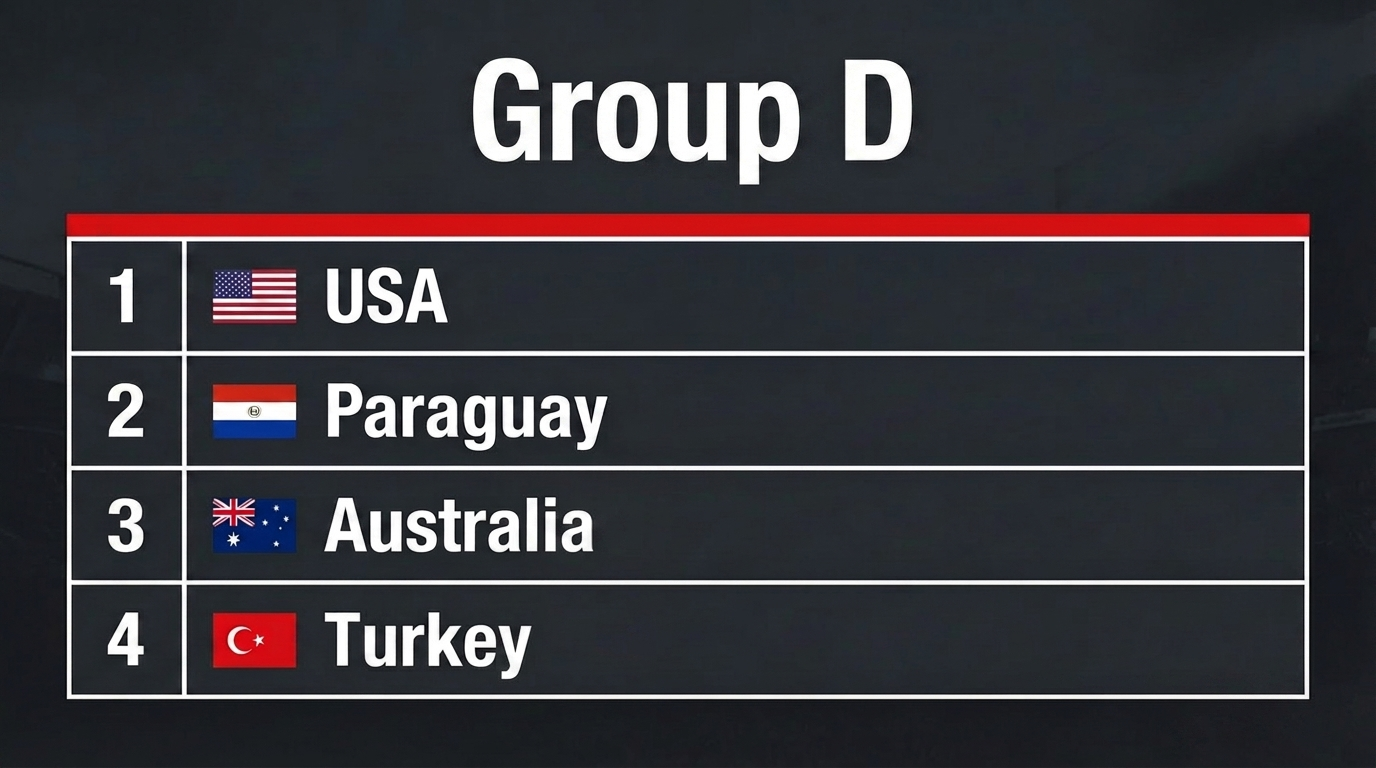
Australia were drawn into Group D alongside co-hosts the United States, Paraguay and Türkiye – a section that puts them third in the pre-tournament odds hierarchy behind the Americans and Türkiye, with Paraguay as the probable fourth-place finisher. The opening fixture against Türkiye in Vancouver on 13 June is the group’s most important match for the Socceroos’ knockout prospects: it is the only game in which a result is genuinely achievable against opposition whose individual quality does not categorically overwhelm Australia’s squad. Türkiye qualified through the UEFA play-offs, carry Hakan Çalhanoğlu and Kenan Yıldız, and will be backed by the emotional momentum of a tournament debut as European play-off qualifiers. But they are the realistic points-earning opportunity in Group D for Popovic’s side.
The USA fixture in Seattle on 19 June is the defining group match in terms of narrative – a co-host nation with enormous home crowd support, Pochettino’s organised pressing system and the specific tactical challenges that Australia’s back-three will need to solve. The Paraguay fixture provides the most intriguing tactical match-up: two compact, physically organised sides with limited individual brilliance but genuine collective cohesion, fighting for a place in the round of 32.
| Date (BST) | Match | Venue | Stage |
| 13 June, 05:00 | Australia vs Türkiye | BC Place, Vancouver | Group D |
| 19 June, 20:00 | USA vs Australia | Lumen Field, Seattle | Group D |
| 25 June, 03:00 | Australia vs Paraguay | Levi’s Stadium, Santa Clara | Group D |
Odds & Predictions: The Socceroos as Stubborn Dark Horses
Australia are priced at approximately 200/1 to win the 2026 World Cup outright with the major UK bookmakers – a market assessment that correctly reflects their position outside the realistic tournament-winning candidates. For Group D qualification, they are priced at around 3/1 to advance as runners-up or third-placed qualifiers – a price that reflects the genuine uncertainty about whether Paraguay or Australia will take the second automatic qualification spot behind the USA. Their specific match markets are where the most defensible betting positions sit.
Australia at evens or shorter against Paraguay is the clearest individual match proposition in Group D – two sides of comparable quality in a fixture where Australia’s better qualifying form and Popovic’s tactical preparation are the marginal differentiating factors. The Türkiye match at around 11/4 for an Australia win carries additional merit given Türkiye’s own uncertainty as a play-off qualifier with limited recent form data in competitive matches, and given that Australia’s back-three defensive system has historically performed well against physically direct Turkish-style opponents.
The round-of-sixteen market – Australia to advance from Group D at around 2/1 – is the most interesting medium-term position for bettors who believe in Popovic’s system and the specific resilience that Australian football has demonstrated in knockout football since 2006. Against Paraguay and a limited Türkiye, if both matches are navigated competitively, the USA result becomes irrelevant to advancement. At 2/1, that scenario carries value for a squad that has consistently outperformed its pre-tournament odds across every campaign since joining the AFC. For the full outright market and Group D betting specials, visit our World Cup 2026 odds hub.
Our prediction: Australia to finish third in Group D, qualifying as one of the eight best third-placed teams, and exiting in the Round of 32 against a top-four seeded nation. The scenario of Popovic becoming the first Australian to play and manage at a World Cup – if they advance – is one of 2026’s most compelling individual narratives.
The Socceroos have been defying expectations at World Cups since 2006, and Popovic’s organised, disciplined football gives them the specific tools to do it again. Australia at the 2026 World Cup is not a romantic long shot – it is a competently managed, physically resilient squad with elite organisational principles and a manager whose own World Cup journey makes his 2026 campaign uniquely meaningful. For the complete tournament picture and all player analysis, visit our World Cup 2026 betting hub.