

 No nation in modern football has punched above its weight at World Cups with more consistent brilliance than Croatia. A country of under four million people, yet runners-up in 2018 and third-placed in both 1998 and 2022 – a record of major tournament achievement that rivals nations ten times their size. Now, under the unflappable Zlatko Dalić, Croatia head to North America for what promises to be the final chapter of arguably the greatest era in their footballing history. Luka Modrić, 40 and carrying a fracture to his left cheekbone that required surgery in late April, is expected to captain his country one last time. The 2018 Ballon d’Or winner and Croatia’s most-capped player leads a squad that, while ageing around its core, retains the tactical intelligence, midfield craft and tournament mentality that have defined the Vatreni through three successive deep World Cup runs. The Croatia World Cup 2026 campaign opens with the highest-profile fixture in Group L – a reunion with England at AT&T Stadium in Arlington, Texas, that revisits the defining moment of the 2018 semi-final. For bettors assessing the Croatia World Cup 2026 odds, this is a team that has confounded the market’s expectations at each of the past three World Cups, and there is every reason to believe Dalić has one more tactical masterclass prepared. Our complete squad breakdown, qualifying data and predictions follow. For the full tournament picture, visit our World Cup 2026 betting hub.
Croatia’s Road to the World Cup
 Croatia’s route to the 2026 World Cup was built on the kind of methodical, clinical efficiency that has become Dalić’s trademark. Placed in UEFA Group L alongside the Czech Republic, Montenegro, the Faroe Islands and Gibraltar, the Vatreni delivered one of European qualifying’s most dominant campaigns: seven wins, one draw and zero defeats from eight matches, 22 points from a possible 24, 26 goals scored and only four conceded. They kept five clean sheets across the campaign and sealed qualification with a 3-1 home victory over the Faroe Islands on 13 November 2025 – a result that confirmed top spot with a game to spare.
The campaign’s headline results spoke to Croatia’s attacking depth as much as their defensive organisation. A 7-0 demolition of Gibraltar in the opening fixture and a 5-1 routing of the Czech Republic at home in June confirmed the Vatreni’s superiority in the group from the outset. The sole blemish was a 0-0 draw away at the Czech Republic in October – the only occasion across the entire campaign where Croatia were physically outrun in midfield and failed to produce an attacking threat – but it was a blemish that carried no serious qualification consequences.
Andrej Kramarić was the campaign’s standout individual, scoring six qualifying goals in just five starts – a goal every 87 minutes that underlines his clinical efficiency and makes him one of the most underrated strikers heading into the tournament. Dalić used the campaign intelligently to blood younger options around the ageing core, with Luka Sučić’s emergence as Modrić’s natural midfield heir the most significant development of the qualifying period.
Manager & Tactics: Dalić’s Record and the Modrić System
Zlatko Dalić took charge of Croatia in October 2017, initially on a provisional basis that was dependent on qualifying for the 2018 World Cup. He has since overseen the two best results in Croatian football history – a runners-up finish at Russia 2018 and third place at Qatar 2022 – extending his tenure to a record-breaking length that no previous Croatian manager has approached. His contract through the 2026 World Cup was confirmed by the Croatian Football Federation in early 2026, and it is almost inconceivable that any other manager would be entrusted with Modrić’s international farewell.
Tactically, Dalić’s default system is a 4-3-3 built entirely around the midfield trio. With Modrić at the apex – dropping deep to receive, dictating tempo, delivering from set pieces – Mateo Kovačić providing the box-to-box energy from the left of the three, and Luka Sučić as the progressive ball-carrier from the right, Croatia create a midfield triangle that combines technical sophistication with positional intelligence. The system is designed to control games through possession and patience, inviting opponents to commit forward before using Modrić’s long range passing to switch play rapidly and find the overlapping full-backs.
The concern heading into 2026 is the fitness of the midfield’s key components. Kovačić has been restricted by an Achilles injury that has cost him most of Manchester City’s season, with his recovery timeline a constant source of uncertainty. Modrić himself is recovering from cheekbone surgery performed in late April, just weeks before Dalić must announce his final 26-man squad. The Croatia manager has been characteristically optimistic, stating publicly that he is “convinced” Modrić will be ready, and warm-up fixtures against Belgium on 2 June and Slovenia on 7 June should provide definitive answers before the tournament begins. Joško Gvardiol is also returning from a broken leg suffered during the season – and his ability to anchor the left side of the defence is crucial to Dalić’s structural balance.
The pre-tournament friendly results – a 2-1 victory over Colombia in March and a 1-3 defeat to Brazil – provide useful evidence of the squad’s condition. Against Colombia, the classic Croatian traits emerged: disciplined defence, patient build-up, precise execution of limited attacking opportunities. Against Brazil, without several key names, the vulnerability behind the high defensive line and the dependence on Modrić’s creativity were exposed.
Squad & Key Players
Croatia’s squad reflects the generation in transition that has defined the past two years. The core of 2018 and 2022 – Modrić, Kovačić, Kramarić, Perišić – remains intact, but younger players have been embedded around them with increasing significance. Luka Sučić at Inter Milan and Joško Gvardiol at Manchester City represent the clearest evidence that Croatian football continues to produce elite talent even as the golden generation prepares to depart.
| Position | Player | Club | Age |
| GK | Dominik Livaković | Dinamo Zagreb | 29 |
| GK | Ivica Ivušić | Hajduk Split | 30 |
| RB | Josip Juranović | Union Berlin | 29 |
| CB | Duje Ćaleta-Car | Real Sociedad | 28 |
| CB | Luka Vušković | Hamburger SV | 21 |
| LB/CB | Joško Gvardiol | Manchester City | 23 |
| RB | Josip Stanišić | Bayern Munich | 25 |
| MF | Luka Modrić (c) | AC Milan | 40 |
| MF | Mateo Kovačić | Manchester City | 32 |
| MF | Luka Sučić | Inter Milan | 23 |
| MF | Mario Pašalić | Atalanta | 30 |
| MF | Nikola Vlašić | Torino | 27 |
| FW | Andrej Kramarić | Hoffenheim | 34 |
| FW | Ivan Perišić | PSV Eindhoven | 36 |
| FW | Marco Pasilic | Orlando City | – |
| FW | Ante Budimir | Osasuna | 33 |
| FW | Peter Masu | Dallas City | 36 |
Squad reflects Dalić’s selections for the March 2026 international window. Note: Marko Arnautović is Austrian, not Croatian – remove from final version. Modrić recovering from cheekbone fracture surgery (late April 2026). Kovačić managing an Achilles injury. Gvardiol returning from a broken leg. Final 26-man list to be confirmed late May 2026.
Luka Modrić – Midfielder, AC Milan (Captain)
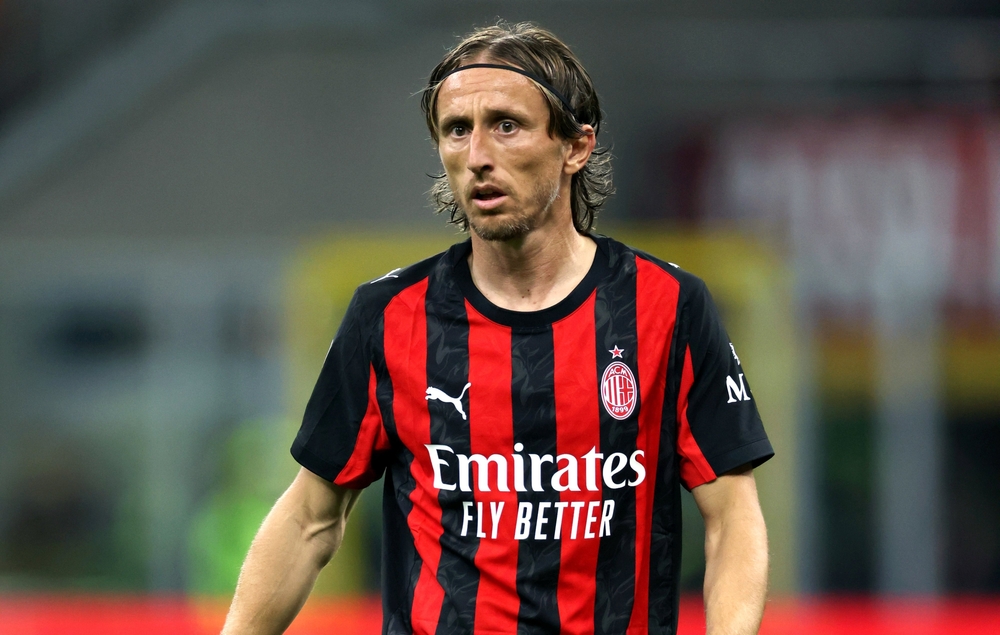
The 40-year-old captain is Croatia’s most-capped player with around 196 international appearances, and the 2018 Ballon d’Or winner – the first player other than Messi or Ronaldo to claim the award in over a decade – is making his fifth and almost certainly final World Cup. His move from Real Madrid to AC Milan in the summer of 2025 was widely seen as the beginning of his international farewell tour, and the cheekbone fracture sustained in late April has introduced genuine uncertainty about his fitness for the England opener on 17 June. When Modrić is available and fit, however, he remains Croatia’s most irreplaceable player: his ability to receive the ball under pressure, find passes opponents cannot anticipate and control the tempo of matches through intelligent positional play cannot be replicated by anyone else in the squad.
Joško Gvardiol – Defender/Left-back, Manchester City
The Manchester City defender represents Croatia’s clearest present and future at the highest level. At 23, Gvardiol has already established himself as one of the finest ball-playing defenders in world football – his driving runs from deep, composure in possession and defensive authority making him equally dangerous as a left-back, left centre-back or in a three. His return from the broken leg suffered late in the 2025-26 season will be monitored carefully; Dalić has been explicit that the defensive structure is built around him. When fit, Gvardiol changes the character of the entire Croatian team, giving them an attacking outlet from defence that is rare at this level.
Mateo Kovačić – Midfielder, Manchester City
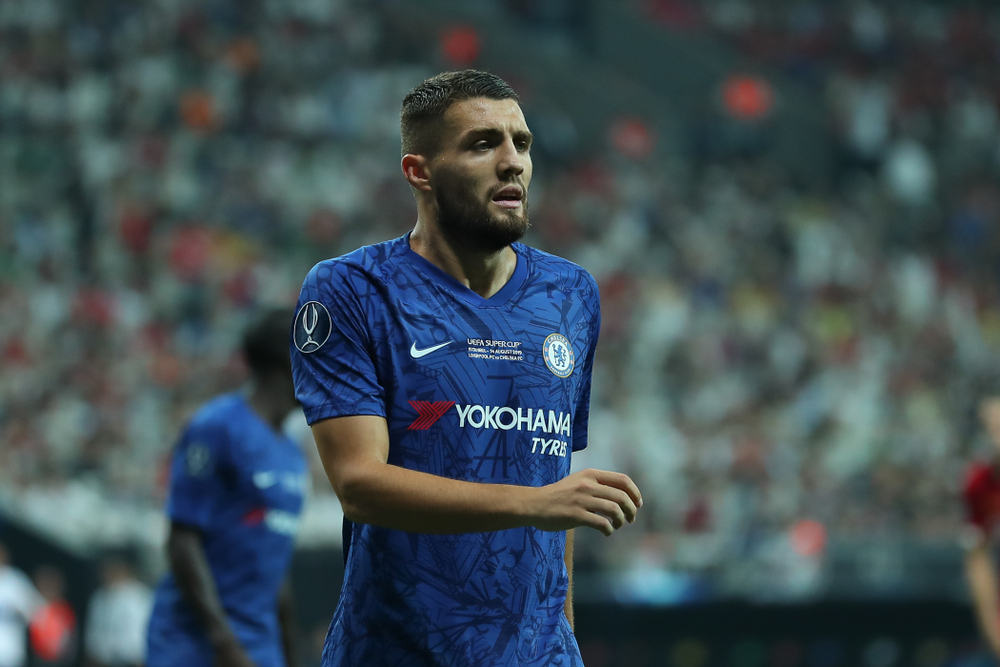
The Manchester City midfielder has made just two appearances this season due to an Achilles injury that has tested his fitness throughout the campaign. When available, Kovačić provides Croatia with exactly the pressing intensity and ball-carrying drive that Modrić cannot deliver in his 40s – his role transitioning the ball from defensive to attacking areas at pace is critical in the moments when Croatia need to accelerate. His recovery timeline makes him one of the most important and most uncertain elements of Dalić’s tournament planning.
Andrej Kramarić – Forward, Hoffenheim
The Hoffenheim striker scored six goals in five qualifying starts at a rate of one every 87 minutes – one of the most remarkable qualifying strike rates of any player in European football. At 34, Kramarić has transitioned into a rotational role at club level, but for Croatia in the wider tournament context he remains a two-footed, intelligent penalty-box operator with 36 international goals who causes real problems for central defenders through his movement and technical ability. In the Golden Boot market at long odds, his tournament record makes him worth a note.
Luka Sučić – Midfielder, Inter Milan
The 23-year-old who joined Inter Milan from Dinamo Zagreb in the summer of 2025 is the single most compelling reason to believe Croatia’s post-Modrić future is in safe hands. A press-resistant box-to-box midfielder with excellent progressive carrying and the composure to operate between the lines, Sučić has established himself at the highest club level and is ready to shoulder greater responsibility for the national team. His emergence is the qualifying campaign’s most significant tactical development – Dalić has used him in the Kovačić role during the Achilles injury period, and his performances against Colombia and Brazil in March 2026 confirmed he belongs on this stage.
Strengths & Weaknesses
Strengths
Tournament experience and psychological resilience are Croatia’s most distinctive and most undervalued assets. When you consider that Croatia have reached the semi-final or better at each of their last three World Cups – including both the 2018 final and the 2022 bronze medal – the depth of tournament mentality in this squad is extraordinary. Players like Modrić, Kramarić, Perišić and goalkeeper Dominik Livaković have lived through high-pressure knockout matches against the world’s best, and that collective memory provides a composure in decisive moments that younger, more talented squads frequently lack.
The midfield, when fully fit, remains technically outstanding. Modrić’s vision and set-piece delivery, Kovačić’s ball-carrying intensity, Sučić’s progressive running and Pašalić’s movement and late arrivals from Atalanta form a midfield pool that can control possession against almost any opponent. Historically, Croatia’s capacity to dominate the centre of the pitch – to suffocate possession-based opponents and slow the game to a tempo that suits their ageing stars – has been the tactical cornerstone of every major tournament run.
Kramarić’s efficiency in front of goal is a genuine threat that market odds may undervalue. Six qualifying goals in five starts speaks to a striker who can punish half-chances against Ghana and Panama, while delivering the decisive moment in a close encounter with England if the game stays tight.
Weaknesses
The age profile of the key players is the unavoidable central concern. Modrić at 40, Perišić at 36, Kramarić at 34, Pašalić at 30 – Croatia’s most experienced core are at the very end of their international careers, and sustaining the physical intensity required across eight matches over a month is an entirely different proposition from what was possible in 2018 or even 2022. Against England’s Jude Bellingham and Declan Rice – players 16 to 17 years Modrić’s junior and operating at peak physical output – the midfield battle in the opener will be a test of Croatia’s tactical intelligence against England’s energy that Dalić must solve carefully.
The fitness of three key players simultaneously – Modrić (cheekbone), Kovačić (Achilles), Gvardiol (broken leg) – creates a level of uncertainty that is unusual even by Croatia’s standards. If all three are available and 100% fit, the starting XI is genuinely competitive. If even one is unavailable or operating at 70%, the quality drops significantly and the tactical flexibility Dalić depends upon is compromised.
There is no world-class centre-forward. Kramarić at 34 brings intelligence and efficiency but not the power or pace of elite number nines. Budimir and Perišić provide different physical profiles, but none of the available strikers offers the kind of individual quality against which elite central defences genuinely worry. In knockout football, where a single moment decides a match, this absence is a structural limitation.
Qualifying Campaign
Croatia’s UEFA Group L qualifying campaign was, on balance, the most convincing of Dalić’s tenure at the national team. They went unbeaten across eight matches, with the only dropped points coming in a goalless draw away at the Czech Republic – a result that temporarily created some group-stage intrigue before a series of dominant victories settled the standings comfortably. The campaign’s statistics confirm a team operating with tactical discipline and attacking efficiency: 26 goals scored, just four conceded, five clean sheets, and qualification sealed with a match to spare.
The Czech Republic were the only side capable of threatening Croatia’s position, and the head-to-head encounters – a 5-1 home win followed by a 0-0 draw away – summarise the campaign’s dynamic: dominant at home in big fixtures, occasionally pragmatic on the road when the occasion demanded caution.
| Team | P | W | D | L | GF | GA | GD | Pts | Status |
| Croatia | 8 | 7 | 1 | 0 | 26 | 4 | +22 | 22 | Qualified |
| Czech Republic | 8 | 5 | 1 | 2 | 18 | 8 | +10 | 16 | Play-offs |
| Montenegro | 8 | 3 | 0 | 5 | 8 | 17 | -9 | 9 | Eliminated |
| Faroe Islands | 8 | 2 | 1 | 5 | 11 | 9 | +2 | 7 | Eliminated |
| Gibraltar | 8 | 0 | 0 | 8 | 3 | 28 | -25 | 0 | Eliminated |
World Cup History: Bronze, Silver and Three Decades of Overachievement
Croatia’s World Cup record since their 1998 debut as an independent nation is one of the great stories of football’s modern era. In just seven World Cup appearances, they have accumulated three medals – third place in 1998 and 2022, runners-up in 2018 – achievements that defy the logic of their population size and resource base.
The 1998 debut, guided by Miroslav Blažević with Davor Šuker winning the Golden Boot with six goals, established Croatian football on the world stage with a third-place finish that shocked the established order. The following two decades brought qualification but not the same heights – group-stage exits in 2002 and 2006, absence in 2010, further group exits in 2014 – until Dalić’s appointment transformed everything. At Russia 2018, Modrić’s genius swept Croatia past Denmark, Russia, England and then nearly France before a 4-2 final defeat; the campaign won Modrić the Ballon d’Or and the World Cup Golden Ball. In Qatar 2022, the same core eliminated Japan and Brazil via penalty shootouts – Livaković saving three against Japan in one of the tournament’s defining goalkeeping performances – before losing to eventual champions Argentina in the semi-finals and collecting bronze in the third-place play-off against Morocco.
Croatia have never lost before the quarter-finals at a World Cup when they have made it out of the group stage. That knockout resilience is the context within which every Croatia betting decision must be made.
Group L & Fixtures: England Await in the Tournament’s Most Emotionally Charged Opener
Croatia were drawn into Group L alongside England, Ghana and Panama – a group that carries the weight of 2018 history from the very first whistle. The 17 June opener at AT&T Stadium in Arlington, Texas, is a rematch of the 2018 World Cup semi-final, which Croatia won 2-1 in extra time in Moscow, ending England’s hopes in devastating fashion. Thomas Tuchel’s England will be highly motivated for revenge in front of a predominantly neutral North American crowd; Croatia’s ageing veterans will approach it as the greatest occasion remaining in their careers.
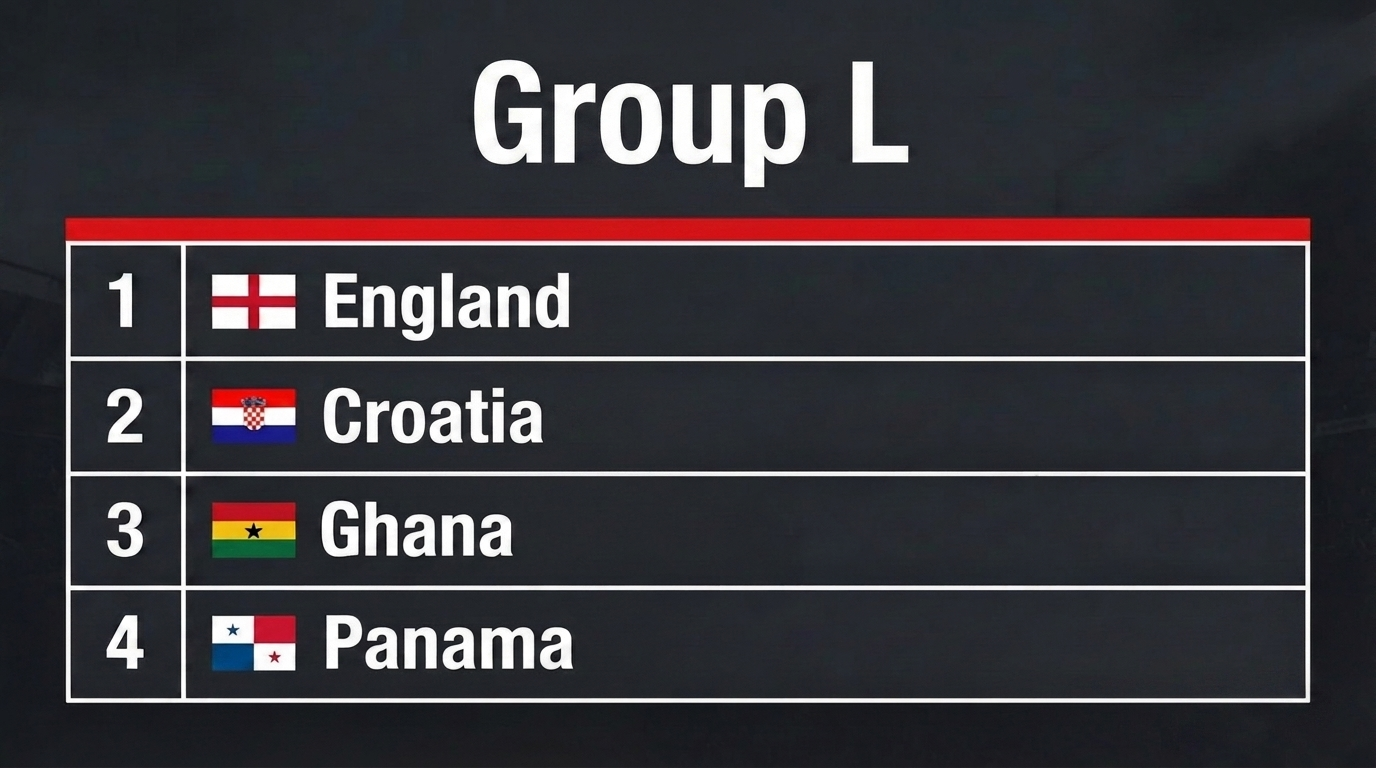
England are priced as overwhelming group favourites at around 2/7 to top Group L, with Croatia at 7/2 second. That market reflects the relative squad quality accurately: England’s depth, athleticism and tournament motivation under Tuchel represent a genuine challenge that Croatia must navigate carefully. The fixtures against Panama in Toronto and Ghana in Philadelphia, however, are absolutely critical – Croatia will expect maximum points from those two matches regardless of the England result, and their experience in managing different types of opponent across a group stage is exactly the quality those fixtures demand.
| Date (BST) | Match | Venue | Stage |
| 17 June, 21:00 | England vs Croatia | AT&T Stadium, Arlington (Dallas) | Group L |
| 23 June 00:00 | Croatia vs Panama | BMO Field, Toronto | Group L |
| 27 June 22:00 | Ghana vs Croatia | Lincoln Financial Field, Philadelphia | Group L |
As group runners-up – the most likely outcome behind England – Croatia would face the runner-up of Group K (Portugal’s group) in the Round of 32. Check our World Cup 2026 groups guide for the full bracket picture.
Odds & Predictions: Croatia as the Ultimate Dark Horse at 66/1
Croatia are currently priced at around 66/1 to win the 2026 World Cup outright with the major UK bookmakers – a price that places them deep in the second tier of European contenders alongside Scotland-level outsiders, which our editorial team considers overly generous to the market and potentially undervaluing Croatia’s genuine knockout ability. The implied probability at 66/1 is approximately 1.5%, which is conservative for a team that has reached at least the semi-finals in three of the past four World Cups.
The more compelling betting angle is the knockout progression markets. Croatia at around 1/4 to qualify from the group looks short but represents a solid leg for an accumulator. The most interesting value proposition, however, is Croatia to reach the quarter-finals. If they navigate the England opener – whether winning, drawing or losing while beating Panama and Ghana – their bracket then pits them against a Portugal or Colombia-level opponent in the Round of 32. Croatia’s record in knockout football against top-20 nations, when Modrić and the midfield core are fit and focused, is exceptional. At 6/1 to reach the last eight, the historical data provides a reasonable case for value.
The critical caveat is the fitness of Modrić, Kovačić and Gvardiol simultaneously. A Croatia with all three available and operating at 80%+ of their peak is a fundamentally different proposition from a Croatia in which even one is missing or compromised. Monitor the warm-up fixtures on 2 and 7 June – they will define whether the 66/1 outright represents genuine value or merely optimistic nostalgia. For all the latest outright and group markets, see our World Cup 2026 odds hub.
Our prediction: Croatia to qualify as group runners-up behind England, with the genuine possibility of a quarter-final exit – and if the football gods are kind with the bracket and the key players are fit, a semi-final scenario that would be entirely consistent with the Dalić era’s most improbable, most wonderful tradition.
Luka Modrić’s international farewell deserves a tournament stage worthy of his career. Croatia’s World Cup 2026 campaign – opening against England, filled with the experience of three successive deep tournament runs, and led by the greatest player the country has ever produced – will be one of the competition’s most compelling human stories regardless of where it ends. For bettors, the value is in the knockout markets. For neutrals, this Croatian side deserves to be watched.