

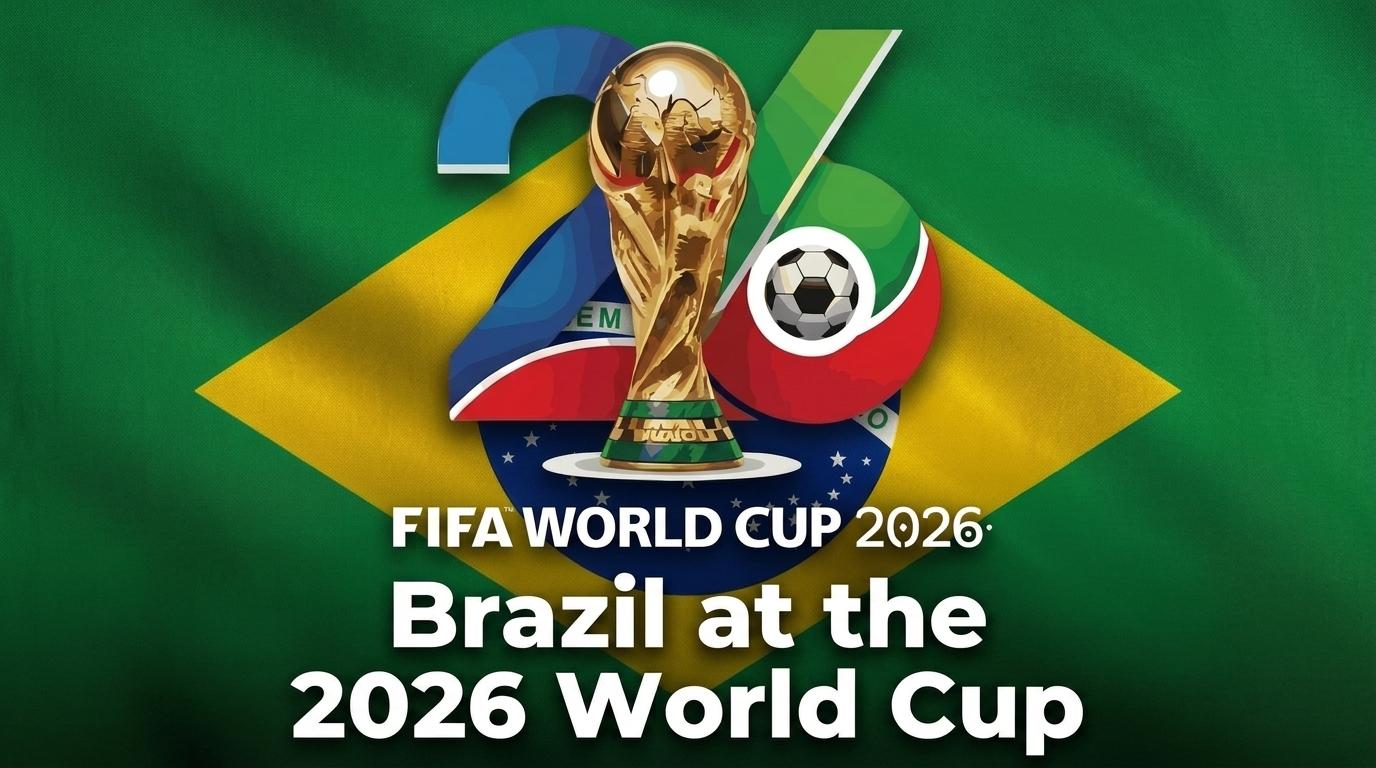
 Brazil arrive at the 2026 World Cup carrying both the weight of history and the uncertainty of the present. Five world titles, the only nation to have appeared at every edition of the tournament since 1930, and a 24-year drought since their last triumph in Japan and South Korea in 2002 – the longest title absence in their history. Under Carlo Ancelotti, appointed in May 2025 after Dorival Júnior’s dismal qualifying campaign, the Seleção enter this tournament as genuine contenders but not without significant question marks: Rodrygo is ruled out with a knee injury, Estêvão Willian has reportedly been ruled out in April 2026 , Neymar has not appeared for Brazil since March 2025 and was absent from the most recent squad, and the qualifying record – fifth place in CONMEBOL with eight wins, four draws and six defeats from 18 matches – suggests a team in transition rather than the dominant Seleção of past generations. Ancelotti’s task is to channel Vinicius Júnior, Raphinha and a Premier League-heavy supporting cast into a coherent tournament unit in time for their Group C opener on 14 June. This is the complete guide to Brazil at World Cup 2026. For full tournament context, visit our World Cup 2026 hub, and for all group details see our World Cup 2026 groups guide.
Brazil’s Road to the World Cup: Turbulence, Change and Ancelotti’s Arrival
 Brazil’s qualifying campaign was one of the most uncomfortable in recent history for a nation of their stature. Under Dorival Júnior, the Seleção struggled for consistency, suffering heavy defeats to Argentina (0-3 in Buenos Aires and 0-1 at home) and failing to produce the attacking football that Brazilian supporters expect. The CBF – the Brazilian Football Confederation – responded by making the most high-profile managerial appointment in world football since Pep Guardiola joined Manchester City: in May 2025, they announced Carlo Ancelotti, who left Real Madrid at the end of his contract to become the first non-Brazilian manager to take the role since the Seleção’s trophy-less experiments with foreign coaches in the 1960s. Ancelotti’s appointment triggered immediate optimism: a manager with five Champions League titles, winner of the league in all five of Europe’s major football nations, and with a direct familiarity with Brazil’s Real Madrid contingent – Vinicius Júnior, Rodrygo and Éder Militão had all worked with him at club level.
The results under Ancelotti improved gradually. Brazil won 28 points across 18 qualifying matches overall – the same total as Colombia, Uruguay and Paraguay – finishing fifth in CONMEBOL. In the March 2026 preparation period, results were mixed: Brazil lost 2-1 to France – a defeat that nonetheless carried no real alarm given France’s quality and the experimental nature of both squads. The injury news has been the primary negative of the pre-tournament period: Rodrygo’s knee injury ruling him out entirely, and Estêvão’s reported absence, leave Brazil without two of their most anticipated young attackers.
Carlo Ancelotti: Five Champions Leagues, One Final Challenge
Carlo Ancelotti, born June 1959, is the most decorated club manager in the history of the Champions League – five titles across AC Milan (twice), Real Madrid (three times) – and the only manager to have won the domestic championship in all of England, France, Germany, Italy and Spain. He brings to the Brazil job a specific tactical intelligence shaped by decades managing the world’s most demanding club environments and a relationship with elite players that is universally described by those who have worked with him as uniquely respectful and motivating. His squad management approach – light training sessions, high-quality preparation, emphasis on player confidence – is the opposite of the high-intensity demands that sometimes alienated Brazilian players under previous managers.
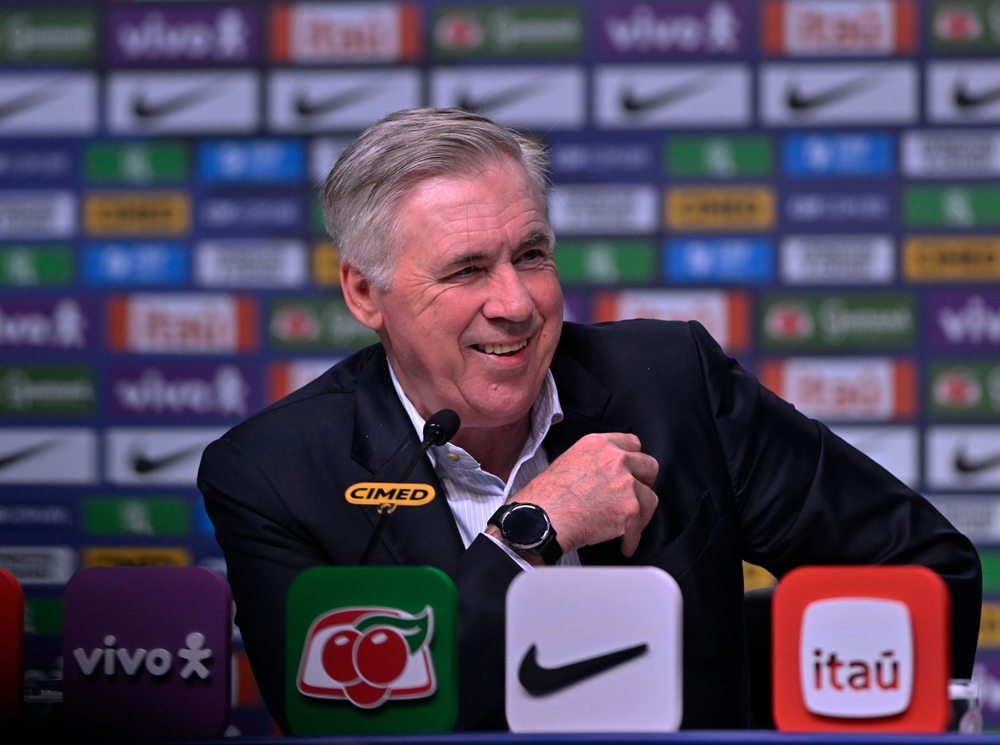
Ancelotti’s preferred system is a 4-3-3 or 4-2-3-1 that emphasises compact defence, patient build-up, and collective pressing over flair, with Brazil circulating possession through the flanks and exploiting transitions with Vinicius Júnior’s direct running. The 4-3-3 allows Vinicius and Raphinha to operate in wide positions where their one-versus-one ability is maximised, while Casemiro and Bruno Guimarães provide the midfield stability that Ancelotti considers non-negotiable. The tactical challenge in North America is specific: Brazil must manage the heat and humidity of Miami and the East Coast venues while playing with the vertical aggression that their attacking quality demands, without exposing the transitional vulnerabilities that their qualifying results – six defeats from 18 CONMEBOL matches – demonstrated. Ancelotti’s contract runs to December 2026 – he will have no involvement at a subsequent tournament.
Brazil’s 2026 World Cup Squad: Key Players
| Position | Player | Club | Caps | Int’l Goals |
| GK | Alisson Becker | Liverpool 🏴 | 75+ | 1 |
| CB | Marquinhos | PSG | 85+ | 10+ |
| CB | Gabriel Magalhães | Arsenal 🏴 | 15+ | 2+ |
| CB | Éder Militão | Real Madrid | 35+ | 1+ |
| DM | Casemiro | Manchester United 🏴 | 75+ | 6+ |
| CM | Bruno Guimarães | Newcastle United 🏴 | 35+ | 5+ |
| CM | Gerson / Paquetá | Flamengo / West Ham 🏴 | 30+ | 3+ |
| RW | Raphinha | Barcelona | 35+ | 14+ |
| AM | Endrick | Real Madrid | 15+ | 6+ |
| LW | Vinicius Júnior | Real Madrid | 55+ | 22+ |
| ST/FWD | Gabriel Martinelli | Arsenal 🏴 | 20+ | 4+ |
Vinicius Júnior – The Captain, the Danger, the Standard-Bearer
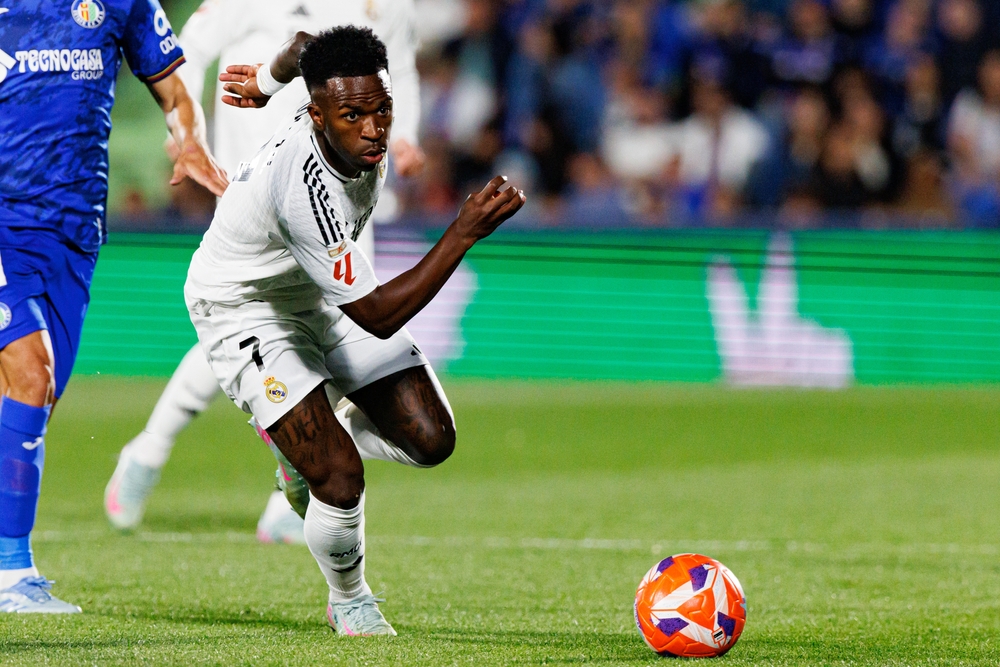
Vinicius Júnior is Brazil’s captain and their most dangerous attacker – the player around whom Ancelotti’s entire offensive structure is built. His 2023-24 season at Real Madrid, in which he scored 24 goals across all competitions and was runner-up for the Ballon d’Or, confirmed him as the world’s most devastating counter-attacking winger. Vinicius’ pace – elite even among elite players – combined with his improvement in final-third decision-making under Ancelotti at club level makes him the primary threat that every Group C opponent will design their defensive plan around. The Rodrigo Bentancur issue and historical incidents in La Liga have shaped public perception, but on the pitch his numbers – 22 international goals and approximately 15 qualifying goals across his Brazil career – are unambiguous. Without Rodrygo to provide a second technical wide threat, Brazil’s attacking system becomes more dependent on Vinicius carrying his individual quality into every significant moment.
Raphinha – Barcelona’s Talismanic Winger, Brazil’s Creative Force
Raphinha’s transformation since joining Barcelona from Leeds United under Hansi Flick has been one of football’s outstanding individual stories of the past two seasons. His goal and assist output for Barcelona in 2024-25 – reportedly 27 goals and 15 assists in all competitions – placed him among Europe’s most productive wide forwards and earned him genuine Ballon d’Or consideration. For Brazil, Raphinha brings the technical quality and set-piece threat that was absent from the qualifying campaign’s most frustrating performances. He operates from the right wing, cutting inside onto his left foot to shoot or combining with the striker, and his direct running complements Vinicius’ left-side threat by creating a bilateral wide attack that forces defensive attention across the full width of the pitch. His 14 international goals understate the creative contribution he provides in terms of chances generated. Raphinha is Premier League-familiar to UK viewers from his Leeds and Chelsea discussions – his current form for Barcelona is the best of his career.
Alisson Becker – The Liverpool Goalkeeper Who Could Define Brazil’s Tournament
Alisson Becker has been among the three best goalkeepers in the world for the past six years and remains Brazil’s most reliable source of clean sheets. The Liverpool number one brings Champions League pedigree, Premier League consistency and a capacity for extraordinary individual saves that can swing tight knockout-round matches. Brazil’s qualifying record of 17 goals conceded from 18 matches [from confirmed standings: GF24 GA17] suggests a defence that was leaky by their standards – Alisson’s presence ensures the tournament’s higher-stakes matches will test opponents’ finishing rather than reward poor defending. For UK viewers, Alisson’s club form at Liverpool provides direct familiarity that makes Brazil’s defensive outlook easier to assess than it would be for a less Premier League-visible squad.
Endrick – The Teenager Who Could Announce Himself to the World
Endrick, who turns 20 during the tournament, is the Brazilian forward whose ceiling is most debated and most discussed. The former Palmeiras striker, now at Real Madrid, has the profile of the classic Brazilian centre-forward – explosive acceleration, clinical finishing in the penalty area, and a willingness to run in behind defensive lines – but his development at club level has been complicated by game time management at Real Madrid. For Brazil, he represents the pure striker option that Ancelotti otherwise lacks: without Neymar and Rodrygo, there is no other player in the squad who combines a centre-forward’s movement with Endrick’s finishing quality. His performances in international football – six goals from approximately 15 appearances – suggest that the tournament stage elevates rather than intimidates him.
Brazil’s Strengths and the Injury Crisis That Changes the Equation
Strengths: Brazil’s primary strength is their bilateral wide threat – Vinicius from the left, Raphinha from the right – generating the most dangerous combination of pace and technical quality available to any manager in the tournament field. Behind them, the midfield partnership of Bruno Guimarães and Casemiro provides the best defensive midfield unit in the Brazil squad and arguably among the best available to any top-ten contender. Alisson in goal is world-class. Marquinhos brings 85+ international caps and Champions League-winning experience to the defensive leadership. Brazil dominated possession in CONMEBOL qualifying, averaging approximately 62% of the ball – an unusual stat for a team with their n umber of defeats, suggesting the issues are transitional rather than fundamental.
Weaknesses: The injury list is the most significant of any major contender. Rodrygo’s absence removes the primary technical alternative to Vinicius on the left and the creative option through the centre. Estêvão’s reported absence removes the one young attacker most capable of changing a match off the bench. Neymar’s fitness – the 33-year-old has not played for Brazil since March 2025 and was absent from Ancelotti’s March 2026 squad – now makes his involvement implausible absent a dramatic fitness reversal. Beyond the absentees, the qualifying record of six defeats in 18 CONMEBOL matches is the most defeats suffered by any of the six South American qualifiers, and those defeats came against quality opposition: Argentina (twice), Colombia, Paraguay and Venezuela. Brazil’s inability to find a reliable central striker – Rodrygo and Endrick provide very different profiles, and with the former absent the latter is untested over a long tournament – remains the structural question Ancelotti must answer before 14 June. The transition from the high-press demands of their attacking shape to a solid defensive block was Brazil’s most persistent qualifying weakness.
CONMEBOL Qualifying: Fifth in South America, But Still Through
Brazil’s final CONMEBOL standing – fifth, on 28 points from 18 matches – was sufficient to qualify automatically as the fifth-placed team in a six-automatic-place system. Brazil recovered after a slow start led to a heavy and humbling defeat at Argentina in March that was a real wake-up call – Dorival Júnior was fired and replaced by Carlo Ancelotti. The injury-hit side never really looked convincing during qualification but they’re still going to the World Cup.
| CONMEBOL Final Standings | P | W | D | L | GF | GA | Pts |
| 1. Argentina 🏆 | 18 | 12 | 2 | 4 | 31 | 10 | 38 |
| 2. Ecuador | 18 | 8 | 8 | 2 | 14 | 5 | 29 |
| 3. Colombia | 18 | 7 | 7 | 4 | 28 | 18 | 28 |
| 4. Uruguay | 18 | 7 | 7 | 4 | 22 | 12 | 28 |
| 5. Brazil ✓ | 18 | 8 | 4 | 6 | 24 | 17 | 28 |
| 6. Paraguay ✓ | 18 | 7 | 7 | 4 | 14 | 10 | 28 |
Four teams – Colombia, Uruguay, Brazil and Paraguay – finished level on 28 points, with Brazil’s superior goal difference over Paraguay securing their automatic berth. The final qualifying record of W8 D4 L6 is the worst qualifying record of any of the five major tournament contenders (Spain, England, France, Brazil, Argentina).
Brazil’s World Cup History: The Greatest Tournament Pedigree on Earth
Five World Cup titles. The only nation to have appeared at every edition of the tournament. The record all-time scorer (Klose surpassed Ronaldo, but Brazil as a team have scored more World Cup goals than any other nation). Brazil’s 1970 side – Pelé, Jairzinho, Tostão, Rivelino – is universally regarded as the finest team ever to compete in the tournament, winning all six matches and scoring 19 goals. The 2002 triumph in Japan and South Korea, with Ronaldo’s eight goals (joint record at the time) and the partnership with Ronaldinho, produced the last generation to add a sixth star to the shirt. And then, 24 years of nothing: quarter-finals in 2006 (France), quarter-finals in 2010 (Netherlands), quarter-finals in 2022 (Croatia). The 7-1 home semi-final defeat to Germany in 2014 remains the single most traumatic result in Brazilian football history.
| Year | Stage | Notable |
| 1958 | Champions 🏆 | Pelé (17), 5-2 v Sweden in final |
| 1962 | Champions 🏆 | Back-to-back; Garrincha the star after Pelé injury |
| 1970 | Champions 🏆 | Greatest team ever; 4-1 v Italy in final |
| 1994 | Champions 🏆 | Romário and Bebeto; 0-0 aet, pens v Italy |
| 2002 | Champions 🏆 | Ronaldo 8 goals; 2-0 v Germany in final |
| 2014 | 4th place | Germany 7-1 (semi-final); national trauma |
| 2022 | Quarter-final | Croatia pens; Neymar’s heartbreak |
Group C: Morocco, Scotland and Haiti – A Winnable Group With One Significant Test
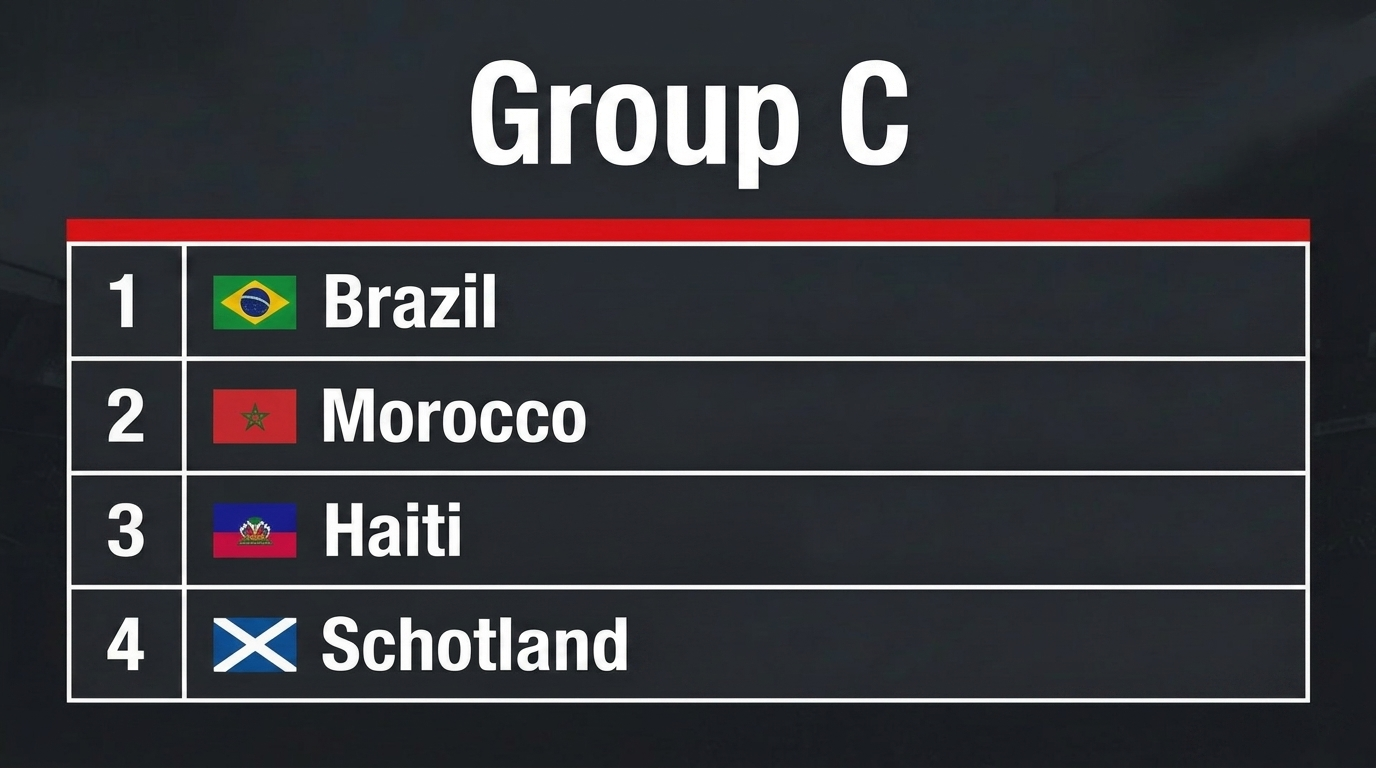
Brazil were drawn in Group C alongside Morocco, Scotland and Haiti. In football terms, only Morocco poses a genuine competitive challenge – the 2022 semi-finalists who, even under new manager Mohamed Ouahbi (appointed after Walid Regragui’s departure), carry the defensive organisation and transition quality that troubled Spain and Portugal in Qatar. Scotland (first World Cup since 1998) and Haiti represent fixtures where Brazil should accumulate six points with no serious difficulty. All Brazil matches will be played in the United States, with Brazil playing in New York [area], Philadelphia and Miami. For full group analysis, see our World Cup 2026 groups guide.
| Match | Date | BST KO | Venue | TV | Brazil odds |
| Brazil v Morocco | 13 Jun 2026 | 11:00pm BST | MetLife Stadium, New Jersey | BBC/iPlayer | 4/6 |
| Brazil v Haiti | 20 Jun 2026 | 2:00am BST | Lincoln Financial Field, Philadelphia | ITV/ITVX | 1/14 |
| Scotland v Brazil | 24 Jun 2026 | 11:00pm BST | Hard Rock Stadium, Miami | BBC/iPlayer | Brazil 4/7 |
Brazil World Cup 2026 Odds and Our Prediction
Brazil are priced at 8/1 with leading UK bookmakers including bet365, William Hill and Paddy Power – the same price as Argentina, level-pegging with the defending champions. The implied probability at 8/1 is approximately 11.1%. Our editorial assessment places Brazil’s true probability of winning the tournament at approximately 9-11%, making the 8/1 price roughly fair rather than generous. The injury situation – particularly Rodrygo’s absence – reduces Brazil’s attacking ceiling relative to a fully fit squad, and the qualifying form suggests inconsistency rather than tournament readiness. The transition from Ancelotti’s first season of international management to knockout-round precision against world-class opponents is the primary risk factor.
| Market | Odds (approx.) | Our verdict |
| Brazil to win World Cup | 8/1 | Fair price – injury list and form give pause |
| Brazil to win Group C | 4/9 | Confident – Morocco is the only test |
| Brazil to reach semi-finals | 3/1 | Plausible – bracket favours them if Morocco is negotiated |
| Vinicius Júnior Golden Boot | 25/1 | Speculative value – primary goalscorer if Endrick doesn’t start |
| Brazil v Morocco – over 2.5 goals | 6/4 | Attractive – both sides attack from wide positions |
| Brazil v Haiti – Brazil -3 handicap | 5/4 | Value at correct price – Brazil should dominate |
Brazil remain a contender – Ancelotti’s record and the talent of Vinicius and Raphinha ensure that – but the 8/1 price offers no particular value over Spain (9/2), England (6/1) or France (13/2) given the comparative strength of Brazil’s tournament preparation and injury situation. As an each-way speculative selection, Brazil’s group path to the Round of 32 is smooth; the question of whether they are genuinely equipped to beat Spain, France or England in a knockout-round encounter will only be answered in July. For all the latest odds across every Brazil and tournament market, see our World Cup 2026 odds guide. All tournament coverage is available at our World Cup 2026 hub.