

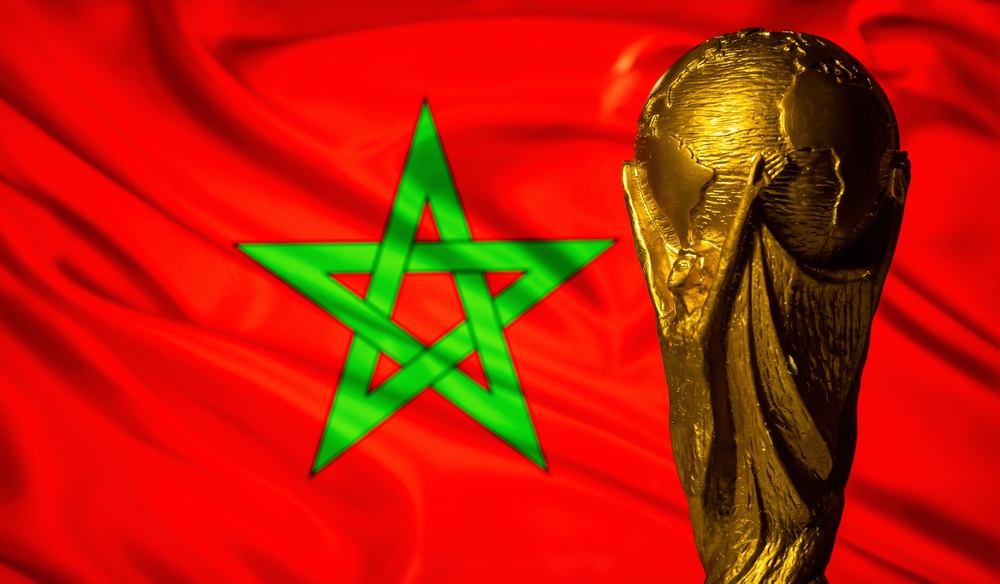
 No nation has defined what is possible for African football more dramatically than Morocco. The Atlas Lions’ historic semi-final run at Qatar 2022 – eliminating Belgium, Spain and Portugal en route to becoming the first African team to reach the last four at a World Cup – rewrote the tournament’s narrative and elevated a generation of players into icons. Four years on, the Morocco World Cup 2026 squad arrives in North America carrying both the weight of that legacy and a series of complicating plot lines that make this one of the most fascinating and difficult teams to assess in the entire 48-nation field. Walid Regragui, the architect of the 2022 miracle, departed in March 2026 following the fallout from an extraordinary AFCON final controversy. Mohamed Ouahbi – who previously guided Morocco’s under-20 side to the 2025 U-20 World Cup title – inherits a squad of genuine quality in Achraf Hakimi, Brahim Diaz, Yassine Bounou and a deep pool of European-based talent, but faces the challenge of installing tactical cohesion with minimal time before Group C opens against Brazil at MetLife Stadium on 13 June. Scottish football followers will be watching this group with particular interest: the Three Lions and the Tartan Army both share Group C with Morocco and Brazil, making it one of the tournament’s most compelling early-stage narratives. For the full outright market, visit our World Cup 2026 betting hub.
Morocco’s Road to the World Cup
 Morocco’s qualification for the 2026 World Cup was achieved with a dominance that confirmed their status as the continent’s premier football nation. Drawn into CAF Group E alongside Tanzania, Zambia, Niger and Congo (with Eritrea withdrawing before the opening fixtures), the Atlas Lions became the first African nation to qualify for the expanded 48-team tournament, sealing their place with two group matches still to play – a remarkable margin of certainty that reflected the gulf in quality between Morocco and every other team in the section.
The key results told a comprehensive story: a 6-0 thrashing of Congo, back-to-back victories over Tanzania including a 2-0 win, a 2-1 defeat of Zambia, and a 5-0 demolition of Niger that clinched qualification in September 2025. The campaign’s most striking statistics were the consistency of goals and the near-impenetrable defensive record. Ayoub El Kaabi led the qualifying scorers with four goals, supplemented by contributions from across the squad. Qualification was sealed without defeat, confirming this as one of the most efficient African qualifying campaigns in recent memory.
The backdrop to the pre-tournament period was, however, considerably more turbulent. Morocco hosted AFCON 2025 and reached the final as overwhelming favourites, only to lose to Senegal 1-0 in extra time after an extraordinary controversy in which Brahim Diaz missed a stoppage-time penalty and Senegal’s players briefly walked off the pitch following a disputed penalty decision. CAF subsequently awarded the AFCON title to Morocco on the basis of Senegal’s abandonment of play – a ruling that remains disputed – but the psychological damage of another near-miss on the biggest continental stage was evident. Regragui’s departure in March 2026, followed by Ouahbi’s appointment, means Morocco arrive at their seventh World Cup with new management, unresolved internal questions and enormous external expectations in equal measure.
Manager & Tactics: Ouahbi’s Inheritance and the Tactical Continuity Question
Mohamed Ouahbi’s appointment in March 2026 was simultaneously logical and jarring. The 49-year-old had built an impressive reputation through Morocco’s youth structures – most notably leading the Atlas Cubs to the 2025 U-20 World Cup title, only the second African side in history to achieve that feat – but managing a senior international team in the final months before a World Cup, with no previous experience at that level, is a challenge of an entirely different category. His first two matches in charge – a 2-1 win over Paraguay and a 1-1 draw with Ecuador in late March – provided limited but not discouraging evidence of what his Morocco might look like.
Tactically, Ouahbi has maintained the DNA established by Regragui: a compact defensive block, rapid transitions and the exploitation of wide overloads through Hakimi’s advancing runs and Brahim Diaz’s creativity between the lines. The preferred shape appears to be a 4-3-3 or 4-1-4-1 depending on the opponent, with two mobile central midfielders providing the pressing intensity that disrupted Spain, Portugal and Belgium in 2022. What the manager is still working out is his best central striker configuration – Ayoub El Kaabi at Olympiakos and Youssef En-Nesyri provide different profiles, and neither has fully nailed down the first-choice role across the recent camp period.
The centre-back pairing is the other unresolved tactical question. Since the 2022 World Cup, Morocco have rotated through multiple central defensive combinations without finding the consistent partnership that defined the Qatar campaign. Nayef Aguerd’s experience at Marseille and Issa Diop’s physicality give Ouahbi genuine options, but their combination under tournament pressure against Brazil’s attacking depth remains an open question. Ouahbi’s communication style is reportedly more collaborative and open than Regragui’s confrontational approach, and his ability to rebuild squad cohesion after the AFCON trauma in the limited preparation time available will be one of the tournament’s most closely watched managerial tests.
Squad & Key Players
Morocco’s squad depth across the attacking and defensive third is genuine, with a remarkable concentration of European talent that confirms the generation’s development since 2022. Of the 26 players who appeared in Qatar, only six remained in Ouahbi’s first March squad – Hakimi, Bounou, Mazraoui, El Khannouss, Ounahi and Ezzalzouli – reflecting how significantly the squad has been refreshed around a core of established performers.
| Position | Player | Club | Age |
| GK | Yassine Bounou | Al-Hilal | 33 |
| GK | Munir El Kajoui | RS Berkane | 35 |
| RB | Achraf Hakimi (c) | Paris Saint-Germain | 27 |
| CB | Nayef Aguerd | Marseille | |
| CB | Issa Diop | Fulham | 28 |
| CB | Jawad El Yamiq | Zaragoza | 33 |
| LB | Noussair Mazraoui | Manchester United | 27 |
| MF | Sofyan Amrabat | Real Betis (loan from Fenerbahçe) | 29 |
| MF | Bilal El Khannouss | Stuttgart | 21 |
| MF | Azzedine Ounahi | Marseille | 24 |
| MF | Ismael Saibari | PSV Eindhoven | 25 |
| MF | Neil El Aynaoui | AS Roma | 23 |
| FW | Brahim Diaz | Real Madrid | 26 |
| FW | Achraf Hakimi | [see above] | – |
| FW | Ayoub El Kaabi | Olympiakos | 32 |
| FW | Youssef En-Nesyri | Fenerbahçe | 28 |
| FW | Abdessamad Ezzalzouli | Real Betis | 24 |
| FW | Amine Adli | Bournemouth | 24 |
| FW | Hamza Igamane | Rangers | 22 |
| FW | Eliesse Ben Seghir | AS Monaco | 19 |
Achraf Hakimi – Right-back, Paris Saint-Germain (Captain)
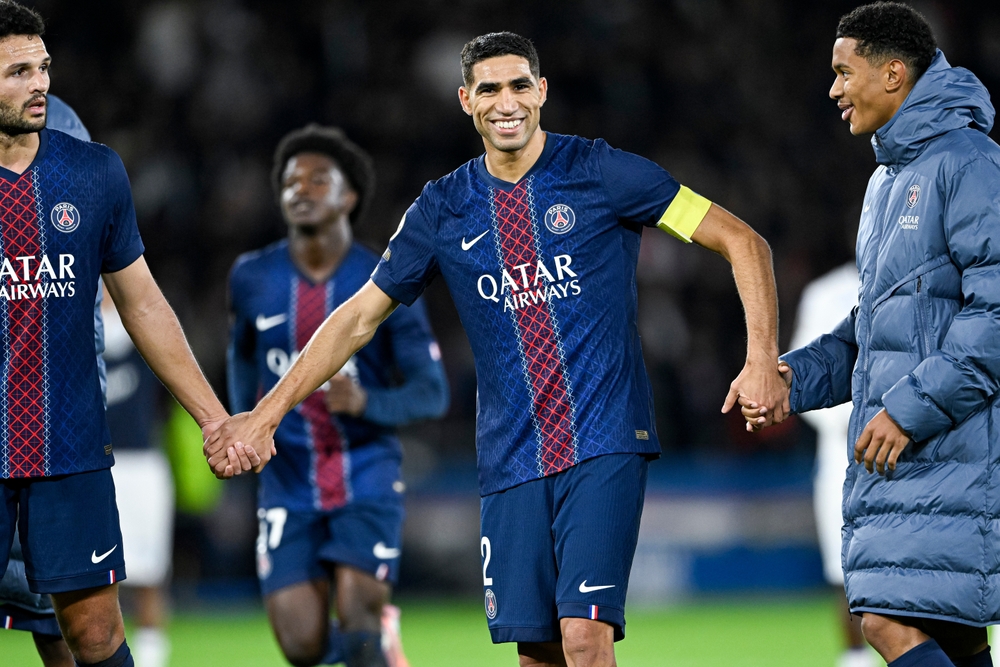
The PSG captain is not merely Morocco’s best player – he is, by the consensus of most objective analysis, one of the two or three finest right-backs in world football. Under Luis Enrique at PSG, he has been deployed in an increasingly advanced role, recording 28 goals across two-and-a-half seasons including in Champions League final and semi-final matches. At 27, Hakimi arrives at this tournament at the absolute peak of his physical and technical development, combining the raw pace and athleticism that made him a sensation at Real Madrid with the positional intelligence and final-third contribution of a genuine attacking threat. His advancing runs from right-back create overloads that no team has yet consistently solved, and Morocco’s entire attacking system is designed to exploit the space his movement generates. The captain’s armband since Regragui’s era reflects his leadership qualities as much as his technical ones.
Brahim Diaz – Forward, Real Madrid
The Real Madrid attacker was the standout individual of AFCON 2025 with five goals, and his performances for the Atlas Lions have consistently exceeded his club contributions at Madrid. At 26, Diaz operates as the creative fulcrum in Ouahbi’s system – a player who can dribble past defenders in tight spaces, deliver precise through-balls and arrive in the box to finish. The AFCON final penalty miss – which preceded the extraordinary abandonment controversy – will be the defining moment his critics point to, but his record of a goal every two international appearances across 22 caps confirms consistent delivery at the highest African level. His partnership with Hakimi on the right side of Morocco’s attack is the primary creative engine Ouahbi will build his World Cup system around.
Sofyan Amrabat – Midfielder, Real Betis
The defensive midfielder who became a global superstar through the 2022 World Cup is now 29 and, despite a difficult Manchester United period, has reportedly rediscovered his best form on loan at Real Betis in La Liga. His ability to disrupt attacking moves through intelligent positioning, aggressive pressing and the reading of passing lanes was the primary reason Morocco could contain Portugal and Spain in 2022 – it is this version of Amrabat, fit, motivated and playing regularly, that Ouahbi needs for a deep tournament run. If Amrabat is operating at the level he showed in Qatar, Morocco’s defensive midfield structure is capable of neutralising any attack in the world for extended periods.
Bilal El Khannouss – Midfielder, Stuttgart
The 21-year-old midfielder moved from Leicester City to Stuttgart on loan and has been one of the Bundesliga’s most exciting young talents this season. His ability to receive the ball under pressure, break lines with progressive carrying and deliver incisive final-third passes from midfield positions makes him the clearest signal of Morocco’s footballing evolution – a generation of players raised in European youth football who have the technical sophistication to compete with the world’s best. His development since making his name at Leicester represents the depth of talent Morocco can now draw from as their European diaspora matures.
Hamza Igamane – Forward, Rangers
The Rangers striker represents one of Scotland’s most direct World Cup connections to Group C: should Igamane’s form at Ibrox continue, and should he feature against Scotland in the second group fixture, it will be one of the tournament’s more extraordinary individual storylines. The 22-year-old has been among the most prolific forwards in the Scottish Premiership this season and gives Ouahbi a physical alternative striker option to El Kaabi and En-Nesyri.
Strengths & Weaknesses
Strengths
Morocco’s defensive system under Regragui was the defining tactical innovation of the 2022 World Cup, and despite the managerial change, the personnel that made it possible remain largely intact. The combination of Bounou’s shot-stopping authority – Morocco kept clean sheets against Cristiano Ronaldo’s Portugal and a Belgian side ranked in the world’s top five – with Amrabat’s midfield screening, Hakimi’s capacity to cover on the right and the disciplined shape of the back four created a defensive structure that conceded goals at a rate that no other team across the tournament matched. Against Scotland’s directness and Haiti’s limited attacking depth, this defensive solidity alone should be sufficient to secure group qualification.
The attacking talent pool is deeper than the 2022 World Cup squad. Brahim Diaz has matured considerably since Qatar, El Khannouss provides a creative dimension from midfield that was less available four years ago, and the emergence of Ben Seghir at Monaco and Igamane at Rangers gives Ouahbi rotation options that Regragui never had. Morocco’s counter-attacking threat – one of the tournament’s most defined and repeatable attacking patterns – works as effectively against Brazil as it did against Portugal, because it does not depend on sustained possession dominance but rather on disciplined shape and the quality of the transition moment.
The Morocco vs Brazil fixture’s specific tactical matchup is intriguing. Brazil’s 2026 version under Ancelotti features a high defensive line that Morocco’s transition speed – Hakimi accelerating into space, Diaz driving in behind, Ezzalzouli’s pace in one-versus-one situations – is specifically designed to exploit. BetMGM’s group preview analysis noted that Brazil’s defence had shown vulnerability against counter-attacking sides, and Morocco’s xG production against Spain (2022) and Portugal (2022) at comparable odds confirms they are capable of generating genuine threat against elite opposition.
Weaknesses
The managerial transition is the squad’s most significant structural concern. Ouahbi has had one international window with this group before the tournament begins, has never managed at senior level and inherits a squad that experienced significant psychological trauma in the AFCON final. The tactical DNA is continuous, but the micro-level decisions – how to manage Hakimi’s minutes across three group fixtures, whether to start El Kaabi or En-Nesyri, how to structure the midfield against Brazil’s pressing – require precisely the kind of senior tournament experience that Ouahbi has not yet accumulated. In every other article in this series, managers bring World Cup experience into their preparation; Morocco’s manager has none, and that asymmetry matters when the pressure of Group C arrives.
The central defensive partnership remains unresolved. After the 2022 World Cup, Morocco’s inability to consistently reproduce the Romain Saïss and Aguerd combination – with Saïss now 36 – has created recurring question marks about the back line. Without a settled, trusted centre-back pairing, the defensive solidity that was their greatest 2022 weapon becomes less reliable, particularly against Brazil’s wide attack of Vinicius Júnior and potential replacements for the injured Rodrygo.
Goal production from central striking positions is the third persistent concern. Neither El Kaabi nor En-Nesyri has confirmed first-choice status, and neither has the profile of a striker capable of carrying a team through five or six knockout matches if Diaz or Hakimi are contained. The 2022 success was built on defensive solidity and set-piece goals as much as open-play attacking quality, and if that template is harder to replicate against more prepared opponents in 2026, the question of who scores when Morocco need a winner becomes urgent.
Qualifying Campaign
Morocco’s CAF Group E campaign was the most dominant African qualifying performance of the cycle. Operating in a group that lost Eritrea to withdrawal before the first match and Congo to a mid-campaign suspension for government interference in federation operations, the Atlas Lions nonetheless delivered an unbeaten record across eight fixtures, confirming qualification with two matches remaining – the first African nation to secure their place at the expanded 48-team tournament.
The results were comprehensive throughout: six clean sheets, 20 goals scored and just four conceded (not counting the Congo forfeit matches), with El Kaabi the leading scorer on four goals. The quality of opposition did not test Morocco to the degree that the European groups tested their continental equivalents, but the ruthlessness with which they dispatched a Congo side in a 6-0 result and the consistency of winning across a two-year campaign reflected a squad that takes no fixtures lightly.
| Team | P | W | D | L | GF | GA | GD | Pts | Status |
| Morocco | 8 | 7 | 1 | 0 | 22 | 4 | +18 | 22 | Qualified |
| Niger | 8 | 5 | 0 | 3 | 11 | 10 | +1 | 15 | Eliminated |
| Tanzania | 8 | 3 | 1 | 4 | 6 | 7 | -1 | 10 | Eliminated |
| Zambia | 8 | 3 | 0 | 5 | 10 | 10 | -20 | 9 | Eliminated |
| Congo | 6 | 0 | 1 | 7 | 4 | 24 | -20 | 1 | Eliminated |
World Cup History: From 1986 to Semi-Finals – Africa’s Most Consistent Story
Morocco’s World Cup history carries a significance disproportionate to their six appearances. The 1970 appearance – a 3-0 defeat to West Germany in Guadalajara – was Africa’s most creditable early tournament performance, but it was 1986 in Mexico that first established Morocco as a genuine force, when they became the first African nation to top a World Cup group, finishing ahead of England, Poland and Portugal. Despite their second-round exit to West Germany, the achievement changed perceptions of African football permanently.
The following decades brought inconsistency: a group-stage exit in 1994, absence in 2002 and 2006, and another first-round exit in 1998 when they lost to Norway and drew with Scotland in one of the tournament’s more memorable group matchups. The 2018 World Cup brought a third group-stage exit in four appearances. And then came Qatar 2022 – and history.
Regragui’s side defeated Belgium 2-0, drew with Croatia 0-0, beat Canada 2-1, then eliminated Spain on penalties, eliminated Portugal 1-0 through En-Nesyri’s header, and defeated Portugal with a performance that stunned the football world. The France semi-final – a 2-0 defeat to the eventual finalists – ended the run, but the third-place play-off victory over Croatia 2-1 confirmed Morocco as the most successful African nation in World Cup history. Their 2022 campaign remains the blueprint every other African qualifying nation now studies.
Morocco will also co-host the 2030 World Cup alongside Spain and Portugal – another measure of how significantly the country’s global football standing has risen in the space of a decade.
Group C & Fixtures: The Scotland Connection and a Brazil Blockbuster Opener
Morocco were drawn into Group C alongside Brazil, Scotland and Haiti – a group that carries particular resonance for UK football followers given Scotland’s participation and the historic 1998 matchup that this tournament revisits in the second group fixture. Brazil are the overwhelming group favourites, Morocco are the clear second-place candidates at around 4/1 to top the section and 1/9 to qualify, while Scotland – making their first World Cup appearance since France 1998 – will approach the Morocco fixture in Massachusetts on 19 June as their most realistic opportunity to take points from one of the group’s serious contenders.
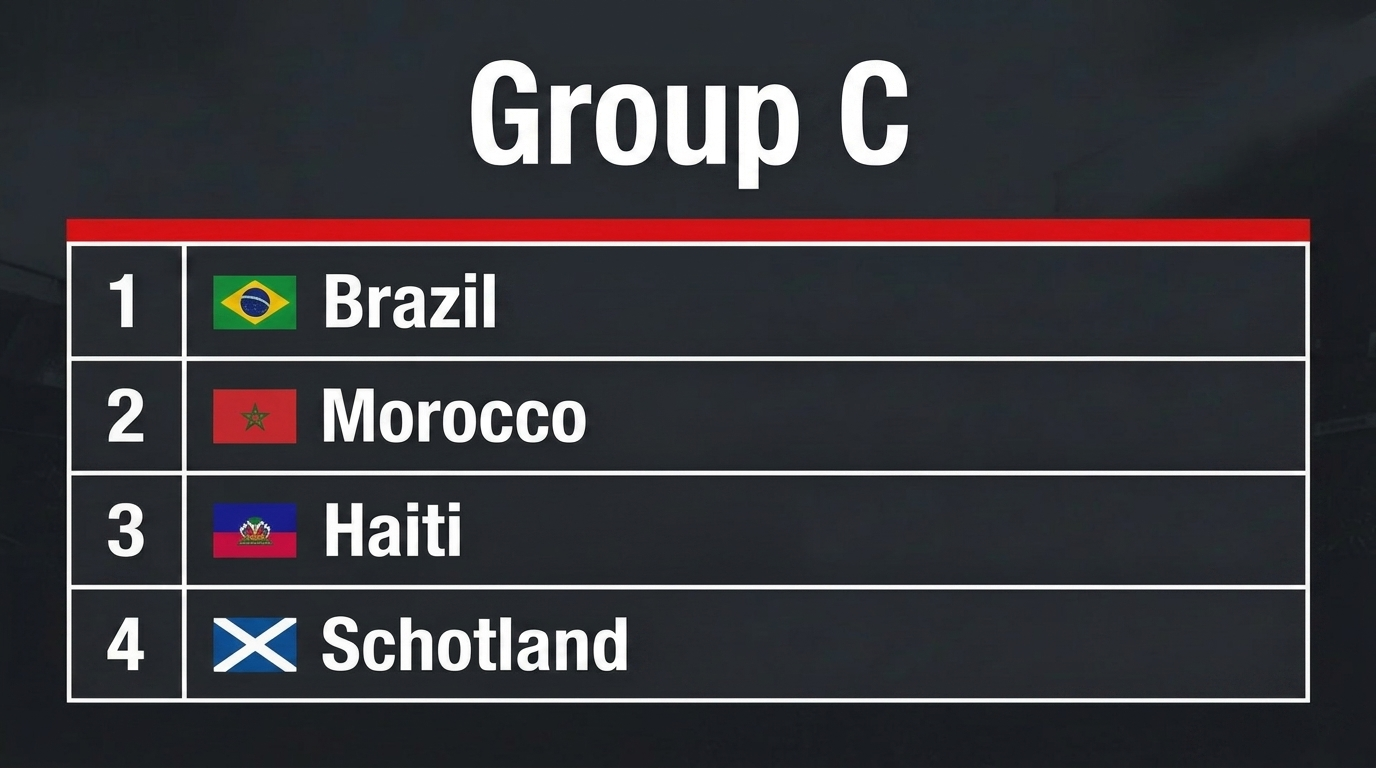
The opener against Brazil at MetLife Stadium on 13 June is the tournament’s most compelling early matchup for neutral observers and for bettors alike. Morocco’s counter-attacking system against Carlo Ancelotti’s Brazil – a side that lost Rodrygo to an ACL injury before the tournament – creates genuine tactical uncertainty at +400 odds for a Morocco win. The second fixture against Scotland at Gillette Stadium in Foxborough on 19 June carries different pressures: Steve Clarke’s disciplined, physical Scottish side – returning to the World Cup after 28 years – will make the fixture extremely competitive, and Scotland’s set-piece quality could cause Morocco defensive problems that Brazil’s individual quality might not. The group closes against Haiti in Atlanta on 24 June, a match Morocco will expect to win comfortably.
| Date (BST) | Match | Venue | Stage |
| 14 June 23:00 | Brazil vs Morocco | MetLife Stadium, East Rutherford (New Jersey) | Group C |
| 19 June 23:00 | Scotland vs Morocco | Gillette Stadium, Foxborough (Boston) | Group C |
| 24 June 23:00 | Morocco vs Haiti | Mercedes-Benz Stadium, Atlanta | Group C |
As group runners-up, Morocco would face the winner of Group D (USA’s group) in the Round of 32. See our full World Cup 2026 groups guide for the complete bracket.
Odds & Predictions: Morocco’s Value Case in an Open Bracket
Morocco are currently priced at around 50/1 to win the 2026 World Cup outright with the major UK bookmakers – making them the leading African representative in the tournament odds market and, on most books, the shortest-priced non-European/non-South American team in the tournament. The implied probability at 50/1 is approximately 2%, and our editorial view is that this price fairly reflects both the genuine quality of the squad and the significant uncertainty created by the managerial change, the AFCON trauma and the difficulty of their group opening.
The more interesting betting angles are in the progression markets. Morocco at 1/9 to qualify from Group C is effectively a certainty play that makes more sense as an accumulator leg than a standalone bet. The more compelling price is Morocco to win the group – currently around 4/1 – which is genuinely interesting if you believe their counter-attacking system can contain or defeat Brazil in the opening fixture. BetMGM’s group preview analysts argued that Morocco’s defensive metrics against elite European opposition make them a live underdog in the Brazil fixture at +400, and their record in knockout football against higher-ranked teams across the 2022 tournament provides historical evidence for exactly this kind of upset.
For the tournament at large, Morocco at 50/1 represents the African continent’s clearest value proposition. Of the nine African qualifiers at this tournament, none carry the tactical sophistication, the European talent pool or the proven knockout mentality that Morocco possess. The managerial change is a genuine risk that the market has correctly factored in, but the players remain, the defensive system is established, and Hakimi’s individual quality in the bracket could produce decisive moments in the early knockout rounds. At 50/1, a small outright position is defensible as a long-shot value punt backed by evidence rather than sentiment. For all the latest Morocco prices, visit our World Cup 2026 odds hub.
Our prediction: Morocco to qualify second from Group C behind Brazil, advance through the Round of 32 in a tight encounter against the USA or a comparable Group D qualifier, and exit at the Round of 16 against a major European opponent. The caveat is that if Ouahbi solves the central defensive question quickly and Amrabat returns to 2022 form, the quarter-final scenario is entirely plausible for a team that reached the semi-finals four years ago and whose key players are at the peak of their careers.
Morocco’s story at the 2026 World Cup is one of transition carrying the weight of history. The players who electrified the world in Qatar are mostly still here, older and more experienced, playing under a manager who must earn their trust in the space of three group matches. That precarious, compelling dynamic makes the Atlas Lions one of the most watchable – and most difficult to definitively price – teams in North America this summer.