

England arrive at the 2026 World Cup as genuine contenders for the first time in 60 years – not on the basis of hope, but on the weight of structural evidence. A perfect qualifying campaign, the most favourable group draw any major contender received, a bracket that keeps Spain, France’s knockout-round dominance and Argentina away until the semi-finals at the earliest, and the deepest pool of Premier League talent ever assembled under a single England manager. Thomas Tuchel, the German who replaced Gareth Southgate after the Euro 2024 final defeat by Spain, has transformed the Three Lions into a possession-based, structurally coherent unit that averaged 64% ball retention in his tenure and conceded zero goals in eight qualifying matches. This is the comprehensive guide to England at World Cup 2026 – squad, tactics, qualifying record, Group L opponents and our expert predictions. For full tournament context, visit our World Cup 2026 hub, and for more on the tournament that could bring football home, see our dedicated Is it Coming Home guide.
England’s Road to North America: The Tuchel Revolution
 The England story for 2026 begins in Berlin on 14 July 2024. Spain beat England 2-1 in the Euro 2024 final, Mikel Oyarzabal’s 86th-minute winner ending a tournament in which England had somehow reached the showpiece despite failing to convince at any point. Gareth Southgate, architect of England’s best modern tournament runs – 2018 semi-final, 2021 Euros final, 2022 quarter-final – resigned within days. The FA moved quickly and controversially, appointing Thomas Tuchel in October 2024. A German taking charge of the national team attracted predictable tabloid scepticism. What it attracted inside the FA was a coaching intellect shaped by Champions League success at Paris Saint-Germain and Chelsea, and a tactical sophistication that Southgate – a fine tournament manager but never a tactician of the highest order – simply could not match.
Tuchel’s impact was immediate and measurable. England secured qualification after just six games and finished with a 100% record in Group K, scoring 22 goals while conceding none. They were the first European nation to qualify, sealing their place in Riga with two matches to spare. The defensive structure – built on a high press, compact lines and John Stones stepping into midfield alongside Declan Rice – conceded nothing across eight competitive matches. The attacking output of 22 goals at an average of 2.75 per game, including 5-0 demolitions of both Serbia and Latvia, sent a message to the rest of Europe: the era of England grinding out results through individual quality despite a tactical void was over. For the first time since 1966, England went to a World Cup as a properly managed international side.
Thomas Tuchel: The Tactical Mind England Needed
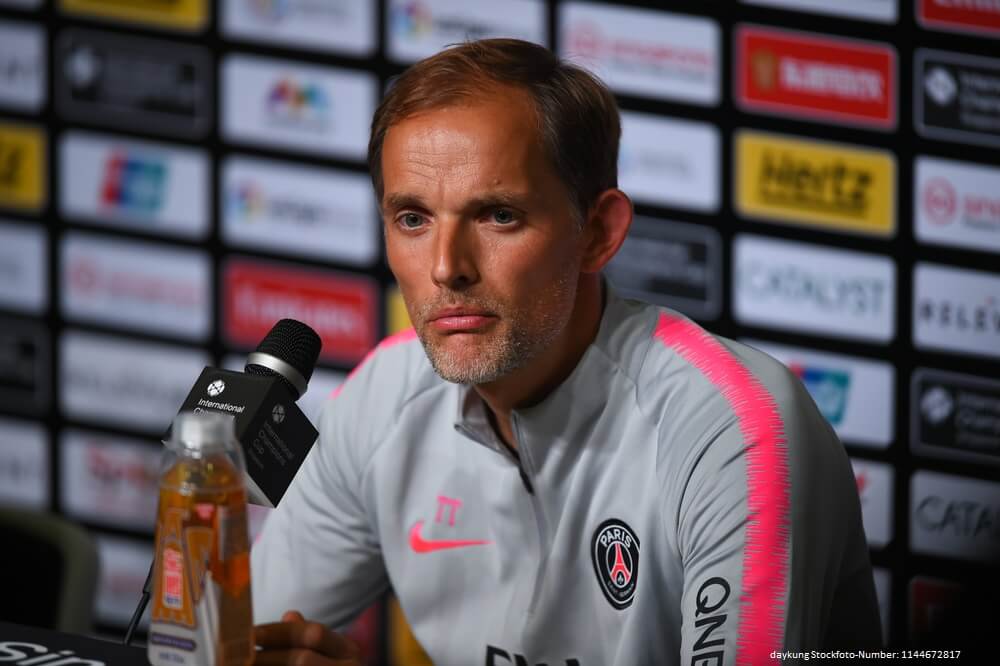
Thomas Tuchel was born in Krumbach, Bavaria, in 1973 and built his coaching career through Augsburg, Mainz and then Borussia Dortmund, where his use of pressing structures and positional play first drew international attention. At Paris Saint-Germain he won five Ligue 1 titles and reached the 2020 Champions League final. At Chelsea he won the Champions League, the FA Cup and the Carabao Cup in 14 months before being dismissed in September 2022. At Bayern Munich he reached the Champions League semi-finals in 2024 before leaving by mutual consent. No previous England manager carried comparable trophy credentials at club level.
His tactical system with England is built around a 4-2-3-1 shape that morphs during possession into a 3-2-5, with John Stones stepping into midfield to create numerical superiority against opposition presses. Declan Rice anchors below Stones, screening the back four while releasing the players ahead of him to operate in advanced positions. Jude Bellingham functions as the primary half-space occupier between the double pivot and the forward line, receiving the ball in pockets between defensive lines and driving forward. Kane leads the press from the front, dropping deep to play passes that most centre-forwards cannot conceive, let alone execute, before arriving in the box to finish.
The results in qualifying were historic in their defensive solidity. England’s xGA (expected goals against) across eight qualifying matches was approximately 3.2 total – conceding zero despite an expected tally that generous finishing from opponents could theoretically have translated into actual goals. Under Tuchel, England have reduced their vulnerability to counter-attacks – the recurring weakness of the Southgate era – by maintaining defensive shape more consistently when transitioning from attack to defence. The 64% average possession figure across his tenure is the highest any England manager has posted in the era of comprehensive tracking data. The pressing system requires physical excellence from every outfield player, which makes fitness monitoring between now and 11 June the critical variable for England’s entire tournament approach.
England’s 2026 World Cup Squad: Key Players
| Position | Key Player | Club | Caps | Int’l Goals |
| GK | Jordan Pickford | Everton | 68+ | 0 |
| RB | Reece James | Chelsea | 30+ | 1 |
| CB | John Stones | Manchester City | 75+ | 3 |
| CB | Marc Guéhi | Newcastle United | 20+ | 0 |
| LB | Nico O’Reilly | Manchester City | 5+ | 0 |
| DM | Declan Rice | Arsenal | 55+ | 3 |
| CM | Jude Bellingham | Real Madrid | 40+ | 15+ |
| AM | Cole Palmer | Chelsea | 15+ | 5+ |
| RW | Bukayo Saka | Arsenal | 50+ | 14+ |
| LW | Anthony Gordon | Newcastle United | 15+ | 4+ |
| ST | Harry Kane | Bayern Munich | 95+ | 68+ |
Harry Kane – Captain, Record-Breaker, Tournament Decider
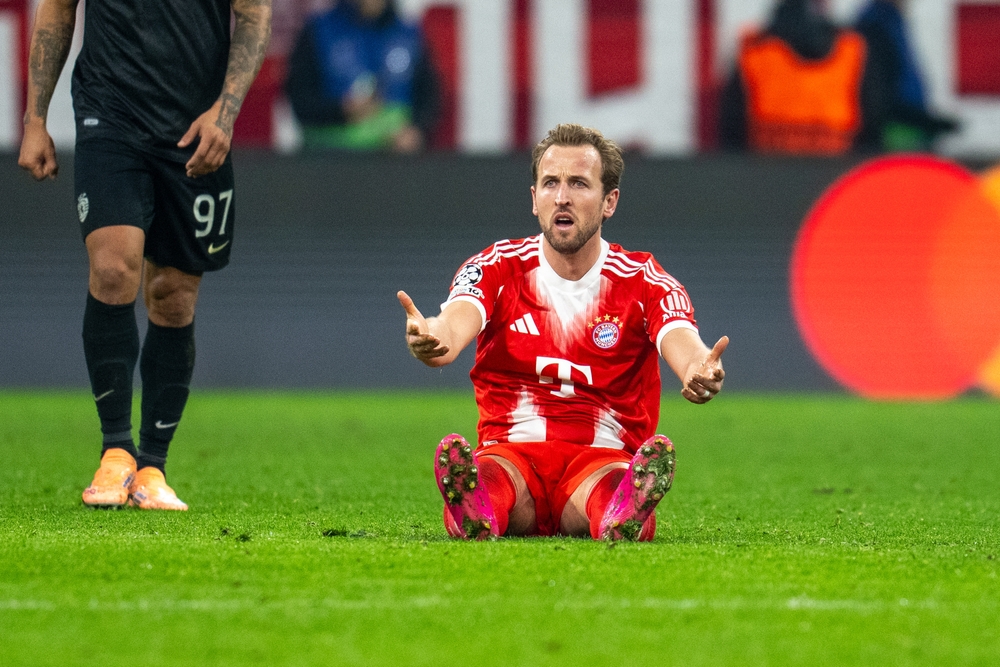
Harry Kane is England’s all-time leading scorer and the single most important player in Thomas Tuchel’s system. At Bayern Munich this season he has been extraordinary – registering 50+ goals across all competitions in 2025-26 – and arrives at 32 in the form of his career. Kane brings more than goals: his ability to drop deep, hold the ball under pressure and play incisive passes into advancing midfielders makes him the axis around which England’s entire attacking structure rotates. Tuchel has been blunt on his importance, having stated after England’s 1-0 loss to Japan – a match Kane missed through injury – that no team in the world can replace what Kane provides. He won the 2018 World Cup Golden Boot with six goals and is among the leading candidates for the 2026 equivalent at 7/1. The entire England tournament depends on him staying fit and sharp. For detailed analysis of Kane’s World Cup prospects, see our Harry Kane profile.
Jude Bellingham – England’s Generational Talent
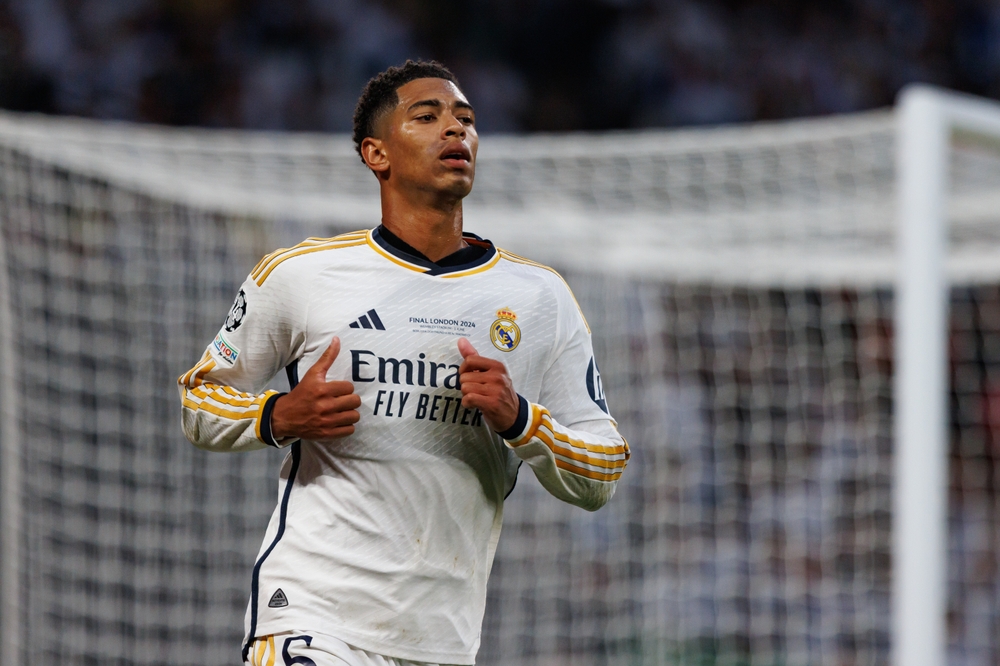 Jude Bellingham is, at his best, the most complete midfielder playing international football in 2026. His 2023-24 season at Real Madrid – where he scored 23 La Liga goals from midfield, including critical Champions League contributions – announced him as the game’s most dynamic box-to-box force. Under Tuchel he operates in the Raumdeuter role that the manager used so effectively with similar profiles at Chelsea and Dortmund – occupying half-spaces, receiving between lines and driving forward with purpose. The concern entering the tournament is fitness: Bellingham has been returning from a hamstring injury and has not played consistently since February 2026. He was absent from the March friendlies against Uruguay and Japan, and was being reintroduced carefully ahead of the tournament. A fully fit Bellingham gives England a dimension that no opponent can plan for; an underprepared Bellingham is a risk to the system’s balance. For full analysis of Bellingham’s role and form, see our Jude Bellingham guide.
Bukayo Saka – England’s Most Consistent Performer
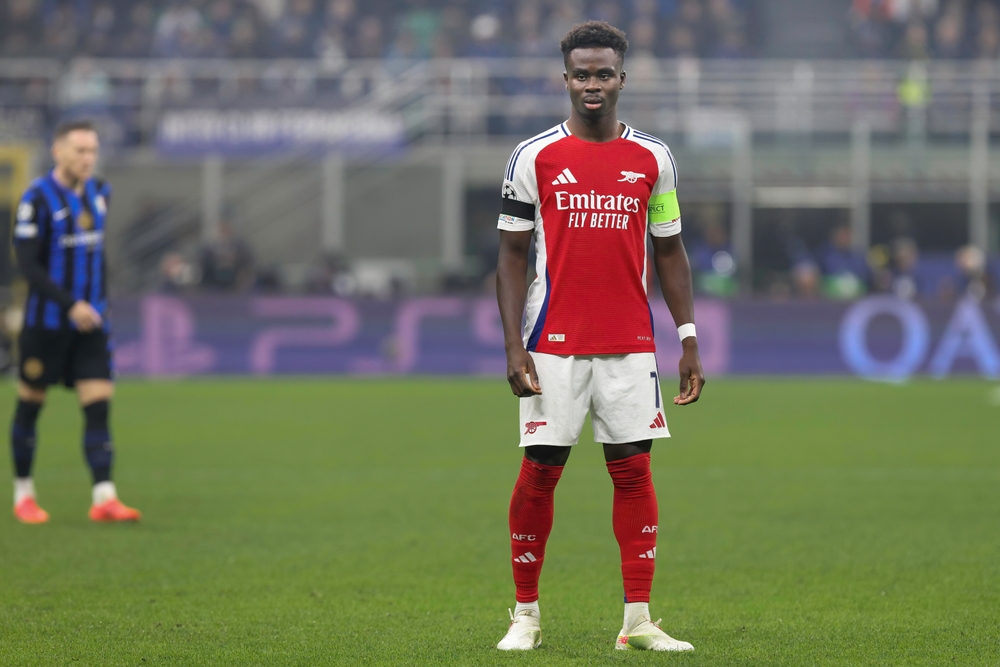
Bukayo Saka is the player Tuchel turns to first when building his team and the last he expects to leave the starting XI. The Arsenal forward has been consistent for both club and country to a degree unusual even among elite players – his directness from wide positions, the combination of pace, technical quality and end-product that makes him impossible to defend against at full speed, and the willingness to accept enormous defensive responsibility on the right side of England’s press structure. With 14 international goals, Tuchel has been explicit that he wants Saka to score more – noting in a squad meeting that he considered the tally too low given the quality. Saka missed the March friendlies through injury, but his return to fitness before the tournament was confirmed. He is one of the most important figures in the England dressing room as well as on the pitch. Full profile: Bukayo Saka World Cup guide.
Declan Rice – The Engine Room of the Tuchel System
Declan Rice is the player who makes Tuchel’s system work structurally, and has been one of the Premier League’s best midfielders since his £105m move to Arsenal in 2023. As the single pivot below John Stones in England’s build-up shape, he screens the back four, wins second balls, distributes simply and quickly to Bellingham and Saka, and provides the positional discipline that allows England’s full-backs to push forward. His Premier League statistics under Arteta – in terms of ball recoveries, progressive passes and pressure success rate – are consistently among the top five midfielders in the division. Rice captained England in Kane’s absence during the March camp. At 27, this is the World Cup he has been building towards since breaking through at West Ham in 2018.
Cole Palmer – The Wild Card in England’s Creative Arsenal
Cole Palmer emerged as England’s most creative option when playing time under Tuchel allowed him to demonstrate the difference between his technical level and the rest of the squad’s attacking midfielders. His 2024-25 Premier League season at Chelsea – 22 goals and 14 assists in 35 appearances – was one of the finest individual campaigns by an English player in years, and it earned him a secure place in the tournament squad’s creative tier. Palmer operates in the spaces behind Kane and Bellingham, finding passes that others cannot see and arriving late to score when opponents have narrowed to contain the primary threats. His role in the final 26 is now secure; his role in the starting XI – particularly if Bellingham returns to full fitness – will depend on Tuchel’s tactical assessment of each individual opponent.
Strengths, Weaknesses and the Data Behind England’s Campaign
Strengths: The headline statistic from England’s qualifying campaign is 22 goals scored, zero conceded across eight matches – a defensive record matched by no other European qualifier in the 2026 cycle. The combination of John Stones as a ball-playing centre-back capable of operating as a third midfielder, Declan Rice’s screening intelligence and Jordan Pickford’s growing authority in the penalty area has created a defensive structure that is harder to break down than any England back line since the 1966 era. England average 64% possession under Tuchel and rank in approximately the 95th percentile for opponent pass completion rate allowed in the final third – meaning opponents complete fewer successful passes in England’s third of the pitch than against virtually any other major international side. Tuchel’s system also creates a pressing trap in the middle third that forces teams into turnovers in dangerous areas, generating scoring opportunities from England’s own defensive action.
Weaknesses: The system’s dependency on Harry Kane is the most acute structural fragility in any top-six World Cup contender. England’s March 2026 results without Kane – 1-1 Uruguay, 0-1 Japan – were mediocre performances from a squad that, even without its talisman, should be beating those opponents. Without Kane’s deep-lying movement, the entire attacking structure becomes easier to defend: Bellingham and Saka are forced into positions that require more individual brilliance and less collective organisation. The backup striker situation – Dominic Solanke, Ollie Watkins, Phil Foden as a false nine – offers no equivalent profile to Kane. The left-back position, with Nico O’Reilly emerging as a potential first-choice having previously been a midfielder, carries the tournament uncertainty of a converted player in an unfamiliar role at the highest level. Reece James’s fitness remains uncertain with a hamstring complaint reported as recently as March 2026.
England’s Perfect Qualifying Campaign: Full Results
England maintained a 100 per cent record in Group K. Having defeated Albania 2-0 and Latvia 3-0 at home, they kicked off their away campaign with a 1-0 win against Andorra before beating the same opposition 2-0 at home. They sent a statement to the rest of Europe by dismantling Serbia 5-0 and followed it up with another 5-0 demolition of Latvia, sealing their spot at the 2026 World Cup with two games to spare. They completed the campaign with 2-0 wins at home to Serbia and away to Albania, going through the entire series without conceding a single goal.
| Match | Date | Venue | Score | Scorers (ENG) |
| England v Albania | Mar 2025 | Wembley | 2-0 | Lewis-Skelly, Kane |
| England v Latvia | Jun 2025 | Wembley | 3-0 | James, Kane, Eze |
| Andorra v England | Jun 2025 | Andorra la Vella | 0-1 | Kane |
| England v Andorra | Sep 2025 | Wembley | 2-0 | Garcia (og), Rice |
| Serbia v England | Sep 2025 | Belgrade | 0-5 | Kane, Madueke, Konsa, Guehi, Rashford |
| Latvia v England | Oct 2025 | Riga | 0-5 | Gordon, Kane 2, Toñiševs (og), Eze |
| England v Serbia | Nov 2025 | Wembley | 2-0 | Saka, Eze |
| Albania v England | Nov 2025 | Tirana | 0-2 | Kane 2 |
Group K final standings: P8 W8 D0 L0 GF22 GA0 GD+22 Pts24. England finished first and qualified directly. Albania qualified via the play-offs. England’s qualifying goal difference of +22 from eight games was the highest of any European qualifier in the 2026 cycle.
England’s World Cup History: Sixty Years and Counting
England invented football and have won it exactly once – on 30 July 1966, at Wembley, when Geoff Hurst’s hat-trick and Bobby Moore’s captain’s composure delivered a 4-2 victory over West Germany before 97,000. That remains the only major international trophy in the history of the men’s game for England, and its shadow – stretching six decades – defines everything about how the nation relates to its national team. The last 60 years have produced two semi-finals (1990, 2018), a Euros final (2021), and multiple quarter-final exits, always with the same combination of genuine quality in the squad and consistent failure to deliver it when the matches mattered most.
| Year | Stage Reached | Exit | Notable |
| 1966 | Champions 🏆 | – | Hurst hat-trick in final vs W. Germany 4-2 |
| 1970 | Quarter-final | W. Germany 3-2 (aet) | Led 2-0, collapsed |
| 1982 | Second group stage | Unbeaten but eliminated | 0 goals conceded, 0 goals in decisive games |
| 1986 | Quarter-final | Argentina 2-1 | Maradona Hand of God + Goal of Century |
| 1990 | Semi-final | W. Germany (pens) | Pearce and Waddle missed; Gazza wept |
| 1998 | Round of 16 | Argentina (pens) | Beckham red card; Owen wonder goal |
| 2002 | Quarter-final | Brazil 2-1 | Ronaldinho chip; Seaman catch that wasn’t |
| 2006 | Quarter-final | Portugal (pens) | Rooney red card, Ronaldo wink |
| 2010 | Round of 16 | Germany 4-1 | Lampard ghost goal; humiliation in Bloemfontein |
| 2014 | Group stage | Eliminated in groups | Luis Suárez bite; Uruguay and Costa Rica exit |
| 2018 | Semi-final | Croatia 2-1 (aet) | Kane 6 goals, Golden Boot; Southgate’s finest hour |
| 2022 | Quarter-final | France 2-1 | Kane penalty miss; Bellingham emergence |
Group L: Croatia, Ghana and Panama – England’s Path to the Round of 32
England’s group draw is the most generous a top-four seed received at the 2026 tournament. Group L at the draw in Washington DC on 5 December 2025 paired them with Croatia, Ghana and Panama – three opponents that present progressively diminishing difficulty over England’s three group fixtures. All three matches are broadcast free-to-air in the UK on BBC and ITV, with kick-off times that – unlike many previous overseas World Cups – are manageable for UK viewers. For the complete Group L breakdown and tactical analysis, see our dedicated World Cup 2026 Group L guide.
| Match | Date | BST KO | Venue | TV | England odds |
| England v Croatia | 17 Jun 2026 | 9:00pm | AT&T Stadium, Dallas | ITV/ITVX | 4/6 |
| England v Ghana | 23 Jun 2026 | 9:00pm | Gillette Stadium, Boston | BBC/iPlayer | 1/3 |
| England v Panama | 27 Jun 2026 | 10:00pm | MetLife Stadium, New Jersey | ITV/ITVX | 1/5 |
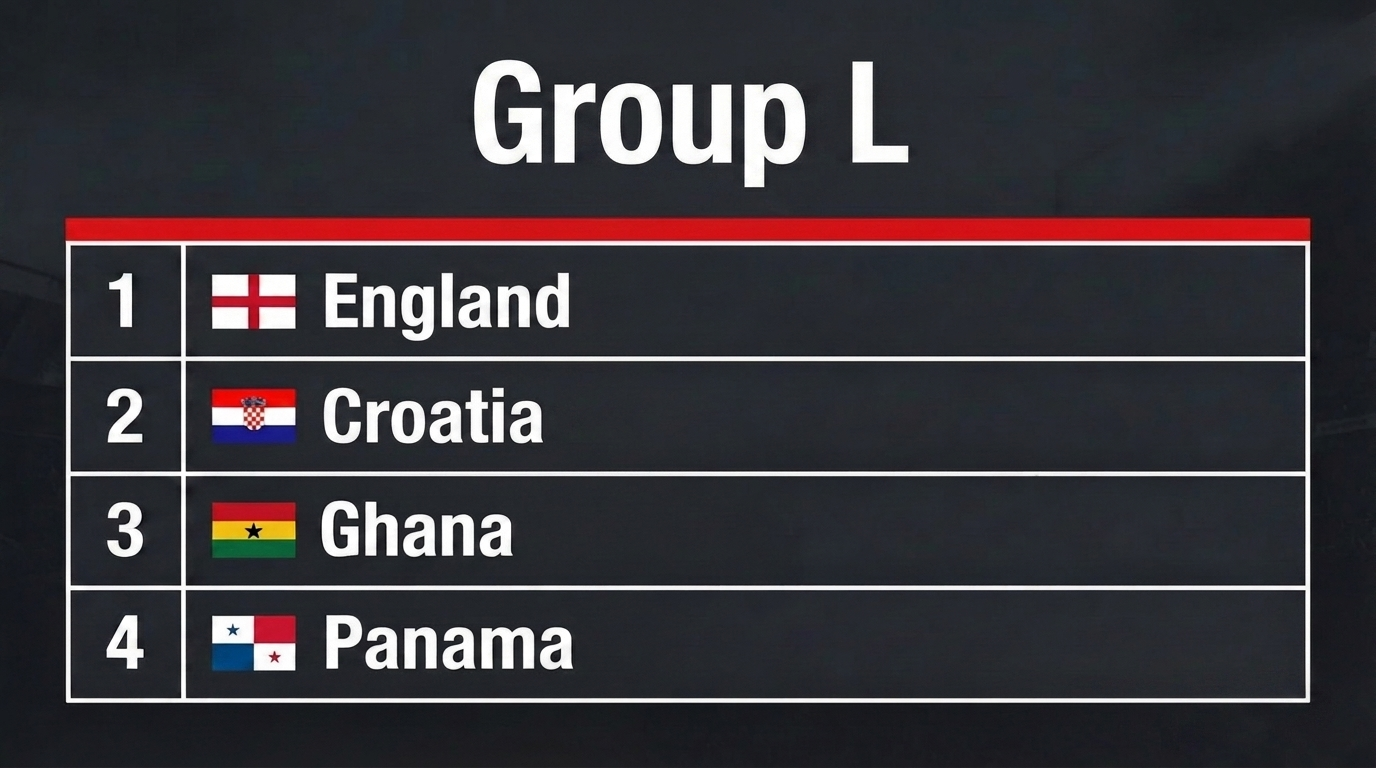
Croatia (opening fixture, 17 June, Dallas): The narrative writes itself. Croatia knocked England out of the 2018 semi-final in Moscow, winning 2-1 after extra time. Luka Modrić arrives at 40, almost certainly in his final World Cup, and the Vatreni’s experienced defensive structure will make this far from a routine win. However, the 2026 Croatian squad is a generation past its 2018 peak – Modrić and Kovačić remain, but the defensive cohesion of Dejan Lovren’s generation has not been replaced. England at 4/6 to win in Dallas is considered likely to be the right side of value.
Ghana (second fixture, 23 June, Boston): Ghana’s strength lies in Premier League-based talent – Thomas Partey, Jordan Ayew and others who will be familiar opponents to Kane, Rice and Saka from the domestic season. They are well organised and difficult to break down, but their attacking threat against a settled England side is limited. England to win by two or more is the appropriate framing for this fixture.
Panama (final group fixture, 27 June, MetLife): Panama’s World Cup record is limited – they have appeared only once previously, at Russia 2018, where they lost all three group games and conceded 11 goals. England should win this comfortably. The MetLife Stadium venue in New Jersey is England’s largest group-stage fixture in terms of stadium capacity (82,500) and will have the biggest British travelling support of the three matches.
England’s World Cup 2026 Odds and Our Predictions
England are priced at 6/1 to win the tournament outright. The implied probability at 6/1 is approximately 14.3%. Our editorial assessment places England’s true probability of winning the tournament at approximately 16-18%, making the 6/1 price either fair or slightly underpriced depending on how one weights the fitness variable. The structural arguments are among the strongest England has carried into any World Cup in the modern era: the draw, the bracket, the squad quality and the tactical sophistication of Tuchel’s system all align simultaneously in a way that may not recur for a generation.
| Market | Odds (approx.) | Our prediction |
| England to win World Cup | 6/1 | Best bet in the top tier of the market |
| England to win Group L | 1/3 | Confident – three wins expected |
| England to reach semi-finals | 4/1 | Likely – bracket strongly favours England |
| England to reach final | 8/1 | Realistic ceiling if fitness holds |
| Harry Kane top scorer | 7/1 | Primary recommendation – structure built for it |
| Jude Bellingham anytime scorer (Group stage) | 6/4 | Strong value if fitness confirmed |
| England to beat Croatia (Group L) | 4/6 | Slight value – difficult but probable |
For the full odds breakdown across every England-related market, see our World Cup 2026 odds guide, and for every analysis and prediction across the tournament, return to our World Cup 2026 hub. Scotland fans should also read our full Scotland World Cup 2026 guide.
Sixty years since 1966. The draw has been kind. The bracket has aligned. The squad is ready. Whether Harry Kane can finally lift the trophy that has eluded every English generation since Bobby Moore – and whether football is indeed coming home to the nation that gave it to the world – will be answered across 39 days in North America beginning on 11 June 2026.