

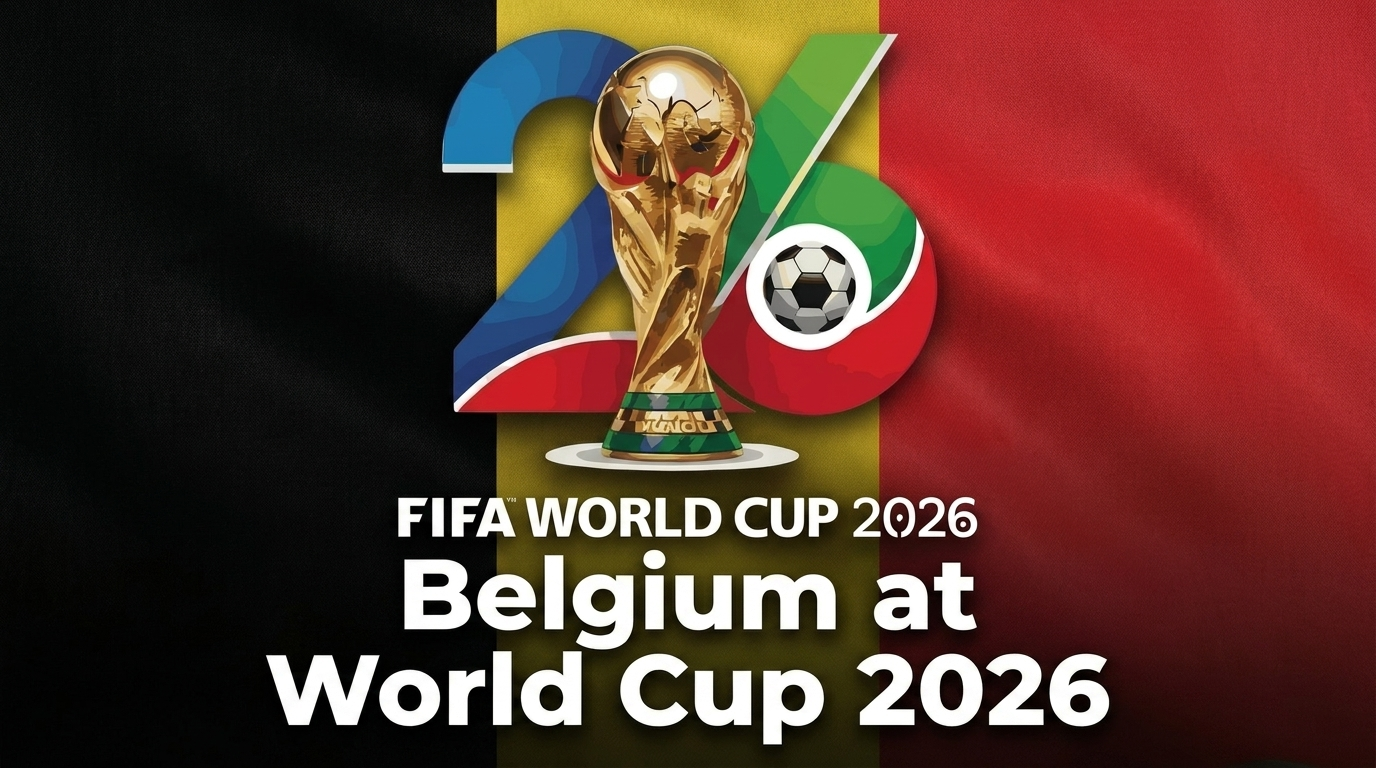
 Belgium’s golden generation never delivered the trophy it promised. From 2014 to 2022, a constellation of world-class talent – De Bruyne, Hazard, Lukaku, Courtois, De Bruyne – carried the weight of an entire nation’s expectations through four successive tournaments without ever claiming the prize their ability demanded. The best finish was third place at Russia 2018. That generation is now in its final chapter, and the Belgium World Cup 2026 squad represents something genuinely different: a squad in transition, with the old guard lending experience to a wave of young attackers who have announced themselves across Europe’s top leagues with real conviction. Rudi Garcia, appointed in January 2025, has the task of stitching those generations together into a coherent tournament team in North America. The group draw has been kind – Egypt, Iran and New Zealand in Group G is the most favourable European draw at this tournament – and the attacking firepower Garcia can deploy makes Belgium dangerous at any stage. The question is whether the defensive rebuild that has quietly accompanied this transition holds firm when knockout football’s merciless intensity arrives. For those looking at the World Cup 2026 outright market, Belgium at 35/1 sits in intriguing territory: too good to dismiss entirely, too historically inconsistent to trust blindly. Read on for our complete Belgium World Cup 2026 squad guide, tactical breakdown and expert betting predictions.
Belgium’s Road to the World Cup
 Belgium qualified for the 2026 World Cup as winners of UEFA Group J, finishing their campaign unbeaten across eight matches in a group that included Wales, North Macedonia, Kazakhstan and Liechtenstein. The headline statistic is commanding enough: 18 points, a goal difference of +22 and qualification confirmed with a 7-0 home thrashing of Liechtenstein on the final matchday. But the full story of this qualifying campaign is more nuanced – and more instructive – than the scoreline suggests.
The group was not without drama. Belgium were held 1-1 by North Macedonia in their opening fixture in June 2025, a result that briefly opened the door for Wales. When they faced Wales in October, it produced one of qualifying’s most extraordinary encounters: Belgium surrendered a three-goal lead at home before Kevin De Bruyne’s 88th-minute strike settled a 4-3 thriller. The return match brought a 4-2 away victory in Cardiff that ended Welsh hopes of automatic qualification. These results confirmed both Belgium’s attacking capacity and the defensive fragility that has become the squad’s most persistent structural concern.
Garcia, who had also steered Belgium through a Nations League relegation play-off against Ukraine in his first two matches in January 2025, emerged from qualifying with the contours of his preferred system clearly established: a 4-2-3-1 built around De Bruyne’s creativity and Doku’s pace, with Amadou Onana and Youri Tielemans providing the defensive midfield screen. Thibaut Courtois has not featured for Belgium since the fallout under his predecessor Domenico Tedesco, leaving Nottingham Forest’s Matz Sels as the established number one – a capable shot-stopper, but an unproven presence in knockout football at the highest level.
Manager & Tactics: Garcia’s Transition Plan and the De Bruyne Question
Rudi Garcia’s appointment as Belgium manager in January 2025 was a surprise in some quarters – his previous roles had all been at club level, most recently at Napoli, and international management represented new territory for the 62-year-old Frenchman. His track record at club football is substantial: a Ligue 1 and Coupe de France double at Lille in 2011, a Champions League semi-final with Roma, and extensive experience managing high-profile squads across France, Italy and Saudi Arabia. What he has brought to Belgium is tactical discipline and an unapologetic pragmatism that his predecessors sometimes lacked when tempted to accommodate too many high-profile individuals simultaneously.
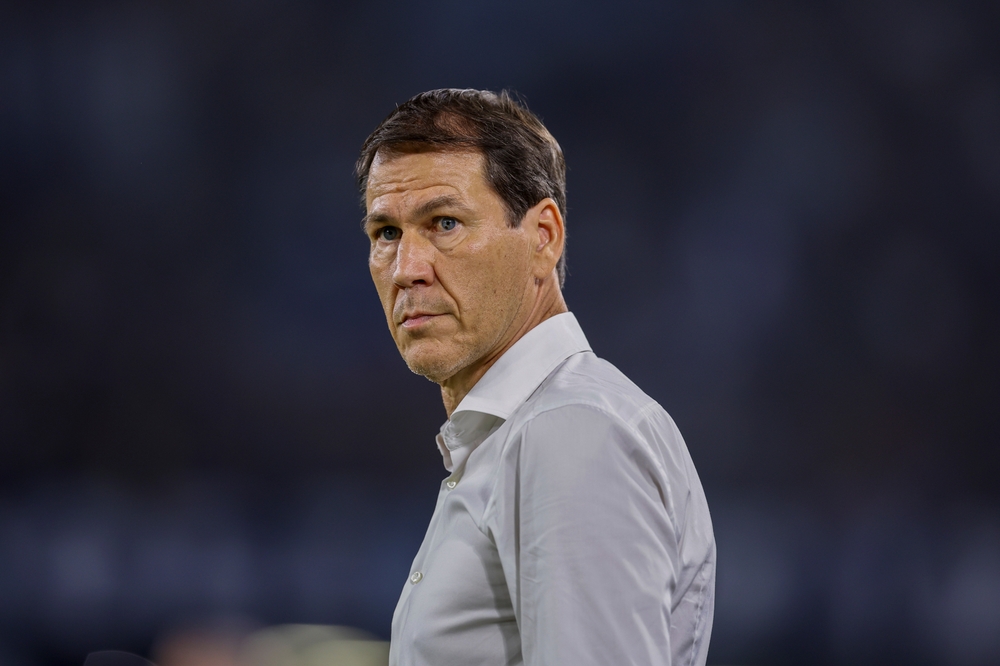
Garcia’s default formation is a 4-2-3-1 with Tielemans and Onana sitting as the double pivot, De Bruyne operating behind the striker as an advanced ten with the freedom to find dangerous pockets, and Doku and a wider option – most likely Alexis Saelemaekers or Leandro Trossard – stretching the wide channels. Lukaku leads the line when fit, his combination with De Bruyne representing the experience of Belgium’s highest-scoring partnership in recent international football history. The system asks De Bruyne to carry significant creative responsibility from a central position, which is both the squad’s greatest strength and, given his age and ongoing injury management, its greatest risk.
The tactical identity Garcia has established is counter-attacking in nature: Belgium sit in a organised mid-block, invite opponents to build, and then transition rapidly through De Bruyne’s range of passing and Doku’s direct running. The March 2026 friendlies – a 5-2 victory over the United States and a 1-1 draw with Mexico – gave Garcia the opportunity to test squad depth in the absence of Courtois and a resting Lukaku, and the results confirmed that the attacking quality extends beyond the headline names. Openda off the bench, De Ketelaere alongside De Bruyne, and a resurgent Trossard all contributed, suggesting the transition from golden generation to new era has more depth than critics have assumed.
The defensive concern is real, however. Belgium conceded in five of their eight qualifying matches, allowed ten goals across two dramatic encounters with Wales alone, and the centre-back partnership behind Tielemans and Onana remains unsettled. Garcia has yet to identify the first-choice pairing with the same conviction he shows in his attacking selections, and against Mohamed Salah and Egypt’s counter-attacking speed on the opening matchday in Seattle, that vulnerability will be immediately tested.
Squad & Key Players
Belgium’s squad combines veterans in their final international chapter with a wave of young attacking talent that ranks among the most exciting in European football. The Premier League is well represented: Doku at Manchester City, Trossard at Arsenal, Onana at Aston Villa, and Senne Lammens having an impressive debut season at Manchester United between the sticks. The Serie A contingent is equally notable, with De Bruyne and Lukaku at Napoli, De Ketelaere and Saelemaekers at AC Milan, and Openda at Juventus.
| Position | Player | Club | Age |
| GK | Matz Sels | Nottingham Forest | 33 |
| GK | Maarten Vandevoordt | RB Leipzig | 23 |
| GK | Senne Lammens | Manchester United | 23 |
| RB | Timothy Castagne | Fulham | 29 |
| CB | Zeno Debast | Sporting CP | 21 |
| CB | Arthur Theate | Frankfurt | 24 |
| CB | Koni De Winter | AC Milan | 23 |
| LB | Maxim De Cuyper | Brighton & Hove Albion | 23 |
| MF | Youri Tielemans (c) | Aston Villa | 29 |
| MF | Amadou Onana | Aston Villa | 23 |
| MF | Kevin De Bruyne | Napoli | 34 |
| MF | Nicolas Raskin | Rangers | 23 |
| MF | Hans Vanaken | Club Brugge | 32 |
| FW | Romelu Lukaku | Napoli | 32 |
| FW | Jérémy Doku | Manchester City | 23 |
| FW | Leandro Trossard | Arsenal | 30 |
| FW | Loïs Openda | Juventus | 25 |
| FW | Charles De Ketelaere | Atalanta | 24 |
| FW | Alexis Saelemaekers | AC Milan | 25 |
Squad reflects Garcia’s selections across the 2025-26 international windows including the March 2026 friendlies. Thibaut Courtois remains absent following the dispute under predecessor Tedesco. Lukaku missed March matches through injury management but is expected in the World Cup squad. Final 26-man list confirmed by 1 June 2026.
Kevin De Bruyne – Midfielder, Napoli
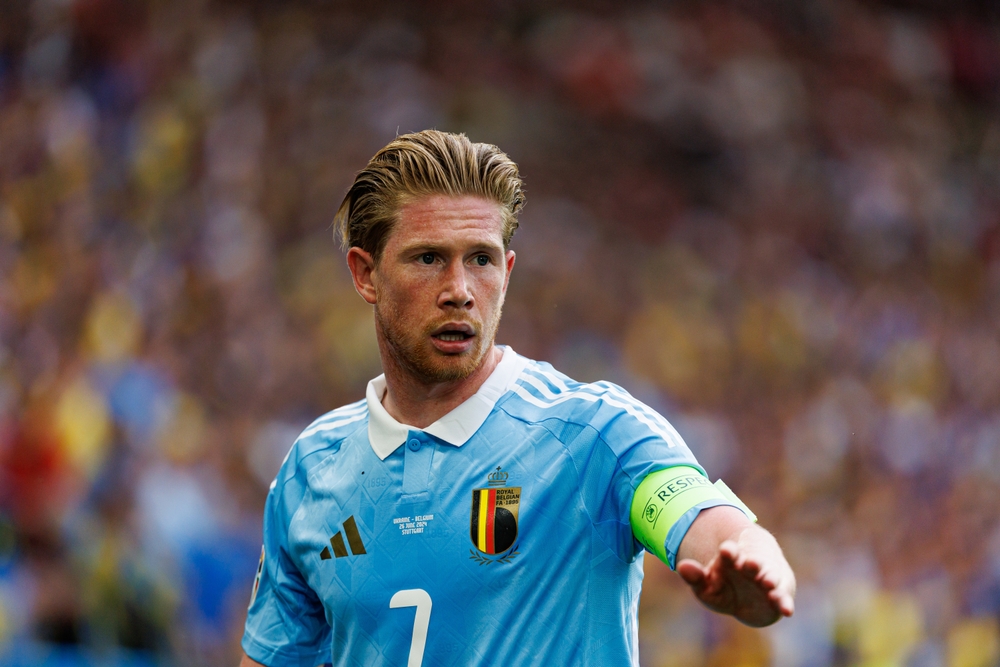
Belgium’s greatest player turns 35 during the tournament, and this is almost certainly his final World Cup. His qualifying contribution – six goals – confirmed that his creative and direct threat from central positions has not faded, even if the injury management Garcia has deployed around him (he missed portions of the campaign) means Koeman and opposing managers will plan around a player who cannot be guaranteed 90 minutes across five or six knockout matches. When De Bruyne is on the pitch and fit, however, he remains capable of moments that change tournaments. His range of passing, dead-ball delivery and ability to arrive in the box from deep are qualities that no other player in this squad replicates. The Napoli move appears to have revitalised him, but Belgium’s tournament ambitions rest uncomfortably on a 35-year-old with a recent injury history.
Jérémy Doku – Forward, Manchester City
The 23-year-old Manchester City winger is Belgium’s most exciting attacking weapon and the player on whom Rudi Garcia builds his wide game. Doku averaged 4.9 successful dribbles per 90 minutes in the Premier League this season – the highest of any player in the division – and his five goals and three assists in qualifying demonstrated that he delivers at international level. His pace on the counter-attack against Egypt’s defence and Iran’s defensive structure will be Belgium’s primary attacking asset in the group stage. At 23, he arrives at this World Cup with the potential to announce himself as one of the tournament’s defining players.
Romelu Lukaku – Forward, Napoli
Belgium’s all-time top scorer with 89 international goals, Lukaku carries the weight of every national record alongside the physical and injury concerns that have complicated his career since the 2022 World Cup. A serious pre-season injury kept him out of the early part of the club season, but his return to Napoli form and inclusion in the March squad suggest he will be available for the tournament. His hold-up play, aerial dominance and penalty-box threat make him irreplaceable in Garcia’s system when fit; without him, the physical presence and goal-scoring focal point the attack requires is simply not available from any other player in the squad.
Amadou Onana – Midfielder, Aston Villa
The Aston Villa midfielder has become Belgium’s most important defensive midfield player under Garcia, his combination of pressing intensity, ball recovery and physical presence in front of the back four complementing Tielemans’ distribution beautifully. At 23, Onana is the defensive heart of the next Belgium generation and his Premier League experience across an entire demanding season provides exactly the conditioning and competitive hardening that major tournament football requires. His importance in containing Salah’s between-the-lines movements in the opener against Egypt cannot be overstated.
Leandro Trossard – Forward, Arsenal
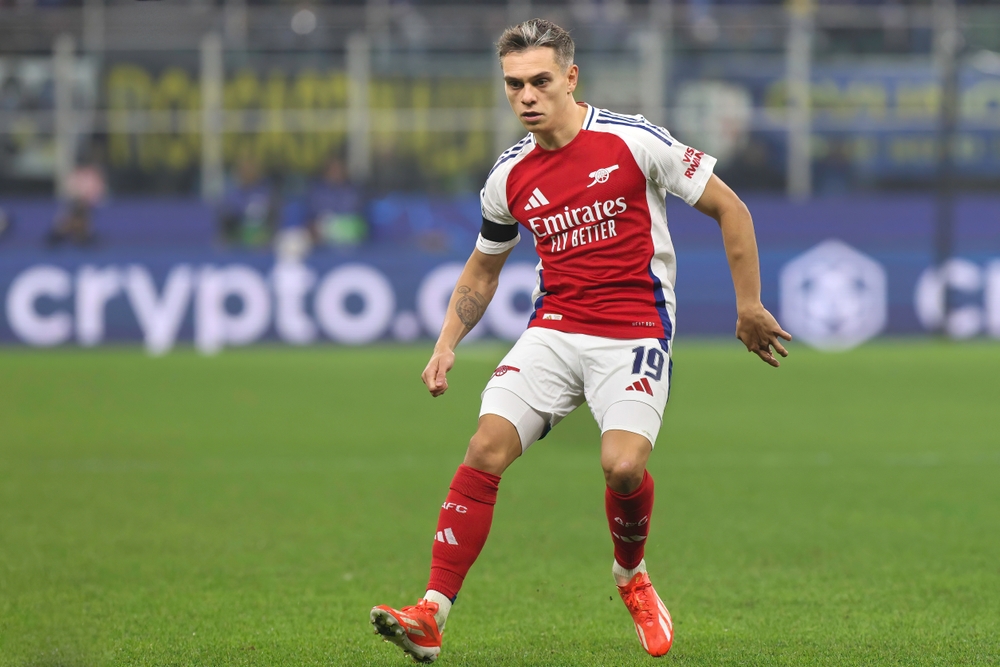
The Arsenal forward brings experience, versatility and consistent delivery from wide or central positions that makes him one of Garcia’s most trusted attacking options. His ability to play across multiple positions in the front three gives Rudi Garcia tactical flexibility in managing Lukaku and De Ketelaere’s minutes across the group stage. His performances at Arsenal this season – leading the club in goal involvements – confirm he is at peak form heading into the tournament.
Strengths & Weaknesses
Strengths
Belgium’s attacking depth is extraordinary and genuinely difficult for any opposition to plan against across multiple matches. Garcia can field an entirely different front three from match to match – Lukaku, Doku, Trossard in one configuration; Openda, De Ketelaere, Saelemaekers in another; with De Bruyne threading the creative needle from behind in either combination. This variety means opponents cannot prepare a single defensive blueprint that neutralises the Belgian attack across a group stage of three different matches, let alone a knockout run. The 5-2 win over the United States in the March friendly, played without Courtois and with Lukaku rested, demonstrated the depth of the attacking pool without the headline names.
The Premier League experience within the squad is significant. Doku, Trossard and Onana all play for Arsenal and Manchester City – two of the three clubs competing for the Premier League title this season – while Tielemans and Onana share the Aston Villa midfield. This level of consistent high-pressure European club football provides a mental and physical preparation base that complements the squad’s technical quality. When knockout matches require the ability to perform under intense scrutiny, this group has the experience to deliver.
The group draw, quite simply, could not have been more favourable. Egypt, Iran and New Zealand represent the softest available group for any European top-eight nation at this tournament, and Belgium’s attacking firepower should be sufficient to secure qualification comfortably and arrive in the knockout rounds with confidence and rhythm intact.
Weaknesses
The defensive structure is the campaign’s central concern. Belgium conceded ten goals in eight qualifying matches against opposition that included Wales and North Macedonia – nations ranked well below the top tier of international football. The absence of Thibaut Courtois, who remains estranged from the national setup following the Tedesco fallout, is a significant loss in terms of the psychological authority a world-class goalkeeper provides. Sels is a dependable Nottingham Forest number one who has impressed in the Premier League, but his tournament pedigree at the highest international level is minimal. The centre-back pairing behind Tielemans and Onana remains the squad’s least settled area, and the transition from the physical era of Kompany and Alderweireld to the current generation has yet to find the same defensive solidity.
Age and fitness are significant dual concerns in the key positions. De Bruyne at 34 with an injury history, Lukaku at 32 with serious injury disruptions across recent seasons, and Axel Witsel at 37 still requiring minutes – the squad’s most important players occupy positions where their ability to sustain performance across a full month-long tournament is legitimately uncertain. Garcia has managed workload carefully in the qualifying campaign, but knockout football cannot be scheduled around injury management.
The historical pattern, too, is instructive. Belgium have qualified for every major tournament since 2014 with impressive group-stage records, only to falter in the knockout rounds when the quality of opposition increases. The quarter-final exits at Euro 2016, Euro 2020 and the 2022 World Cup confirm that this squad’s inability to deliver under maximum pressure is a structural problem rather than merely bad luck. Until that pattern breaks, the market is right to price Belgium as an outsider rather than a contender.
Qualifying Campaign
Belgium’s UEFA Group J qualifying campaign was unbeaten but far from uncomplicated. Garcia’s side began in June 2025 – delayed by the Nations League relegation play-off window in March – and navigated eight matches with five wins, three draws and zero defeats, finishing three points ahead of Wales in second. The headline results tell only part of the story: the two encounters with Wales produced seven goals conceded across the double header before Belgian class ultimately prevailed, and two draws against North Macedonia exposed the defensive frailties that Garcia has spent much of his tenure attempting to address.
De Bruyne’s six qualifying goals – including the 88th-minute winner to complete a remarkable 4-3 comeback against Wales – and Doku’s five goals and three assists were the individual highlights of a campaign that confirmed Belgium’s attacking quality while raising persistent questions about the back line’s reliability under sustained pressure.
| Team | P | W | D | L | GF | GA | GD | Pts | Status |
| Belgium | 8 | 5 | 3 | 0 | 23 | 6 | +17 | 18 | Qualified |
| Wales | 8 | 4 | 4 | 0 | 21 | 11 | +10 | 16 | Play-offs |
| North Macedonia | 8 | 3 | 4 | 1 | 13 | 10 | +3 | 13 | Play-offs* |
| Kazakhstan | 8 | 2 | 2 | 4 | 9 | 13 | -4 | 8 | Eliminated |
| Liechtenstein | 8 | 0 | 0 | 8 | 0 | 31 | -31 | 0 | Eliminated |
World Cup History: Third Place Is Both the Peak and the Problem
Belgium have appeared at the World Cup finals on 14 previous occasions, but their record is defined by the extraordinary gap between their talent and their silverware. The best finish came at Russia 2018, when a golden generation side – Hazard, De Bruyne, Lukaku and Courtois at the peak of their powers – defeated England 2-0 in the third-place play-off in Saint Petersburg. That result remains the sole podium finish in Belgian football history, and the question of why such exceptional individual talent never produced a deeper tournament run than third place remains one of the sport’s most discussed collective failures.
Before the modern era, Belgium were a consistent if modest presence at major tournaments: group-stage appearances in 1930, 1934, and 1938, then absences until the 1970 tournament, followed by quarter-finals in 1986 and fourth place at Mexico 1986 under Guy Thys – a run guided by Jan Ceulemans that represents a high-water mark of Belgian football before the current generation’s era. They missed out entirely in 2006 and 2010 before the golden generation’s emergence saw them qualify for and progress deep into every tournament from 2014 onwards.
The 2022 World Cup in Qatar represented a particularly painful denouement for that generation: a group-stage exit despite beginning as dark-horse semi-final contenders, with internal team discord reportedly contributing to performances that never matched the squad’s talent. That failure under Tedesco led to his departure, Garcia’s appointment, and the beginning of the transition that defines the 2026 squad.
Group G & Fixtures: The Kindest Draw in the Tournament
Belgium landed in Group G with Egypt, Iran and New Zealand – a group widely described by analysts as the most favourable draw available to a European nation of their standard at this tournament. The three opponents represent a genuine step below Belgium in squad quality at every position, yet each carries specific threats that Garcia’s team cannot dismiss. Egypt’s Mohamed Salah, at what may be his final World Cup, provides a genuine match-winning threat in the opener in Seattle; Iran, ranked in the global top 20 and regular qualifiers under a settled setup, will not be easy to break down; and New Zealand’s organisation and Chris Wood’s Premier League goal-scoring quality makes even the third fixture more than a formality.
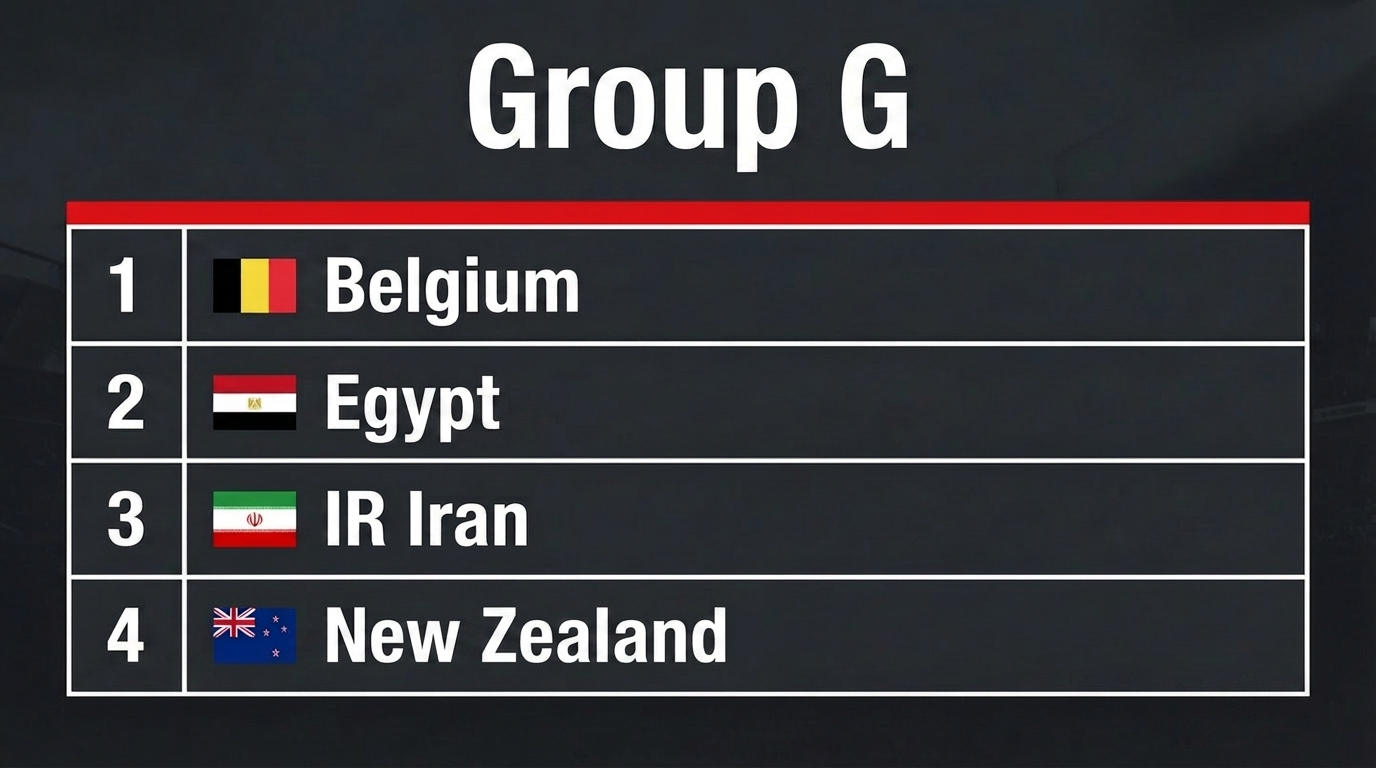
The Belgium vs Egypt opener on 15 June in Seattle is the group’s defining fixture. Egypt drew 0-0 with Spain in a March 2026 friendly and carry genuine defensive and counter-attacking capability. How Belgium manage Salah’s movement between the lines – and whether Onana can neutralise his threat effectively – will set the tone for the entire campaign.
| Date (BST) | Match | Venue | Stage |
| 15 June, 23:00 | Belgium vs Egypt | Lumen Field, Seattle | Group G |
| 21 June 20:00 | Belgium vs Iran | SoFi Stadium, Los Angeles | Group G |
| 25 June 04:00 | Belgium vs New Zealand | BC Place, Vancouver | Group G |
As group winners, Belgium would progress to the Round of 32 to face a third-placed team from another section. Detailed bracket implications are covered in our World Cup 2026 groups guide.
Odds & Predictions: The Case for Belgium as a Value Dark Horse
Belgium are currently priced at around 35/1 to win the 2026 World Cup outright with the major UK bookmakers, placing them well outside the top tier alongside Germany and Portugal in the market’s second division of contenders. The implied probability at 35/1 is approximately 2.8%, which our editorial view considers broadly fair – perhaps even very slightly generous – given Belgium’s historical inability to convert group-stage dominance into deep knockout runs, and the specific concerns around De Bruyne’s fitness and the defensive structure.
The most interesting Belgium betting angle is not the outright market but the progression markets tied to their specific path. Belgium are around 10/11 to top Group G, which looks thin given Egypt’s quality and Salah’s individual capacity to determine a single match. The more compelling construction is Belgium to qualify from the group at near-evens, combined with a punt on their quarter-final outcome once the knockout bracket becomes clearer. If De Bruyne and Lukaku are both fit and firing in the group stage, the Red Devils have the attacking quality to defeat any opponent in the Round of 32 and potentially the Round of 16 as well. It is the quarter-finals – where they have exited at three successive major tournaments – that represents the structural ceiling of ambition.
For Golden Boot markets, Doku at around 40/1 is the most interesting Belgian option given his qualifying form (five goals), his central role in the system, and his age profile suggesting peak physical output. Lukaku at similar odds offers an alternative for those who believe his return to fitness will see him rediscover the goalscoring form that has made him Belgium’s all-time record scorer.
Our prediction: Belgium to reach the quarter-finals, where the established pattern suggests elimination at the hands of a top-four side. For full outright prices and group markets, visit our World Cup 2026 odds hub for the latest prices from the major UK bookmakers.
Belgium enter this tournament at a genuine crossroads: the golden generation’s farewell, the new generation’s audition, and a group draw that presents no excuse for failure in the opening phase. The Red Devils have enough talent across every position to silence the doubters in North America – they just need De Bruyne fit, Lukaku sharp and Garcia to find the defensive answers his predecessors never managed. If all three align, the 35/1 for outright glory starts to look like a compelling flutter.