

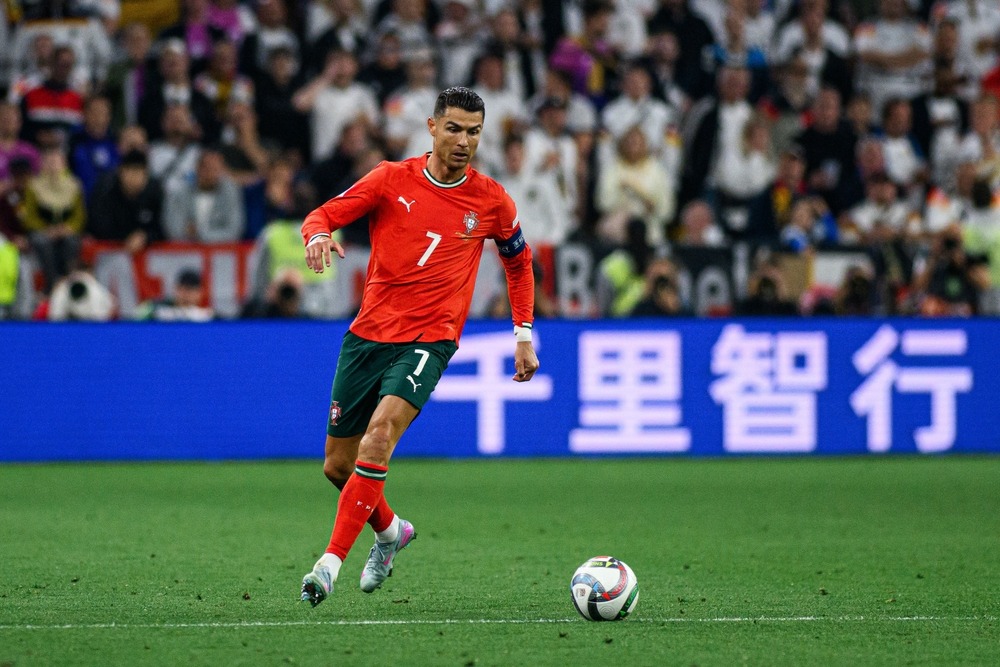
On 5 September 2025, Cristiano Ronaldo scored his 900th career goal for Portugal against Croatia in the UEFA Nations League – becoming the first men’s footballer in history to reach that landmark. By June 2025, he had already signed a two-year contract extension with Al-Nassr that made him, by a considerable margin, the highest-paid athlete in the world, earning an estimated €208 million per year in base salary alone – a figure that, due to Saudi Arabia’s zero-income-tax framework, is received in its entirety. Forbes ranked him the highest-paid athlete on the planet in 2023, 2024 and 2025, and by early 2026 his net worth had crossed $1 billion, making him football’s first active billionaire. At 41 years old – having publicly confirmed that the 2026 World Cup in North America will “definitely” be his last – Cristiano Ronaldo arrives at this summer’s tournament as Portugal’s captain, their all-time record scorer and the most followed individual on social media in the history of the internet, with over 665 million Instagram followers alone. The Cristiano Ronaldo salary at Al-Nassr, the CR7 brand empire spanning hotels, clothing and fragrances, and a Nike lifetime deal worth over $1 billion collectively place him in financial territory no footballer has previously occupied. For the complete outright market and player specials, visit our World Cup 2026 betting hub, or read profiles of every major tournament star in our World Cup 2026 players guide.
Who Is Cristiano Ronaldo?
Cristiano Ronaldo dos Santos Aveiro was born on 5 February 1985 in Funchal, the capital of Madeira, Portugal’s autonomous island region off the country’s south-western coast. He is the youngest of four children born to Maria Dolores dos Santos Aveiro, who worked as a cook and cleaner, and José Dinis Aveiro, who was a kit man at their local club and struggled with alcoholism throughout Cristiano’s childhood before dying of an alcohol-related liver condition at the age of 52 in September 2005. His name carries a specific biographical detail: he was named after Ronald Reagan, his father’s favourite actor – one of those biographical coincidences that retrospectively seems to have predicted a lifetime of global fame.
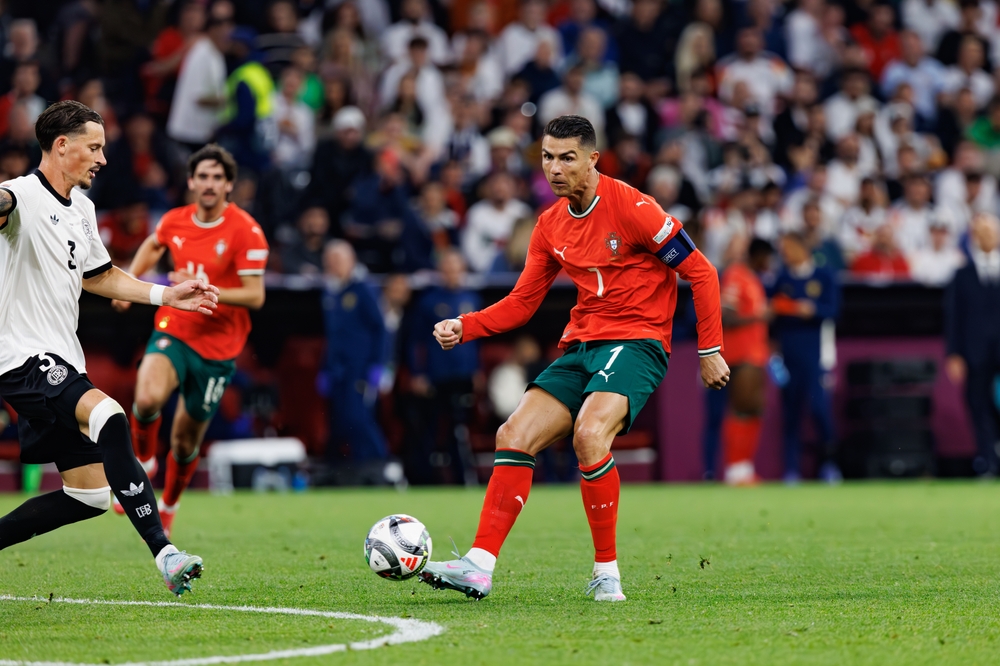
He left Madeira at 12 to join Sporting Clube de Portugal’s academy in Lisbon, making his senior debut for Sporting in 2002 and becoming the only player in the club’s history to represent the under-16, under-17, under-18, B team and first team in the same season. Manchester United signed him in 2003 for £12.24 million – the most expensive teenager in English football history at the time. He stands 188 centimetres tall, weighs 83 kilograms, is right-footed, does not drink alcohol and has no tattoos – a personal choice he has attributed to his regular blood and bone marrow donations. He captains both Al-Nassr and the Portugal national team, and is, by the measure of social media reach, the most famous individual on the planet: over 1 billion total followers across Instagram, Facebook, YouTube and X, the first person in history to reach that landmark.
Career & Honours: Five Champions Leagues, Five Ballon d’Ors and Football’s First 900 Goals
Ronaldo’s career spans four countries and five clubs, each chapter adding records that the next chapter extended rather than merely matched. At Manchester United between 2003 and 2009, he won three Premier League titles, the 2008 UEFA Champions League and the 2008 Ballon d’Or – the first of five individual awards that would confirm him as one of two players who have defined the sport’s greatest decade of individual excellence. His sale to Real Madrid for a then-world-record £80 million in 2009 began the Spanish chapter that produced his most prolific seasons: four Champions League titles, two La Liga titles, the all-time Champions League scoring record of 140 goals (a record that still stands), and four more Ballon d’Or awards across the Madrid period.
Juventus from 2018 to 2021 added two Serie A titles and the distinction of becoming the first player to win league titles in England, Spain and Italy. A return to Manchester United in 2021 ended in his departure in November 2022 after a controversial interview with Piers Morgan, and he arrived at Al-Nassr in January 2023, turning the Saudi Pro League into a globally discussed football destination through the sheer force of his name. The 2025 Nations League title with Portugal – defeating Spain in the final with Ronaldo contributing eight goals in nine tournament games – was the most recent team honour of his career.
| Club/Period | Apps | Goals | Honours |
| Manchester United (2003-09) | 292 | 118 | PL ×3, UCL 2008, FA Cup, League Cup |
| Real Madrid (2009-18) | 438 | 450 | La Liga ×2, UCL ×4, Copa del Rey ×2, Ballon d’Or ×4 |
| Juventus (2018-21) | 134 | 101 | Serie A ×2, Coppa Italia |
| Manchester United (2021-22) | 54 | 27 | – |
| Al-Nassr (2023-present) | Ongoing | 110+ | Nations League 2025 (Portugal) |
| Portugal (2003-present) | 226 | 143 | European Championships, Nations League |
Cristiano Ronaldo’s Salary, Al-Nassr Contract & Net Worth
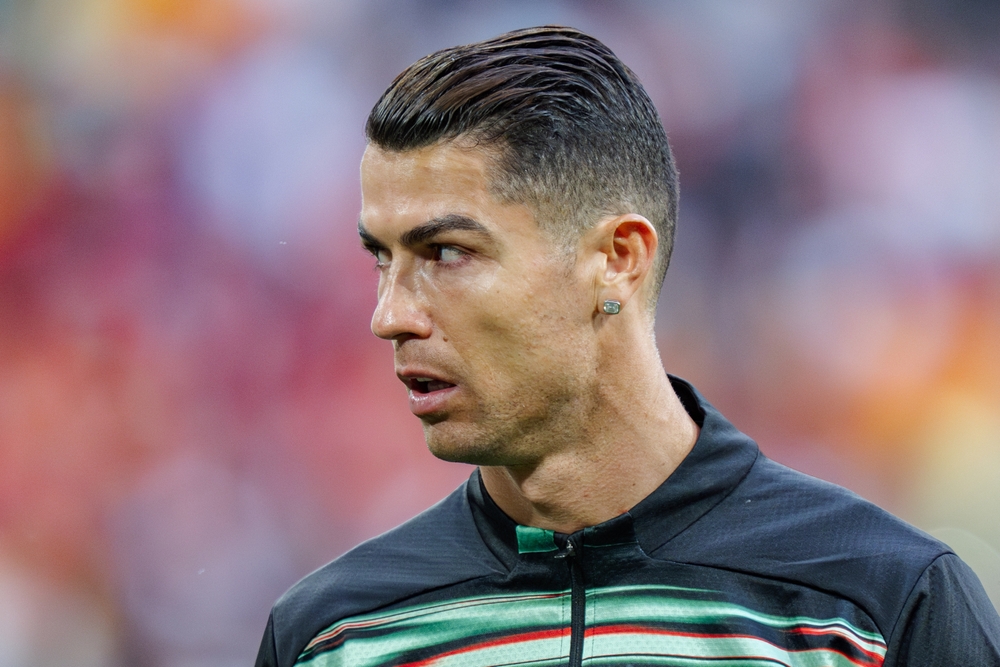
The financial scale of Ronaldo’s Al-Nassr contract – extended in June 2025 for two further years through June 2027 – requires consideration of multiple components to understand fully. According to Capology, his estimated gross fixed salary for 2025-26 is €208.4 million per year, equivalent to €4,007,692 per week, making him the highest-paid player in any football league globally by an enormous margin. SalaryLeaks, citing the June 2025 extension terms, places the base net salary at €200 million per year – a figure that, crucially, is received tax-free due to Saudi Arabia’s zero-income-tax policy for professional athletes, effectively doubling the real-world value compared to an equivalent gross salary in England or Spain where top marginal rates reach 45-52%.
Beyond the base salary, the contract structure includes a 15% equity ownership stake in Al-Nassr FC (estimated at $45-50 million current value), a €30 million signing-on bonus, and performance bonuses that Ronaldo can earn of up to approximately €40 million per season – €8 million for winning the AFC Champions League, €10 million for a Saudi Pro League title, plus individual goal and assist bonuses. The total potential annual compensation, combining all contractual elements, can reach approximately €240 million per year, with a two-year aggregate value estimated between $620 million and $936 million depending on bonus realisation, according to multiple financial analysis sources. His release clause stands at approximately $59 million – low relative to his earnings, reflecting both his age and the Saudi league’s commercial realities.
His net worth is estimated at between $1.2 billion and $1.4 billion as of early 2026, placing him in the Bloomberg Billionaires Index as football’s first active billionaire – a milestone he crossed in 2025 following the contract extension. Forbes ranked him the highest-paid athlete in the world for three consecutive years from 2023 to 2025 ($136 million, $260 million, $260 million respectively). Sportico’s April 2026 ranking placed his total historical earnings at $2.52 billion, third in the history of professional sport behind Michael Jordan and Tiger Woods.
His Nike lifetime deal, formalised in 2016, is valued at over $1 billion total – including a reported $100 million signing bonus – placing him alongside LeBron James and Michael Jordan in the exclusive group of athletes who have secured nine-figure lifetime sportswear agreements. The CR7 brand operates across hotels (Pestana CR7, a joint venture with the Pestana Group), clothing, underwear, fragrances and gyms – a consumer empire that generates substantial annual revenue independent of his football income. He acquired a 25% ownership stake in Spanish club UD Almería on 26 February 2026 through CR7 Sports Investments, a subsidiary of CR7 S.A., expanding his football ownership footprint.
Personal Life: Georgina Rodríguez, Five Children and the Madeira Spirit
Ronaldo’s personal life has been defined by the same relentlessness that characterises his football: a commitment to discipline, family and the projection of a specific image of success that he has maintained since his earliest days of celebrity. His father’s difficult life and premature death shaped Ronaldo’s approach to health and self-management – no alcohol, meticulous nutrition, obsessive physical preparation – in ways that have made him both the most physically durable footballer of his generation and, at 41, still capable of performing at elite level.
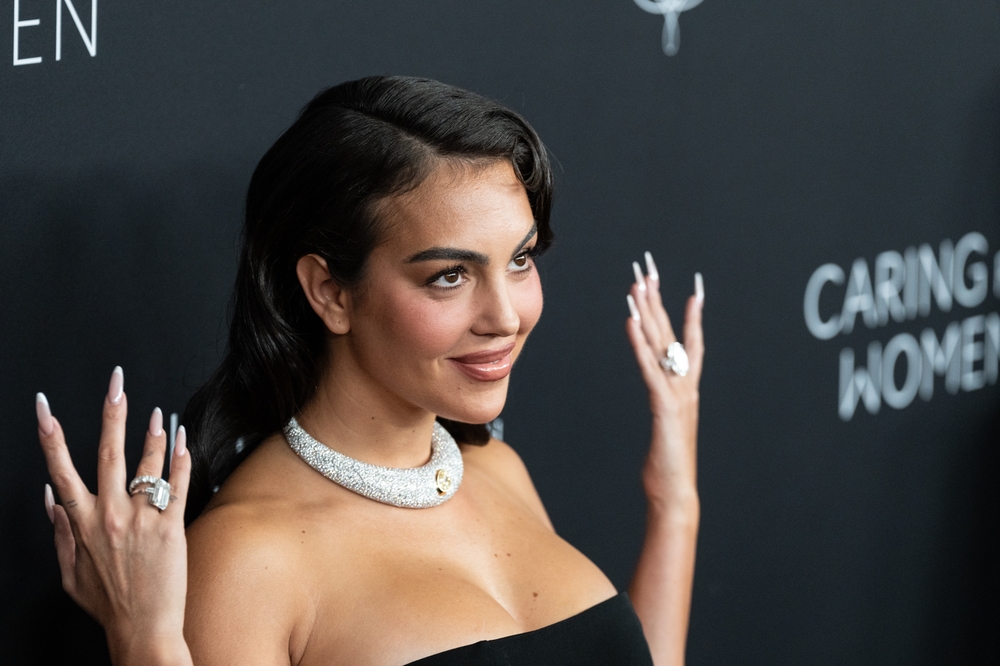
He has five living children. Cristiano Ronaldo Jr. was born in the United States on 17 June 2010; Ronaldo has full custody of the child and has never publicly identified the mother by mutual agreement. Twins Eva Maria and Mateo were born on 8 June 2017 in the United States via surrogacy. His current partner Georgina Rodríguez – an Argentine-Spanish model and influencer whom he met when she was working at a Gucci store in Madrid in 2016 – gave birth to their daughter Alana Martina on 12 November 2017. In April 2022, Georgina gave birth to twins; the boy died during childbirth, while the daughter, Bella Esmeralda, survived. Ronaldo and Georgina posted publicly about the loss: “It is with our deepest sadness we have to announce that our baby boy has passed away. It is the greatest pain that any parents can feel.” They announced their engagement via Instagram on 11 August 2025.
When he signed with Al-Nassr in January 2023, Saudi authorities made a formal exception to the Kingdom’s rule regarding unmarried couples cohabiting – acknowledging the family’s specific circumstances in a culturally significant gesture. The family’s primary base is in Saudi Arabia, with properties also maintained in Madeira and Madrid. His Gulfstream private jet, purchased in January 2025 for approximately £50 million, has become a practical necessity rather than a luxury statement given the family’s travel demands. In December 2025, it was confirmed that Ronaldo will appear in Fast X: Part 2, the latest instalment in the Fast & Furious franchise – a film commitment that extends his cultural footprint beyond football in a way that few other athletes have managed.
Ronaldo at the World Cup 2026: The Last Dance and What It Means for Portugal
Cristiano Ronaldo has publicly confirmed that the 2026 World Cup in North America will “definitely” be his last – the word was chosen carefully in a CNN interview, followed by an acknowledgement that retirement would come “probably one, two years” after the tournament. He will be 41 years old at the time of the tournament, having scored in five consecutive World Cups – a record no other player in the history of men’s football has matched – and arrives with 41 World Cup qualifying goals (the all-time record) and the Nations League title won with Portugal in June 2025 as the most recent confirmation of his continued relevance at the highest international level.
A hamstring injury caused him to miss Portugal’s March 2026 friendly matches, and his fitness ahead of the group stage opener will be carefully managed by manager Roberto Martínez. Portugal are priced at around 10/1 to win the tournament – a price built substantially around Ronaldo’s capacity to reproduce his peak performance in the knockout rounds rather than merely participate. Portugal in Group K face DR Congo, Uzbekistan and Colombia, offering Ronaldo a manageable path to the knockout stage and the goal-scoring opportunities that the Golden Boot market will track closely.
The betting market for the Golden Boot lists Ronaldo at around 20/1 – his tournament age creates genuine pricing uncertainty – but his capacity to deliver in crucial matches has been confirmed across the entirety of his career in a way that no statistical model can adequately discount. For UK bettors, the Ronaldo narrative is also an England concern: if both nations progress from their respective groups, a potential quarter-final or semi-final Ronaldo-vs-England match is the tournament’s most emotionally loaded theoretical scenario for Three Lions supporters. For the complete outright market and Portugal betting analysis, visit our World Cup 2026 betting hub.
Cristiano Ronaldo’s 2026 World Cup appearance will be the conclusion of a career that has redefined the sport’s financial, statistical and cultural boundaries simultaneously. The child from a tin-roofed house in Madeira who left his island at 12 with a single ambition to become the world’s greatest footballer will step onto a North American pitch at 41, still carrying that ambition in a body that the most disciplined nutritional and physical preparation in sporting history has made more durable than almost any analyst predicted. Whatever the result, it will be one of sport’s great final chapters. For the full guide to every major star at this summer’s tournament, visit our World Cup 2026 players guide.