

Every four years, the question arrives. It has arrived seventeen times since Bobby Moore wiped his hands on his shorts and shook the Queen’s hand at Wembley in 1966. Every time, the answer has been no – sometimes brutally, sometimes agonisingly, sometimes through individual moments of cruelty that have left a scar on a generation of supporters. The penalty shoot-outs, the Maradona hand, Beckham’s red card, Kane’s penalty over the bar against France. But if there is a single, honestly argued case for the wait ending in North America this summer, the 2026 World Cup presents it more compellingly than any edition since the tournament’s expansion to 32 teams in 1998. England have the squad. They have – arguably – the manager. They have the experience of two World Cup semi-finals and two European Championship finals accumulated across the last eight years. And for the first time in decades, the framing around the national team under Thomas Tuchel is not romantic hope but evidence-based expectation. This article makes the honest case for England winning the World Cup 2026 – and acknowledges, with equal rigour, the very real reasons it might still not happen. For squad analysis and Group L predictions, visit our England World Cup 2026 guide. For the full outright market, see our World Cup 2026 betting hub.
60 Years of Hurt: Why History Is Both Motivation and Warning
 The 60-year gap between England’s only World Cup victory and the 2026 tournament is not simply a period of failure – it is a catalogue of the specific ways that squads of genuine quality have fallen short. The 1970 team in Mexico, widely considered superior to the 1966 side that won it, led West Germany 2-0 in the quarter-final before the substitution of Gordon Banks’s replacement, Peter Bonetti, coincided with a collapse to a 3-2 defeat. The 1990 side reached the semi-finals and a generation fell in love with Gascoigne’s tears and the nation’s emotional vulnerability in front of penalties. The 1996 team at home, the 2002 team with Beckham, the 2006 “golden generation” of Lampard and Gerrard – each fell before the final hurdle, each producing a specific heartbreak that has given English football its most distinctive emotional characteristic: the ability to believe sincerely in every new beginning.
The Southgate era changed the context more than the result. Two World Cup semi-finals (2018, where England reached the last four for the first time since 1990), a World Cup quarter-final (2022), two European Championship finals (2021 and 2024, both lost on the night) – this represents a sustained level of tournament achievement that England had not managed across any comparable eight-year period since 1966. The infrastructure of tournament football – the specific mental preparation, the penalty practice, the understanding of knockout psychology that Southgate embedded across his six-year tenure – has been inherited by Tuchel and built upon rather than discarded. The England that arrives at 2026 is not starting again. It is a programme that has been preparing for this specific opportunity for a decade. For the complete England World Cup history, see our dedicated feature.
The honest warning that history provides is this: having the best squad is not sufficient. In 2022, France’s squad was arguably superior to every other nation’s and they lost the final on penalties. In 2018, Germany arrived as holders with generational talent and exited in the group stage. The tournament’s knockout structure produces variance that no amount of squad quality can fully neutralise, and England’s specific penalty shoot-out record – one win and four losses in World Cup shoot-outs – remains the programme’s most statistically stubborn competitive liability. But even acknowledging that, the 2026 case is structurally stronger than it has been in any tournament in living memory.
Why 2026 Could Be Different – Evidence, Not Hope

The case for England winning the World Cup 2026 rests on five observable factors rather than optimism:
First: squad depth. The current England squad has at its disposal a number ten who plays for Real Madrid (Bellingham), a centre-forward who is the Premier League’s all-time leading scorer at Bayern Munich (Kane), a right winger who is Arsenal’s highest-paid player (Saka), a defensive midfielder who has broken Champions League free-kick records (Rice), and a second goalkeeper who has been one of the Premier League’s most dependable operators for six years (Pickford). The depth beyond the first eleven – Phil Foden, Cole Palmer, Marcus Rashford, Trent Alexander-Arnold, Kieran Trippier – represents the broadest selection of individual quality England has had at any World Cup including 1966.
Second: tournament experience. The players who reached the 2018 semi-final, the 2021 final and the 2022 quarter-final have accumulated specific tournament experience that cannot be replicated in training camps or competitive qualifiers. Bellingham, who was 19 in Qatar and is now 22. Saka, who missed a Euro 2020 final penalty with devastating public consequence and returned stronger at every subsequent major tournament. Kane, whose 2018 Golden Boot and 2022 quarter-final goal contribution represent a sustained record of international delivery. These players know what it costs, what it takes and what it feels like to be both close and insufficient. That knowledge, applied to a tournament in which the bracket may align favourably, is a competitive advantage.
Third: the expanded format. The 48-team, 104-match format provides an additional Round of 32 that serves as a buffer between the group stage and the matches that genuinely matter. An England side that navigates Group L efficiently can effectively arrive at the Round of 16 with the tactical and physical freshness of a team that has won two and drawn one, against opponents who may have had to fight harder for their group advancement. The path to the final is now eight matches rather than seven – more opportunity, but also a structure that rewards consistency across a longer campaign.
Fourth: the bracket. England’s pathway in Pathway 2 of the expanded bracket places them on the opposite side of the draw from Argentina and Spain, the tournament’s two highest-ranked nations. If England top Group L, their potential Round of 16 opponent is a third-placed team; if they progress as runners-up, they face Group K’s runner-up (likely Colombia or Portugal). The semi-final is the earliest point at which England could theoretically face Spain or Argentina – making the path to the final the most achievable it has been since 2018.
The Tuchel Factor – German Efficiency, English Talent
The appointment of Thomas Tuchel as England manager in October 2024 generated the specific kind of cautious public optimism that comes from hiring a genuinely world-class operator – a manager who has won the Champions League (Chelsea, 2021), reached the final (PSG, 2020), managed at three of the five largest clubs in Europe and demonstrated across multiple different squads the capacity to impose tactical discipline without sacrificing individual freedom. He is, by the consensus of coaching professionals who have worked alongside him, one of the three or four most tactically sophisticated managers working in football today.
His England tenure has provided clear evidence of that quality. The qualification campaign – eight wins from eight, zero goals conceded, maximum points – was constructed with a defensive solidity that Southgate’s England never consistently achieved in qualification. The training sessions, the pre-match analysis and the specific detail of preparation that Tuchel introduced changed the culture around the squad in ways that multiple players have publicly acknowledged. When Bellingham says the team’s tactical clarity has never been higher, that is the Tuchel effect made visible.
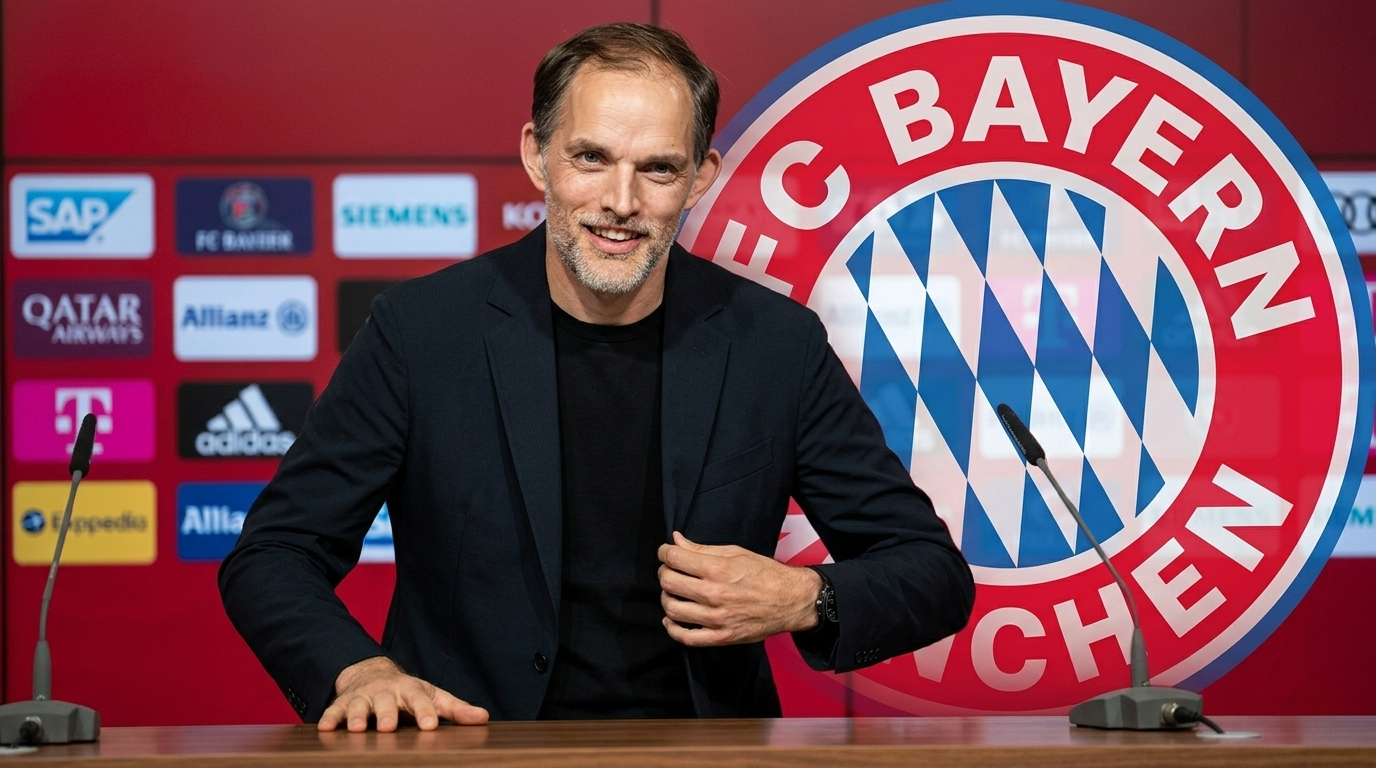
The complications are real and documented. His public comments about Phil Foden – “he struggles to show it on the pitch,” “his inclusion is not guaranteed” – generated controversy that revealed both the standards Tuchel holds and the inevitable friction of a manager who will not manage sentimentality over competitive selection. His response to the Japan and Belgium pre-tournament defeats was defensively structured rather than experimentally expansive. The final selection decisions – Foden in or out, the central defensive partnership, the second striker question – remain open in ways that suggest the system is still being finessed rather than settled.
But the core of what Tuchel brings is the one thing Southgate never fully provided: the conviction that England can win every match in every system against every opponent, regardless of occasion. That conviction has seeped into the squad, and its presence is observable in the way England’s players discuss the tournament. Not hope – expectation. That is a meaningful change.
The Squad: Is This England’s Best Generation Since 1966?
The honest answer to that question depends on how you weight different dimensions of quality, but the objective case is strong. No previous England World Cup squad has had a player of Bellingham’s combination of age and achievement – a 22-year-old who has won the Champions League, scored a bicycle kick to keep England in a European Championship and plays for Real Madrid. No previous squad has had Kane’s goal-scoring record across Premier League, Champions League and international football simultaneously. No previous squad has had Saka, who at 24 is Arsenal’s highest earner and the Premier League’s most marketable player while delivering decisive performances in every major tournament he has entered.
The midfield is where the squad’s depth is most impressive. Rice at defensive midfielder is not simply competent – he is, on current evidence, the best player in that specific position in world football. His Champions League record-breaking free kicks against Real Madrid, his Premier League dominance and his specific capacity to screen, carry and create simultaneously gives England a midfield foundation that France’s Tchouaméni, Spain’s Rodri and Brazil’s Gerson cannot straightforwardly eclipse. Behind Rice, the options – Trent Alexander-Arnold, Conor Gallagher, Adam Wharton, Kobbie Mainoo – represent Premier League-standard depth at every rotation position.
The defensive question is the one that generates genuine scepticism. The centre-back partnership between John Stones and has been functional rather than dominant in pre-tournament friendlies, and the specific vulnerability to pace in behind – exploited by Japan’s Mitoma at Wembley in March – is the tactical problem that Tuchel has not yet publicly resolved. Against France’s pace in a potential semi-final, or against Argentina’s counter-attacking depth, that vulnerability becomes existential rather than procedural.
Group L Analysis – Topping the Section Is the First Objective
England’s Group L draw – Croatia, Ghana and Panama – is one of the more manageable sections any first-seeded nation received at the December 2025 draw. The specific mathematical analysis is straightforward: Croatia are capable of taking points from England but have an ageing squad around a 40-year-old Modrić whose cheekbone surgery in April 2026 has created genuine fitness uncertainty for the opener on 17 June. Ghana are compromised by the Kudus injury that multiple sources suggest will prevent his participation, and by a managerial disruption following Otto Addo’s April 2026 dismissal. Panama are the tournament’s most realistic three-points-available fixture, similar in profile to the 6-1 England vs Panama in Russia 2018.
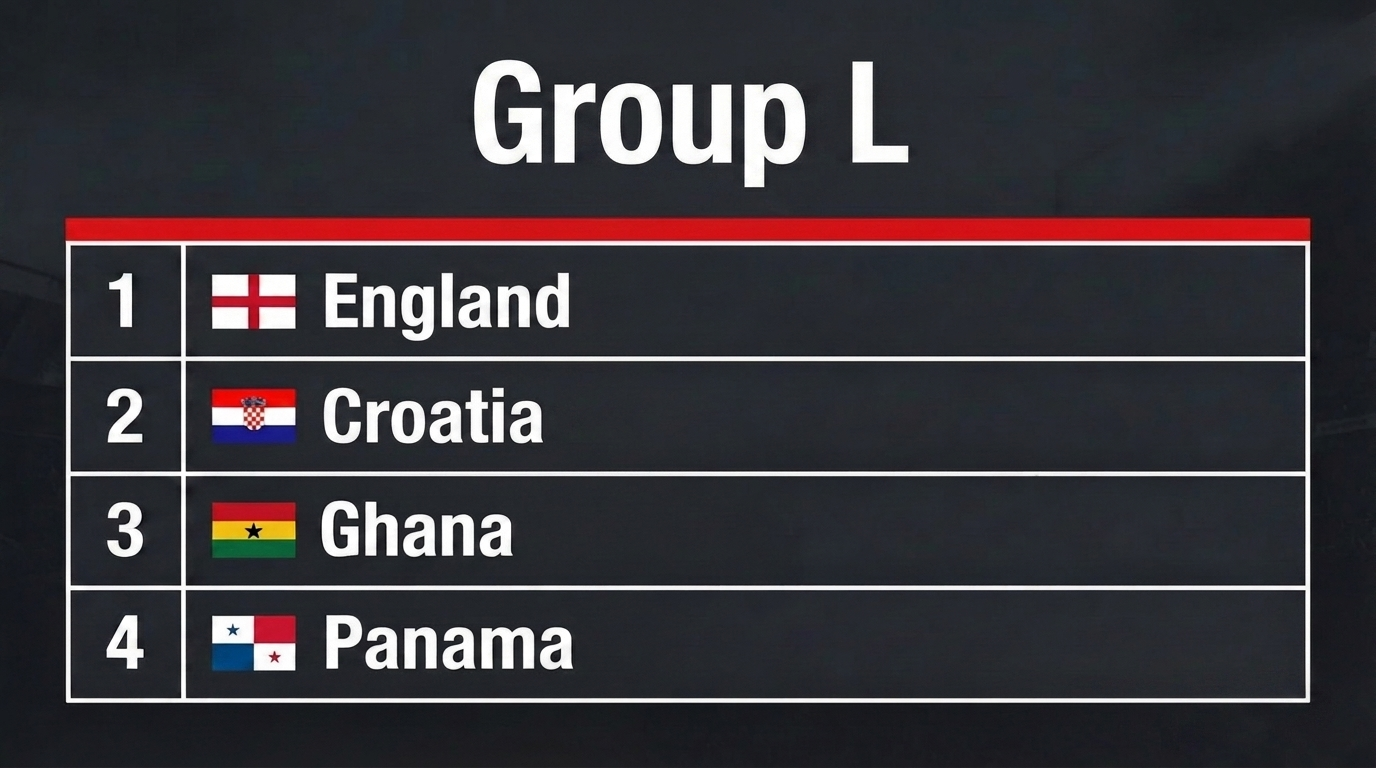
England’s qualifying record – eight wins, zero goals conceded, maximum 24 points – is the strongest European qualifying campaign in the entire tournament field. If that defensive solidity translates into the group stage, and if Kane finds his scoring form early against Croatia on 17 June at AT&T Stadium in Arlington, England should top Group L with nine points and arrive at the Round of 32 with the best possible momentum and the most favourable potential knockout path.
The one risk scenario is the Croatia opener. Modrić’s fitness, Kovačić’s potential absence through his own injury concerns, and the emotional resonance of England vs Croatia – who beat the Three Lions in the 2018 semi-final and famously in the 2007 Euro qualifying campaign – means the group stage cannot be approached with complacency. England managers who have done so historically have faced the specific consequences that complacency at major tournaments produces.
Path to the Final – The Road Through Dallas to New Jersey
England’s potential bracket pathway, based on current group positioning and the FIFA tournament structure, provides one of the more achievable routes to the final that the Three Lions have held since the expanded format was announced. As Group L winners, England would face a third-placed team from Groups E, H, I, J or K in the Round of 32 – almost certainly a nation ranked below 15th in the world. As Group L runners-up, they face Group K’s runner-up, which is most likely Colombia or a lesser Portugal qualifier – formidable but manageable.
The Round of 16 opponents from the Pathway 2 side of the bracket include the potential Group D runner-up – Australia or Paraguay – and Group G winner – Belgium, Egypt or Iran – before the quarter-finals, where a potential opponent could be Germany (Group E) or the Netherlands (Group F). The semi-final is the point at which Spain or Argentina could theoretically appear, but only if all four of those nations simultaneously navigate their own brackets perfectly. The realistic quarter-final opponent is Germany – which, given Germany’s own squad quality concerns (Musiala and Havertz fitness questions), is a genuinely winnable match for Tuchel’s side.
The specific numerical probability of this path materialising is difficult to calculate, but the market’s assessment – England at 7/1 – implies an approximately 13% tournament-winning probability. That figure incorporates all the uncertainty about knockout football’s inherent variance, and the specific risk factors around penalty shoot-outs, defensive vulnerabilities and the form dependence on a Bellingham who has been inconsistent at club level in the lead-up to the tournament.
What the Odds Say – And What the Smart Money Thinks
England are currently priced at around 7/1 to win the 2026 World Cup with UK bookmakers – placing them fourth or fifth in the outright market behind France (5/1-6/1), Spain (5/1), Argentina (7/1-8/1) and occasionally Germany (12/1-14/1). This pricing places England as credible contenders rather than outsiders, a market positioning that reflects both the objective squad quality and the specific historical risk adjustment that their penalty record and quarter-final ceiling have consistently warranted.
From an analytical value perspective, the 7/1 price is neither obviously over-priced nor dramatically undervalued. It accurately captures the following observable realities: England have the individual talent to beat any team in any individual match; they have demonstrated the specific ability to navigate group stages efficiently under Southgate and now Tuchel; they have reached two major tournament finals in the last five years; and they have never, in the modern era, won the decisive match that would confirm they are the best team at the tournament. Until that confirmation arrives, the market will discount them relative to the pure talent assessment – and that discount is precisely what 7/1 represents.
For bettors who want England-specific positions beyond the outright, the most analytically sound markets are: England to reach the quarter-finals (approximately 5/2 – broadly fair given the group draw and bracket analysis); England to win Group L (around 4/9 – slight value as the most likely outcome given their squad and qualifying form); and Harry Kane to be England’s top scorer at the tournament (approximately 6/4 – the most straightforward individual market given his 2018 Golden Boot and consistent major-tournament record). For the full current prices across all England markets, visit our World Cup 2026 odds hub.
So: can England win the World Cup 2026? Yes – more credibly than at any point in the last 40 years, with a squad whose quality, experience and tactical sophistication gives them a legitimate claim to tournament-winning status. The 7/1 price is not wishful thinking inflated by domestic sentiment. It is the market’s honest assessment of a team that has done almost everything right in preparation and now simply needs to do the one thing that has eluded them for 60 years: win every match that matters, on the night it matters, regardless of what the occasion demands. For the definitive squad guide, see our England World Cup 2026 article. For the complete England tournament record from 1950 to 2022, visit our England World Cup history hub. And for every outright and match market, see our World Cup 2026 betting hub.