

In 2018, Panama made their first-ever World Cup appearance – a tournament that ended with three defeats, zero wins and a place in history as the smallest nation, by population, to play at the tournament to that point. One of those three defeats was a 6-1 thrashing by England in a match so one-sided that the margin itself became a minor footnote. Eight years later, Panama return for only their second-ever World Cup, and they find themselves in Group L alongside England once more – a reunion that the Panama Football Federation regards as an opportunity to demonstrate how much Los Canaleros have developed under Danish manager Thomas Christiansen, who has guided them to consecutive CONCACAF Nations League finals and built the most tactically coherent Panama squad in the country’s history. The Panama World Cup 2026 squad is anchored by Aníbal Godoy – the most capped player in Panamanian football history at approximately 159 appearances – and features Adalberto “Coco” Carrasquilla, the 2023 CONCACAF Gold Cup Best Player, and Amir Murillo, the right-back who has established himself in Ligue 1 with Marseille. Nobody expects Panama to progress from Group L. The market at 50/1 to win the section is almost entirely symbolic. But Panama have been reaching CONCACAF finals and finishing second in major confederation competitions for three years running, and Christiansen’s side will arrive in North America with competitive ambition rather than just participatory pride. For the full tournament picture, visit our World Cup 2026 betting hub.
Panama’s Road to the World Cup
 Panama’s qualification for the 2026 World Cup is the clearest evidence to date of the programme’s competitive development under Christiansen. Navigating the CONCACAF qualifying structure – one of the sport’s most uniquely pressurised regional competitions – they came through both rounds without the dramatic near-misses that had characterised previous campaigns, finishing as the fourth CONCACAF nation to qualify behind the three automatic co-hosts (USA, Canada, Mexico).
The second-round stage was emphatically handled: four wins from four against Nicaragua, Guyana, Montserrat and Belize, with Panama’s superior squad quality providing margins of comfort that allowed Christiansen to test tactical variations and blood younger squad members. The third-round Group A stage was tighter, matching them against Suriname, Guatemala and El Salvador – more credible CONCACAF opponents capable of taking points. Panama’s unbeaten twelve-match run across 2025 in competitive fixtures confirmed the tactical solidity that Christiansen had installed, and on the final matchday, a victory over El Salvador secured their group and their World Cup place, with Suriname finishing as runners-up.
The programme’s ambition in the qualification period was further underlined by their run to the 2025 CONCACAF Nations League final – a competition they ultimately lost in a penalty shoot-out against Honduras – and by consistent showings in Gold Cup competition that have made Panama CONCACAF’s most reliable tournament nation behind the three host nations. They are no longer making up the numbers in regional football; they are finalists in every competition they enter, even if the final step has consistently eluded them.
Manager & Tactics: Christiansen’s Patient Build and the 4-2-3-1 System
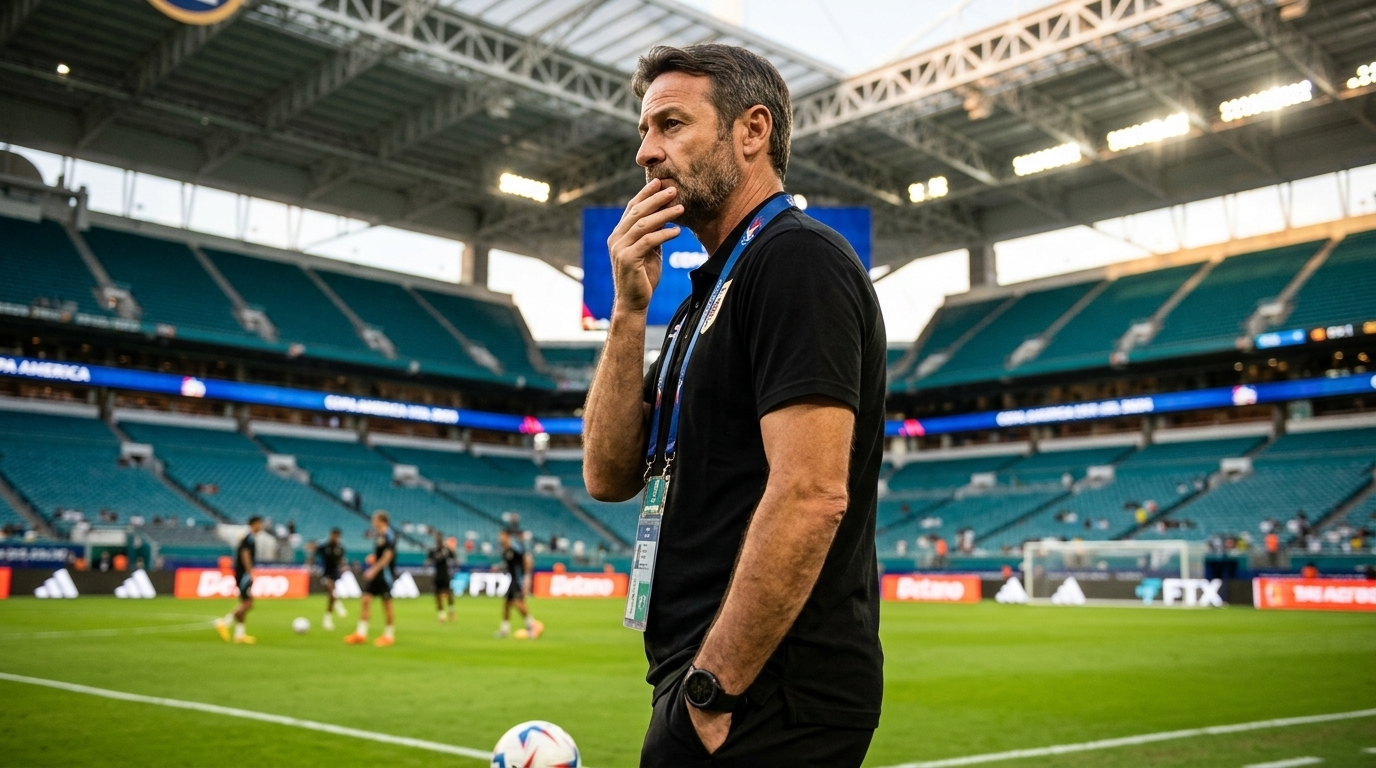
Thomas Christiansen is one of football’s more unusual managerial profiles: a Dane born in West Germany, who represented Spain internationally – earning two caps in 1993 while eligible through residency – and who was the Bundesliga’s top scorer in the 2002-03 season for VfL Bochum, finishing ahead of Giovane Élber, Fredi Bobic and a host of more celebrated strikers. His playing career took him from Barcelona’s youth system through Betis, Tenerife, Hannover, Bochum, Mallorca, Panathinaikos and AaB in Denmark. The breadth of that experience across five countries and multiple leagues gave him the tactical vocabulary that his management career has drawn upon.
After initial management experience in Cyprus with AEK Larnaca and APOEL – where he won the domestic double – Christiansen’s tenure at Leeds United in the Championship attracted wider attention, as did a spell with Union Saint-Gilloise in Belgium. The Panama appointment in 2020 was his first in international management and has proven the most sustained success of his career. He has built a tactically coherent 4-2-3-1 system that can shift to a 5-4-1 when Panama need to defend compactly against superior opposition, combining a possession-focused approach in the second round of qualifying with a more pragmatic defensive emphasis in tighter third-round matches.
The core principles are clear: Godoy and Carrasquilla as the double pivot providing both defensive stability and progressive passing from deep positions, Murillo’s advanced runs from right-back creating width on the right side, and a compact, high-tempo defensive block that makes Panama difficult to break down when they are organised and disciplined. The system has produced results in CONCACAF: consecutive Nations League finals, Gold Cup runners-up in 2023, Gold Cup finalist appearances across three cycles. The question for the World Cup is whether the same organisation can generate the attacking moments to complement the defensive solidity against England, Croatia and Ghana – teams whose individual quality is categorically superior to anything Panama have faced in their qualification campaign.
Squad & Key Players
Panama’s squad is predominantly drawn from MLS, Liga MX, the Panamanian domestic league and a small number of European-based players – a resource base that reflects the country’s developing professional football ecosystem rather than the elite European concentration that characterises England and Croatia’s squads. What the squad lacks in individual quality at the top end it compensates for with collective experience: multiple players carry over 100 international appearances, including the captain.
| Position | Player | Club | Age |
| GK | Orlando Mosquera | Al-Fayha | 31 |
| GK | Luis Mejía | Nacional | 29 |
| CB | Fidel Escobar | Saprissa | 29 |
| CB | Andrés Andrade | LASK | 33 |
| CB | Eric Davis | Club Deportivo Panama | 35 |
| RB | Amir Murillo | Marseille | 30 |
| LB | Harold Cummings | Sporting San Miguelito | 31 |
| MF | Aníbal Godoy (c) | Nashville SC | 36 |
| MF | Adalberto Carrasquilla | Nashville SC | 25 |
| MF | Édgar Bárcenas | Mazatlan | 33 |
| MF | Carlos Harvey | Minnesota United | 21 |
| FW | Ismael Díaz | Leon | 25 |
| FW | Cecilio Waterman | Unversidad | 31 |
| FW | José Fajardo | Unversidad Cotolica | 27 |
Aníbal Godoy – Midfielder (Captain)
The captain and most capped player in Panamanian football history – with approximately 159 appearances at time of writing, a figure that makes him one of the most experienced active players in all of CONCACAF – Godoy is the tactical and emotional heartbeat of Christiansen’s system. His defensive midfield intelligence, the reading of the game developed over a career spanning MLS and CONCACAF competition, provides the base from which Panama’s counter-pressing system operates. At 36, this will almost certainly be his final major tournament, and his leadership of a squad containing multiple centurions gives Christiansen’s side a specific collective maturity that compensates partially for the deficit in raw attacking quality against Group L’s more talented opponents.
Adalberto “Coco” Carrasquilla – Midfielder
The 2023 Gold Cup Best Player is Panama’s most gifted technically creative footballer – a box-to-box midfielder whose ability to receive under pressure, drive forward with the ball and deliver in the final third at CONCACAF level made him the standout individual of that competition. At 25, he is at the ideal age for a first World Cup, and his partnership with Godoy in the double pivot gives Panama their most dynamic midfield structure in the programme’s history. The quality step-up from CONCACAF to Group L opponents will be the most significant challenge of his career, and how he responds will largely determine Panama’s capacity to do anything beyond absorbing and containing.
Amir Murillo – Right-back, Marseille
The most accomplished European-based player in the Panama squad, Murillo has established himself in Ligue 1 with Marseille after spells in Belgium, the United States and France that have given him competitive experience at a level far beyond most of his international teammates. His advancing runs from right-back against less organised opposition in qualifying have generated dangerous crossing positions, and his Ligue 1 experience gives him the tactical awareness to manage the specific challenge of England’s left flank – Saka and a supporting player whose attacking output from wide positions will be the key offensive threat Panama must contain. Murillo’s ability to provide width for Panama in transition while maintaining his defensive responsibilities is the team’s most sophisticated positional dynamic.
Ismael Díaz – Forward
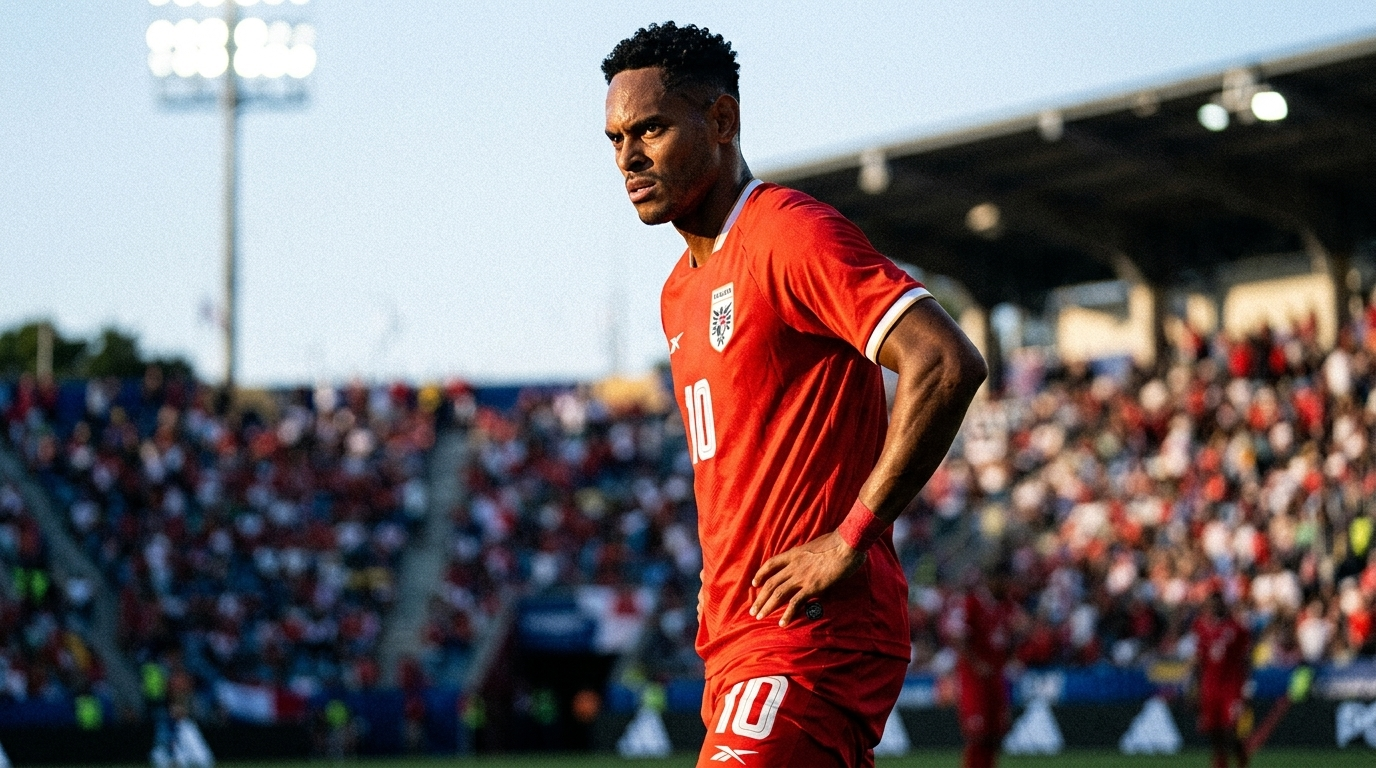
Panama’s primary individual goal-scoring threat and the player Thomas Christiansen relies upon to convert the limited opportunities that Los Canaleros generate against organised defences is José Fajardo. His scoring runs across CONCACAF Nations League and Gold Cup competition have confirmed his ability to take chances at confederation level, while his combination of link-up play and direct running gives Panama’s attack variety beyond a purely physical approach. Against England’s likely centre-back options — which currently include players such as John Stones, Marc Guéhi, Levi Colwill and potentially Jarrad Branthwaite rather than the incorrectly referenced Gallagher — Fajardo’s movement in behind would represent one of the clearest tactical tests Panama could pose to the Three Lions’ defence.
Strengths & Weaknesses
Strengths
Panama’s collective experience and tactical discipline are their most significant competitive assets heading into Group L. No team in this section – not England, not Croatia, not Ghana – carries the specific type of collective cohesion that comes from multiple players having competed together across three qualifying cycles, Nations League campaigns and Gold Cup finals under the same manager for five years. Christiansen has had the luxury of sustained tenure that most international managers at this level never receive, and the stability has produced a team that executes its system instinctively rather than mechanically. When Panama are organised defensively, they are extremely difficult to break down: the 5-4-1 defensive block can reduce space to the point where even technically superior sides struggle to create clear opportunities in the final third, as their CONCACAF results have demonstrated.
Their unbeaten run of 12 competitive matches across 2025 is the clearest evidence that the competitive machinery is working. The Gold Cup final appearance in 2023 and the Nations League final in 2025 confirm this is a programme capable of sustaining tournament performance across multiple matches – not simply a side that performs once and collapses. Even in a group that will stretch them, that tournament resilience is a genuine competitive trait rather than merely a historical claim.
Weaknesses
The fundamental structural reality is that Panama are outgunned in every individual position across Group L – by England comprehensively, by Croatia significantly and by Ghana’s attacking line meaningfully. The gap between Murillo’s Ligue 1 experience and the rest of the squad’s MLS/domestic-league background illustrates the depth of the quality deficit that Christiansen’s collective organisation must compensate for. The squad lacks a player of genuine individual elite quality – the type of game-changing forward who can produce a goal from nothing against organised defences. Their 2018 World Cup total of two goals across three matches (both scored in the 6-1 defeat by England, which tells its own story about the circumstances) illustrates the challenge of converting possession into threats against organised defences at this level.
The attacking output concern is real: Panama’s goals in qualifying came primarily against much weaker CONCACAF opposition, and the step up to England’s defensive block, Croatia’s experienced backline or Ghana’s physical defenders is categorical. Without a reliable goalscorer capable of converting the limited opportunities the system will generate, Panama’s capacity to earn points is structurally limited even against the comparable-ranked Ghana in the opening fixture.
Qualifying Campaign
Panama’s CONCACAF qualifying campaign was conducted in two distinct phases. The first phase – CONCACAF’s Octagonal-replacement Round 2 against Nicaragua, Guyana, Montserrat and Belize – produced four straight wins from four with comfortable margins. The second and decisive phase – Group A of the CONCACAF Third Round – was considerably tighter, with Suriname providing the most competitive opposition across the group. Panama ultimately secured their place at the top of Group A on the final matchday.
| Team | P | W | D | L | GF | GA | Pts | Status |
| Panama | 6 | 3 | 3 | 0 | 9 | 4 | 12 | Qualified |
| Suriname | 6 | 2 | 3 | 1 | 9 | 6 | 9 | Eliminated |
| Guatemala | 6 | 2 | 2 | 2 | 8 | 7 | 8 | Eliminated |
| El Salvador | 6 | 1 | 0 | 5 | 2 | 11 | 3 | Eliminated |
World Cup History: One Tournament, Two Goals and a 6-1 Reality Check
Panama’s World Cup history is the shortest possible: one tournament, three matches, zero points, two goals, three defeats. Their debut came at Russia 2018 – a historic moment for a nation of approximately 4.3 million people that had never previously qualified for the tournament – and the experience was both a celebration and a education in the gap between CONCACAF and world football’s established elite.
The 2018 group stage placed Panama alongside Belgium, England and Tunisia in Group G. A 0-3 defeat to Belgium in Sochi confirmed the scale of the challenge. The match against England in Nizhny Novgorod on 24 June 2018 produced the most significant result in Panamanian football history for two entirely opposing reasons: England won 6-1, with Harry Kane scoring a hat-trick (including two penalties), Ruben Loftus-Cheek, Jesse Lingard and John Stones also scoring. But in the 78th minute, Felipe Baloy scored the first World Cup goal in Panama’s history – a free-kick that prompted scenes of nationwide celebration despite the 5-1 scoreline at the time, later confirmed as 6-1. A third defeat to Tunisia completed the group campaign without a point.
The tournament was nonetheless transformative for Panamanian football. The experience of competing – and occasionally competing credibly before being overwhelmed – against top-10 nations generated a development impulse across the entire federation that is visible in the programme Christiansen has built since 2020. Tragically, the man who scored more goals for Panama than anyone in the country’s history – Luis Carlos Tejada, who netted 43 times in an international career spanning three decades – died at the age of 41 during a recreational football match in his hometown, passing just before the 2026 tournament he had worked his entire career towards qualified for. The 2026 squad will carry his memory into Group L.
Group L & Fixtures: The Panama-Ghana Opener Is Their Moment
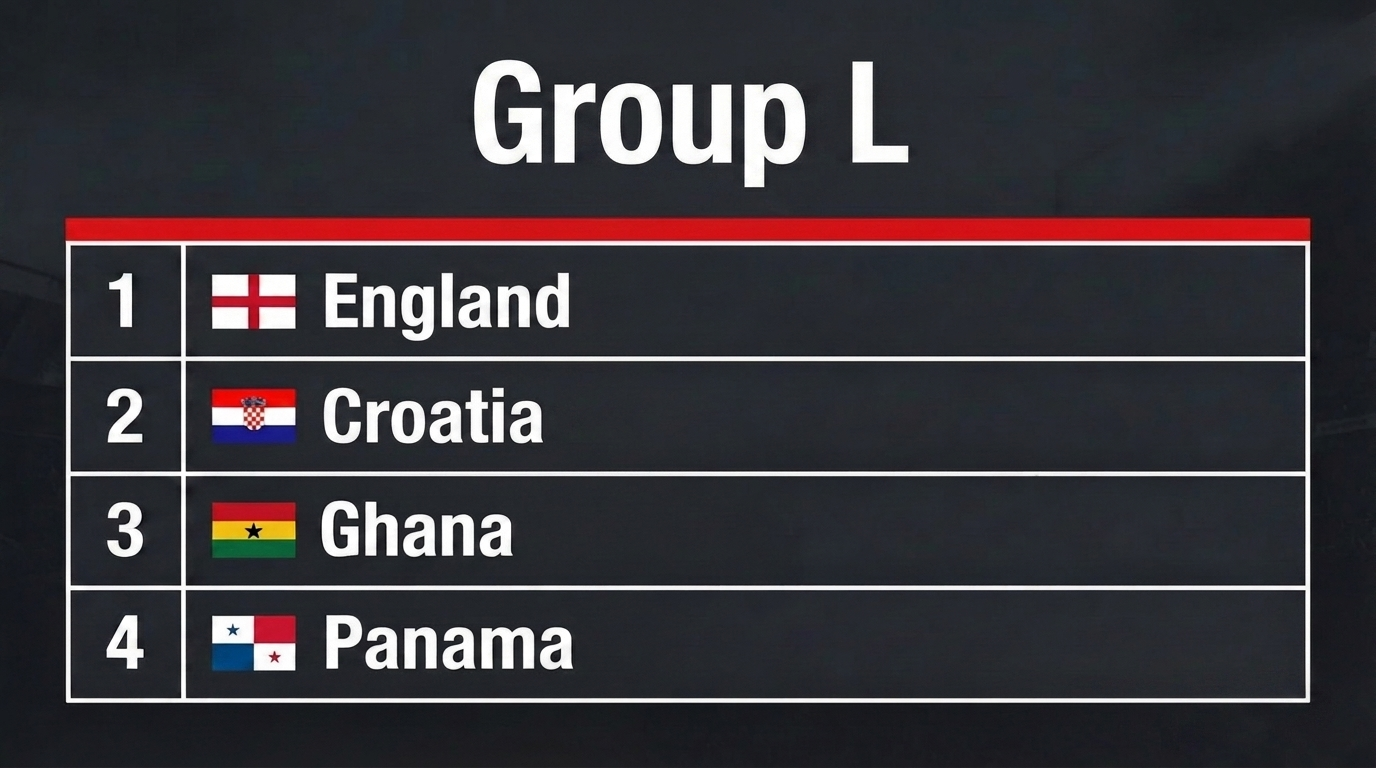
Panama were drawn into Group L alongside England, Croatia and Ghana – a section that requires no analysis to identify the clear group favourites. England are the overwhelming favourites to win the section, Croatia are experienced finalists and Ghana carry Premier League-level individual quality. Panama are priced at 50/1 to win the group and around 5/1 to progress as one of the eight best third-placed teams. The only realistic path to any kind of advancement is winning against Ghana – the one fixture in the group where the individual quality differential is not categorically overwhelming – and then defending resolutely to limit the score against England and Croatia.
The Panama vs Ghana fixture on 17 June at BMO Field in Toronto is the defining match for Panama’s entire tournament. Both nations need those three points; both will approach it as a genuine competitive battle rather than a foregone conclusion. If Panama can maintain their CONCACAF competitive form and Christiansen’s tactical discipline holds against Ghana’s attacking pace, a result is achievable. The England and Croatia fixtures will inevitably be damage-limitation exercises for a squad whose resources are not comparable – but how Panama compete, how they represent their country’s development and whether Felipe Baloy’s 2018 goal-celebration spirit is recreated by a newer generation, will be the story their World Cup 2026 campaign produces regardless of the result.
| Date (BST) | Match | Venue | Stage |
| 18 June, 00:00 | Panama vs Ghana | BMO Field, Toronto | Group L |
| 24 June, 00:00 | England vs Panama | BMO Field, Toronto | Group L |
| 27 June, 22:00 | Panama vs Croatia | MetLife Stadium, East Rutherford | Group L |
Odds & Predictions: Panama as a Three-Points Source for Others
Panama are priced at around 50/1 to win Group L and at approximately 500/1 or longer in the outright World Cup winner market – a market assessment that is frank, accurate and broadly consistent across all major UK bookmakers. The implied probability of them winning the group is less than 2%, which is the market’s polite way of acknowledging that Group L is expected to be settled between England and Croatia, with Ghana as the competitive outsider and Panama as the team from whom the points will be taken.
The most relevant Panama betting market is not the outright win or group winner but the match betting for their opener against Ghana – where Panama at approximately 4/1 to win represents the only fixture in the group where they have a realistic chance of a positive result. Ghana’s Kudus injury concern, Queiroz’s compressed preparation and Panama’s collective experience across CONCACAF competition make Los Canaleros a legitimate live dog in that specific fixture. A Panama win over Ghana and a creditable competitive performance against Croatia could produce a four-point group stage that would make them candidates for one of the eight third-place progression spots in the expanded format – something that would have been unimaginable for the country’s programme even a decade ago.
Our prediction: Panama to finish fourth in Group L, likely without points, but potentially with a competitive showing in one of their three fixtures that confirms the programme’s progress. The Panama vs Ghana match on 17 June is the betting focus. For the full outright market and Group L betting specials, visit our World Cup 2026 odds hub.
Panama’s World Cup 2026 campaign is not a story about lifting trophies or advancing beyond the group stage. It is a story about a small Central American nation that has used football as a vehicle for national identity, collective pride and the specific joy of competing on the world’s largest stage for only the second time in their history. The memory of Luis Carlos Tejada’s 43 international goals hangs over everything – a career built for a World Cup the record scorer never got to see. The players who take the field against Ghana in Toronto on 17 June will carry that absence with them, alongside the singular ambition to earn Panama’s first-ever World Cup point. For the complete tournament odds and Group L analysis, visit our World Cup 2026 betting hub.