

 Ghana’s Group L draw for the 2026 World Cup could not have thrown up a more emotionally loaded fixture for UK football supporters: the Black Stars, managed by the veteran Carlos Queiroz following Otto Addo’s April 2026 departure, will face England in Boston on 23 June – a reunion between two nations whose World Cup relationship was defined by one of the most dramatic exits in the tournament’s history when Asamoah Gyan missed that penalty against Uruguay in 2010. Sixteen years on, the Ghana World Cup 2026 squad includes two of the Premier League’s most exciting attacking players: Antoine Semenyo, the former Bournemouth forward now at Manchester City, and Mohammed Kudus at Tottenham Hotspur – the man whose two goals against South Korea in Qatar 2022 announced him as one of African football’s most dangerous attacking forces. The caveat heading into the tournament is that Kudus has been battling a recurring quad injury that, according to multiple sources in Ghana, may prevent him from participating at all – a potential loss that would fundamentally reshape what the Black Stars can threaten offensively. Even without their most creative player, Queiroz’s organisational intelligence, the physicality of Thomas Partey’s midfield anchor and Semenyo’s elite-level club form give Ghana the capacity to complicate every match in Group L. For the full outright tournament picture, visit our World Cup 2026 betting hub.
Ghana’s Road to the World Cup
 Ghana qualified for the 2026 World Cup as winners of CAF Group I – their fifth World Cup in six tournaments and the clearest evidence that the Black Stars have re-established themselves as one of Africa’s most consistent qualifying performers after missing the 2018 tournament entirely. The campaign was dominated almost from start to finish, with Ghana topping a group containing Mali, Central African Republic, Madagascar, Chad and Comoros without the prolonged uncertainty that had characterised their previous qualifying cycles.
The decisive result came on 12 October 2025 when a Mohammed Kudus goal sealed a 1-0 victory over Comoros in Accra and confirmed Ghana’s place at the 2026 World Cup. Across the ten-match CAF Group I campaign, Ghana won eight matches, drew one and lost one, scoring freely and demonstrating the attacking variety that their European-based squad provides. The single defeat – an early setback that was swiftly corrected – proved to be the only blemish on a campaign that finished with Ghana as clear group winners. The final tally of 25 points from ten matches was among the strongest qualifying records on the African continent and secured the Black Stars a return to the World Cup stage.
The pre-tournament period has been more turbulent. Failure to qualify for AFCON 2025 cost Addo his job in April 2026, just two months before the tournament opens. Carlos Queiroz’s appointment – announced within days of Addo’s dismissal – gives Ghana an experienced tournament operator but an uncomfortably compressed preparation window for installing tactical coherence. Friendly defeats to Austria and the compressed schedule before June have left questions about the team’s defensive organisation that Queiroz is working against the clock to address.
Manager & Tactics: Queiroz’s Defensive Blueprint and the Transition from Addo
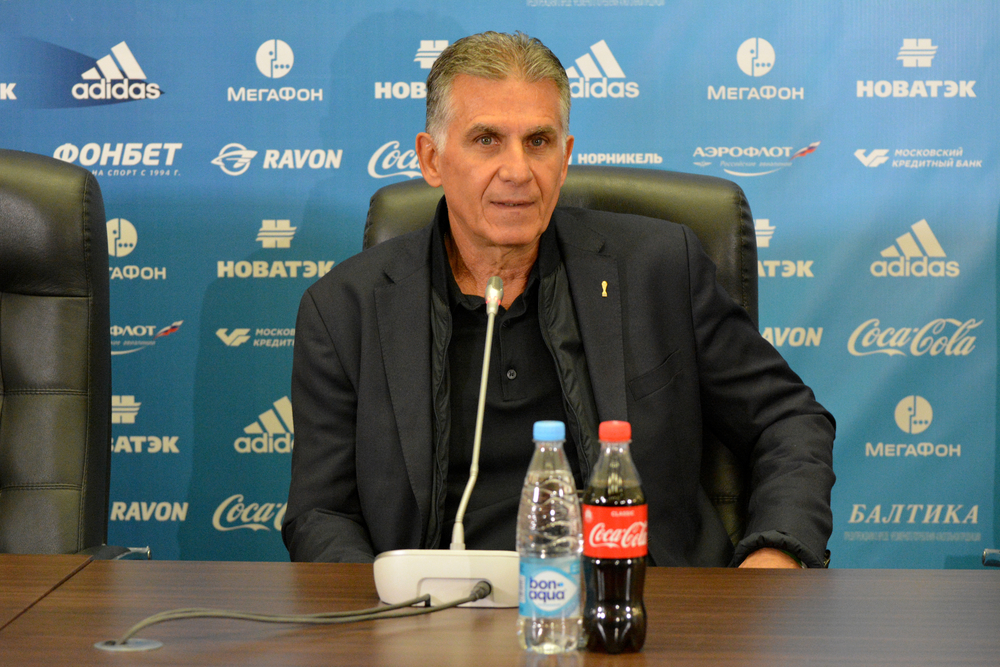
Carlos Queiroz is one of international football’s most experienced managers – a Portuguese tactician whose career has taken him across four continents and seven national teams, from South Africa to Portugal, Iran, Colombia, Egypt, Qatar and now Ghana. He has stood on the touchline at multiple World Cups in different roles, most notably as Sir Alex Ferguson’s assistant at Manchester United and subsequently as head coach, taking Iran to the 2014 and 2018 tournaments and Iran again in 2022. His management profile is defined by a single consistent characteristic: he builds compact, defensively organised teams that are extremely difficult to break down and that punish opponents through rapid counter-attacking transitions rather than sustained possession.
The tactical inheritance from Otto Addo’s qualifying campaign is a 4-2-3-1 base that can shift into a 3-4-3 when Ghana have the ball and need to commit bodies forward. Addo’s system emphasised fluid transitions and quick vertical attacks from defensive positions – an approach that suited the energy of younger players like Kudus and Semenyo but left occasional defensive vulnerabilities that more organised teams could target. Queiroz is expected to tighten the defensive structure significantly, with the double pivot of Thomas Partey and a secondary midfielder providing a more disciplined defensive screen than Ghana showed in their final preparatory matches.
The fundamental question is how much of Addo’s attacking freedom Queiroz will preserve against how much defensive discipline he will impose. His Iran sides were occasionally criticised for being too defensive to threaten elite opposition in the knockout rounds – but in Group L, against England and Croatia, the ability to keep matches tight and avoid conceding first is arguably more important than attacking fluency. A Ghana side that maintains shape, absorbs pressure and hits on the counter through Semenyo’s pace could frustrate both England and Croatia in ways that their pre-tournament odds do not fully reflect.
Squad & Key Players
Ghana’s squad is heavily Premier League-influenced, with Antoine Semenyo at Manchester City, Mohammed Kudus at Tottenham Hotspur and Abdul Fatawu Issahaku at Leicester City among the headline names. Supporting quality comes from across Spanish, German and French football, but the concentration of talent remains relatively narrow: Ghana’s top-end attacking options are strong, while the depth behind that Premier League-led core is considerably thinner than the headline names suggest.
| Position | Player | Club | Age |
| GK | Lawrence Ati-Zigi | St. Gallen | 28 |
| GK | Joseph Wollacott | Crawley Town | 26 |
| RB | Andy Yiadom | Reading | 32 |
| RB | Tariq Lamptey | Fiorentina | 24 |
| CB | Mohammed Salisu | Monaco | 30 |
| CB | Daniel Amartey | Besiktas | 29 |
| CB | Gideon Mensah | Auxerre | 27 |
| LB | Alidu Seidu | Rennes | 24 |
| MF | Thomas Partey | Villarreal | 32 |
| MF | Caleb Yirenkyi | Nordsjaelland | 26 |
| MF | Ernest Nuamah | Lyon | 22 |
| MF | Salis Abdul Samed | Nice | 24 |
| FW | Mohammed Kudus | Tottenham Hotspur | 25 |
| FW | Antoine Semenyo | Manchester City | 25 |
| FW | Iñaki Williams | Athletic Club | 30 |
| FW | Jordan Ayew | Leicester City | 34 |
| FW | Abdul Fatawu Issahaku | Leicester City | 23 |
| FW | Kamaldeen Sulemana | Cagliari | 22 |
Antoine Semenyo – Forward, Manchester City
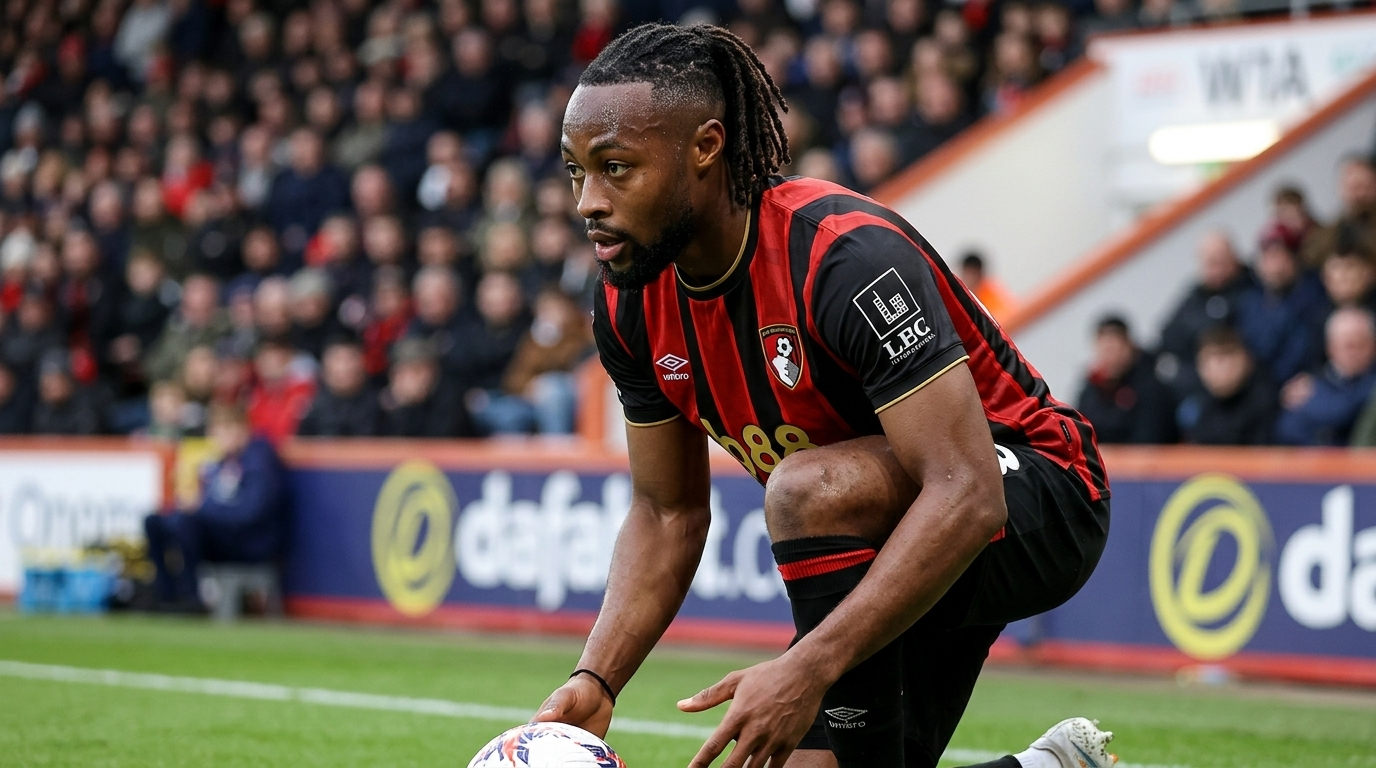
The 25-year-old is Ghana’s undisputed first-choice attacking threat heading into the tournament and, in the absence of Kudus, their primary source of individual match-winning quality. Manchester City paid approximately £64 million to bring him from Bournemouth – confirmation of the Premier League’s market assessment of his potential – and his combination of raw pace, direct dribbling and improving link-up play with the City front three has made him one of the division’s most exciting forward options. For Ghana, his ability to beat full-backs in one-on-one situations creates the specific type of counter-attacking opportunity that Queiroz’s system is designed to exploit. Against England’s full-backs and Croatia’s wider defenders, Semenyo’s pace will be the most reliable individual attacking weapon available.
Mohammed Kudus – Attacking Midfielder/Forward, Tottenham Hotspur
The Tottenham midfielder is Ghana’s most complete attacking player – creative, technically precise, capable of operating between the lines and converting the chances he creates at an elite rate. His two goals against South Korea in Qatar 2022 (including a historic double in a 3-2 victory that confirmed his potential at the highest level) and his record across 46 caps mark him as the player Ghana’s attack is built around. The quad injury that has kept him out for extended periods in 2025-26 and ruled him out of the March international window is the tournament’s most consequential individual fitness story for the Black Stars. Multiple reports from Ghana suggest his participation at the World Cup may be impossible – a loss that would fundamentally alter the team’s attacking ceiling and significantly reduce their chances of advancing from Group L.
Thomas Partey – Midfielder, Villarreal
The former Arsenal midfielder has been Ghana’s most consistent performer across the qualifying campaign and provides the defensive midfield anchor that Queiroz’s system requires. His experience at Arsenal – where he played Champions League football across multiple seasons – gives him the specific tactical understanding of high-level European defensive structures that the rest of Ghana’s midfield lacks. His 50+ Ghana appearances since 2016 and his role as vice-captain confirm his importance to the squad’s experienced core, and Queiroz’s defensive philosophy will lean heavily on Partey’s ability to screen the back line and distribute the ball efficiently under pressure.
Iñaki Williams – Forward, Athletic Club
The Athletic Club striker has made over 480 La Liga appearances and won the 2024 Copa del Rey – a CV of sustained elite Spanish domestic competition that gives Ghana’s attack a physically commanding alternative to Semenyo’s pace-based approach. His brother Nico Williams represents Spain (another example of the dual-nationality dimension that has characterised Ghana’s squad building), and Iñaki’s robust style and aerial ability give Queiroz a different attacking profile to complement Semenyo’s directness from wide positions.
Strengths & Weaknesses
Strengths
The Premier League concentration in Ghana’s attacking line is the squad’s greatest structural advantage. Semenyo’s pace and directness against any full-back in Group L is a genuine individual threat that cannot be negated by defensive systems alone – it requires specific preparation and focused individual attention. The depth of attacking options behind the headline names – Williams’s physicality, Fatawu’s direct running, Kamaldeen Sulemana’s technical quality – gives Queiroz rotation capacity that will matter across three group-stage matches in ten days. Ghana’s counter-attacking system, when organised and disciplined in possession, can contain technically superior sides for extended periods and threaten decisively on the break – exactly the type of tactical approach that upsets occur through at major tournaments.
The qualifying form – eight wins in ten matches, group winners, defensive record improved throughout the campaign – provides genuine evidence that this squad is competitive at the level required. Their 3-2 win over South Korea in Qatar 2022, with Kudus’s brace, confirmed the team’s ability to produce results against comparable-ranked opposition. Ghana finishing above Panama in Group L is virtually assured; the competitive fixtures against England and Croatia are where points beyond the expected minimum might be earned.
Weaknesses
Kudus’s injury is the team’s most fundamental structural problem. Ghana’s attacking system is designed around his creative capacity between the lines – his ability to receive under pressure, turn defenders and deliver in the final third with both feet. Without him, the attacking load falls almost entirely on Semenyo and the combination of Williams and Ayew’s experience, which is sufficient to score goals against Panama but potentially insufficient to threaten England or Croatia for sustained periods. The differential between Ghana with Kudus and Ghana without him may be the largest team-impact injury variable at the entire tournament.
The managerial disruption – Queiroz replacing Addo in April 2026 with fewer than two months until the opening fixture – creates a specific tactical uncertainty that no other team in Group L faces. Queiroz has installed defensive systems quickly in previous tournaments, but the compressed timeline with a squad accustomed to Addo’s more fluid, transition-based approach increases the risk of tactical confusion in high-pressure moments. The defensive record in friendly matches since Addo’s departure suggests the organisational questions are real rather than theoretical.
Qualifying Campaign
Ghana’s CAF Group I campaign was one of Africa’s most dominant qualifying performances of the cycle, ending with the Black Stars confirmed as group winners by October 2025 with matches still to play. The campaign included significant wins over Mali – one of the continent’s stronger sides – and the Central African Republic, as well as the decisive 1-0 victory over Comoros sealed by Mohammed Kudus that confirmed their participation in the tournament for the first time since 2022.
| Team | P | W | D | L | GF | GA | GD | Pts | Status |
| Ghana | 10 | 8 | 1 | 1 | 23 | 6 | +17 | 25 | Qualified |
| Mali | 10 | 5 | 3 | 2 | 17 | 6 | +11 | 18 | Eliminated |
| Comoros | 10 | 5 | 0 | 5 | 12 | 13 | -1 | 15 | Eliminated |
| CAR | 10 | 2 | 2 | 6 | 11 | 24 | -13 | 8 | Elininated |
| Madagascar | 10 | 6 | 1 | 3 | 17 | 12 | +5 | 19 | Eliminated |
| Chad | 10 | 0 | 1 | 9 | 5 | 24 | -19 | 1 | Eliminated |
World Cup History: 2010 and the Goal That Was Never Taken
Ghana’s World Cup history is defined almost entirely by one penalty kick – or rather, the one that was never converted. Their story across six appearances (2006, 2010, 2014, 2022, plus a missed 2018 tournament) has oscillated between the genuine brilliance of 2010 and the collective disappointments that preceded and followed it. As four-time AFCON champions – the most decorated African nation in the continental competition’s history – the Black Stars carry a weight of expectation that their World Cup performances have only occasionally matched.
Ghana’s debut in 2006 under Ratomir Dujković produced a round-of-sixteen appearance – remarkable for a debut tournament – before a 3-0 defeat to Brazil ended their campaign. The 2010 World Cup in South Africa was their tournament, their moment, their near-miracle. Roger Milla’s legendary 1990 Cameroon performance was finally matched by an African side in terms of the semi-final proximity reached, with Ghana eliminating the United States in the round of sixteen and Serbia in the group stage before a quarter-final against Uruguay that will live in infamy. Suárez’s handball on the goal line in the final minute of extra time denied what would have been a certain goal; Asamoah Gyan struck the resulting penalty against the crossbar. The shoot-out that followed ended Ghana’s tournament, denied them a historic semi-final appearance and produced the most emotionally raw exit in African World Cup history.
The 2014 tournament in Brazil produced a group-stage exit marred by dressing-room unrest over bonus payments that overshadowed the football. Ghana failed to qualify for 2018 – a humiliation for a programme of their standing. The 2022 return to the World Cup stage in Qatar produced the highest and lowest moments simultaneously: Kudus’s double in the iconic 3-2 win over South Korea, followed by the 3-0 defeat to Portugal in which Ronaldo scored a controversial penalty and Ghana’s defensive organisation collapsed, and the 0-2 loss to Uruguay that ended their tournament. The pattern across their World Cup career is one of tantalising potential and inconsistent execution – the same paradox that the 2026 Group L campaign will either continue or finally resolve. For the full Group L breakdown, see our World Cup 2026 groups guide.
Group L & Fixtures: England in Boston and the Critical Panama Opener
Ghana were drawn into Group L alongside England, Croatia and Panama – a section that their pre-tournament odds of around 9/1 to win the group acknowledge is among the most challenging any African qualifier faces in the expanded 48-team field. The fixture sequence is critical: the opener against Panama on 17 June is effectively a must-win match, and the England fixture on 23 June – the most emotionally charged match for UK football supporters – will either confirm Ghana’s knockout credentials or effectively end their tournament before the Croatia finale.
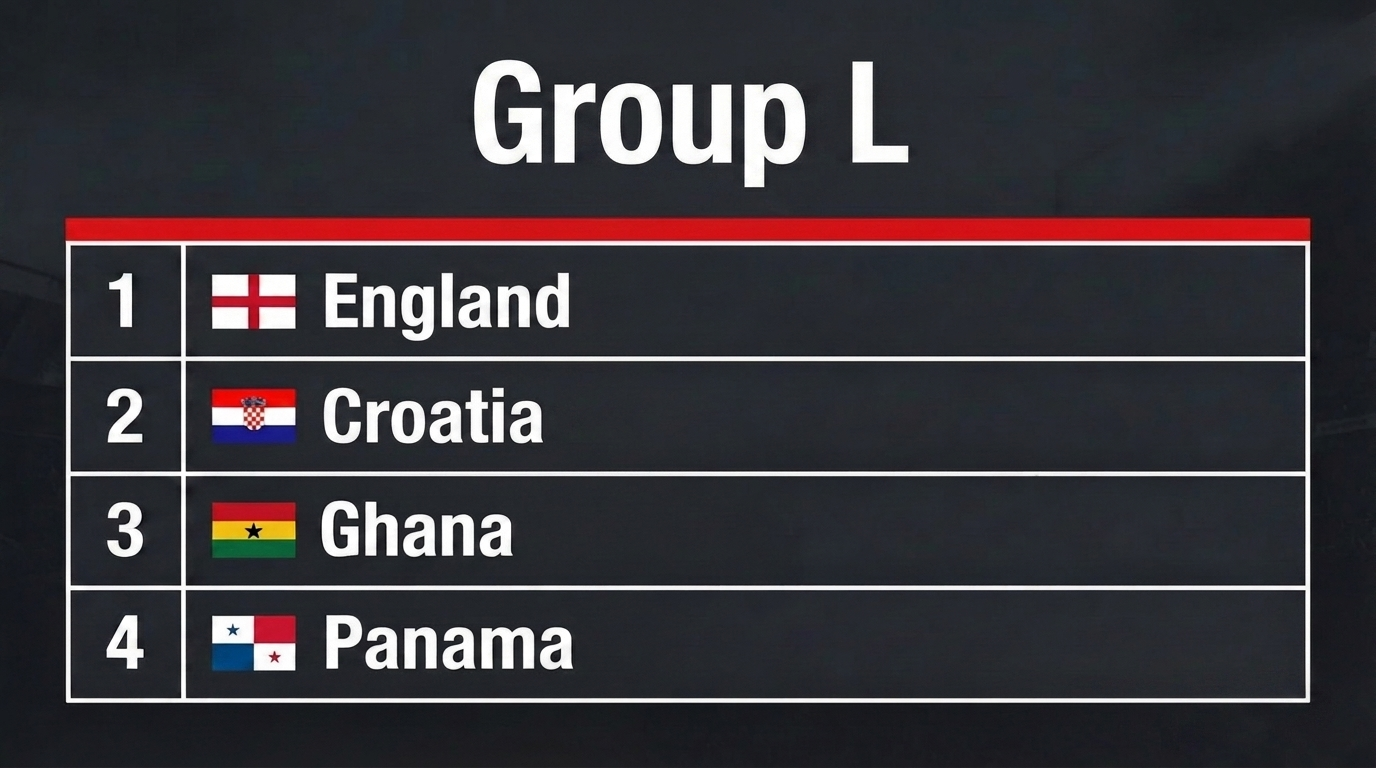
Panama (ranked around 75th globally) are the realistic points source in this group for Ghana. A Ghana victory in Toronto on 17 June sets up the England match as a genuine contest for second place rather than a survival exercise, while a drop of points against Panama renders both subsequent matches existential. The England encounter in Foxborough on 23 June is where Antoine Semenyo’s promise to “cause nightmares” will be tested – and where Tuchel’s three Lions will be equipped with full knowledge of Ghana’s tactical vulnerabilities from the Panama match. The Croatia finale in Philadelphia on 27 June – against a side with Modrić, Kovačić and the specific experience of five consecutive major-tournament deep runs – is the most formidable challenge the schedule presents.
| Date (BST) | Match | Venue | Stage |
| 18 June, 00:00 | Ghana vs Panama | BMO Field, Toronto | Group L |
| 23 June, 21:00 | Ghana vs England | Gillette Stadium, Foxborough (Boston) | Group L |
| 28 June, 02:00 | Ghana vs Croatia | Lincoln Financial Field, Philadelphia | Group L |
Odds & Predictions: Ghana’s Value as a Disruptive Third-Place Threat
Ghana are currently priced at around 9/1 to win Group L with major UK bookmakers and at approximately 10/1 in parts of the US market, placing them as clear third favourites behind England and Croatia in the section. Their outright World Cup odds are generally in the region of 250/1 to 300/1, reflecting the combined challenges of their group, the relative lack of elite squad depth and broader concerns surrounding consistency at the very highest level of international football. Our editorial view is that the outright market broadly assesses Ghana correctly as a long shot to progress beyond the round of sixteen, but may still slightly undervalue their capacity to take points from either England or Croatia during the group stage through the attacking quality and transition threat provided by players such as Mohammed Kudus and Antoine Semenyo.
The most compelling betting angle for Ghana is the “best third-placed team” market – in the expanded 48-team format, eight third-placed teams advance to the Round of 32, and a Ghana side that beats Panama and takes a point from England or Croatia could finish third in Group L with four or five points and still advance. The expanded format changes the calculus for every group-stage outsider, and Ghana’s attacking quality makes a surprise positive result against England or Croatia genuinely possible in a way that the market may not fully price.
With Kudus available, Ghana at 9/1 to win the group or at 2/1 to advance from the group as third are the most defensible positions. Without him, both prices contract significantly in implied value. The state of his fitness at final squad confirmation in late May 2026 is the most important data point in all Ghana betting decisions. For the full outright market and Group L betting specials, visit our World Cup 2026 odds hub.
Our prediction: Ghana to finish third in Group L, likely to advance as one of the eight best third-placed teams if they beat Panama and perform competitively in one of the remaining two fixtures. Qualifying as third provides the path to a Round of 32 encounter against a Pot 1 qualifier from another group – challenging but not impossible for a squad with Semenyo’s class and Queiroz’s organisation. The 2010 penalty shoot-out remains the defining image of what Ghana could have been at a World Cup. In 2026, the question is whether this generation can create their own defining moment rather than being defined by someone else’s.