

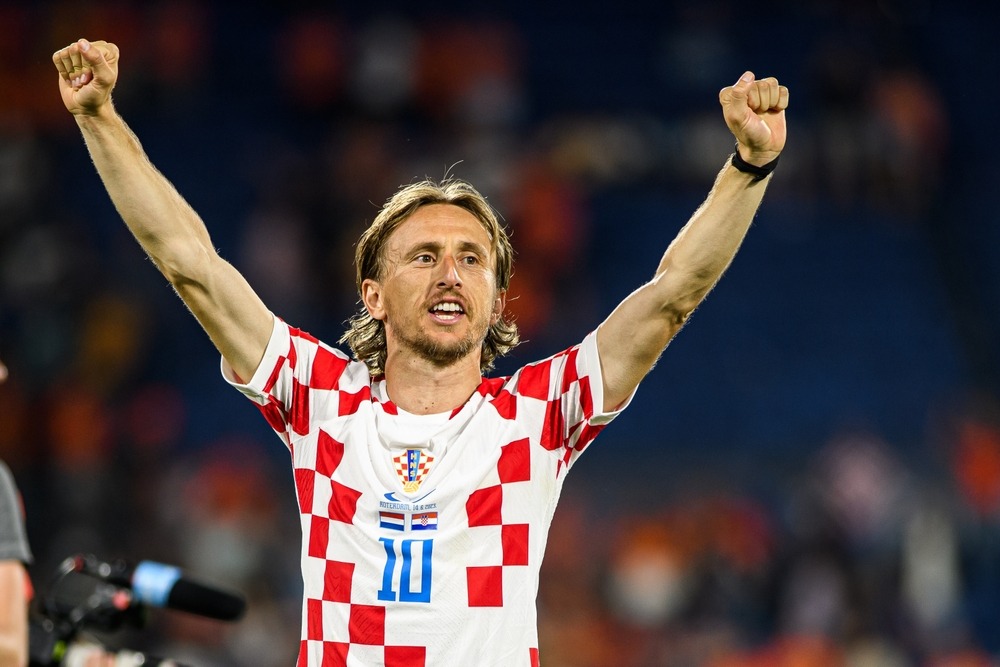
When Luka Modrić made his debut for AC Milan on 23 August 2025, he broke the record for the oldest player ever to debut in Serie A. He was 40 years old. When he scored the winning goal against Pisa on 13 February 2026, he was 40 years and five months old, still producing the precise passing and intelligent positioning that made him the greatest midfielder of his generation. The Luka Modrić salary at AC Milan – where he joined on a free transfer in July 2025 after 13 extraordinary years and 597 appearances at Real Madrid – stands at approximately €6.5 million per year per a deal confirmed by Fabrizio Romano, a fraction of the €21.8 million he was earning in his peak Real Madrid seasons but a deliberate choice by a player whose motivation, as he has repeatedly stated, is the love of the game rather than maximising his final contract. At 40 years old, having won 28 trophies at Real Madrid – the most by any player in the club’s history – a Ballon d’Or, six Champions Leagues and led Croatia to the 2018 World Cup final and 2022 World Cup third place, Modrić is preparing for what he has confirmed will be his final major tournament: the 2026 World Cup in North America. For Croatia’s campaign analysis and Group L fixtures against England, visit our Croatia World Cup 2026 guide, and for the complete tournament player breakdown see our World Cup 2026 players guide.
Who Is Luka Modrić?
Luka Modrić was born on 9 September 1985 in Zadar, on the Adriatic coast of what was then SR Croatia within socialist Yugoslavia, and the first years of his life were defined not by football but by survival. His family lived in the hamlet of Modrići, and in December 1991 – when the Croatian War of Independence was at its most violent – his grandfather Luka, after whom he was named, was executed by Serb rebels near their house. The family were forced to flee, taking refuge in Hotel Kolovare in Zadar, which was then being used as a displaced persons shelter. The family lived there for seven years. It was in the hotel car park that the young Luka played football with the other children, developing the technical skills that would eventually be recognised by Dinamo Zagreb’s scouts.
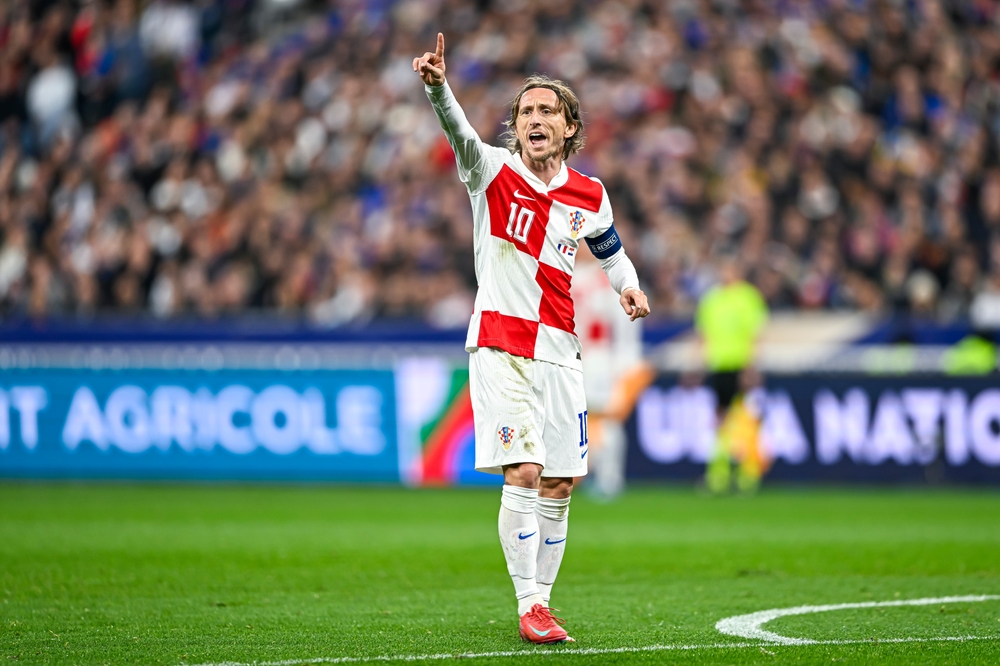
He stands 1.72 metres tall – earning the description from opponents, coaches and analysts alike as a player whose physical profile defied the conventional expectations of an elite central midfielder – is right-footed and wears the number 14 at AC Milan, the same number he wore at Tottenham Hotspur. He is a cousin of the Australian footballer Mark Viduka, and the godfather of Mateo Kovačić’s son Ivan. He captains the Croatia national team, for whom he has made over 175 caps – more than any other player in the country’s history – and since 2025 has also been a co-investor and co-owner of Championship club Swansea City, through a deal completed in April 2025 that reflected his ambition to shape football beyond his playing career.
Career & Honours: From Zadar Hotel Car Park to Six Champions Leagues
Modrić’s career trajectory is one of football’s most compelling stories of delayed recognition and ultimately unambiguous vindication. He played for Dinamo Zagreb from 2003 and won three Croatian league titles before being loaned to Zrinjski Mostar in Bosnia-Herzegovina and Inter Zaprešić, the experiences that sharpened the competitive edge his talent required before it was ready for the highest European level. Tottenham Hotspur signed him in summer 2008 for £30 million – a fee that generated significant scepticism about whether a diminutive Croatian midfielder could survive the Premier League’s physicality. He silenced every critic, leading Spurs to Champions League qualification in 2010 – the club’s first in almost half a century – and producing performances in the Premier League and Champions League that confirmed his quality was genuine and transferable to the English game.
Real Madrid paid £30 million for him in summer 2012, and his thirteen-year career at the Bernabéu rewrote the record books. Six UEFA Champions League titles – in 2014, 2016, 2017, 2018, 2022 and 2024. Four La Liga titles. Two Copa del Rey winners’ medals. The 2018 Ballon d’Or – the first player other than Lionel Messi or Cristiano Ronaldo to win the award since Kaká in 2007, an achievement that confirmed his place among the sport’s all-time elite. In total, he made 597 appearances for Real Madrid and lifted 28 major trophies – the most by any player in the club’s history – before departing on a free transfer in July 2025 after the Club World Cup, where Real Madrid’s semi-final 4-0 defeat to PSG was the final competitive match of his Bernabéu era.
| Club/Period | Apps | Goals | Honours |
| Dinamo Zagreb (2003-2008) | 94 | 26 | Croatian Liga ×3 |
| Tottenham Hotspur (2008-12) | 127 | 17 | UCL qualification 2010 |
| Real Madrid (2012-25) | 597 | 28 | UCL ×6, La Liga ×4, Copa del Rey ×2, FIFA Club WC ×5 [VERIFICAR], + Ballon d’Or 2018 |
| AC Milan (2025-present) | 19+ (Serie A) | 1+ (Serie A) | – |
| Croatia (2006-present) | 175+ | 28 | World Cup 2018 finalist (Golden Ball), WC 2022 third place (Bronze Ball) |
Luka Modrić’s Salary, AC Milan Contract & Net Worth
The financial dimension of Modrić’s AC Milan contract tells the clearest possible story about the priorities of a player in the final chapter of his career: he took a dramatic pay cut to continue playing at the highest professional level because he wanted to play football, not because he needed the money. According to SalaryLeaks – citing Fabrizio Romano as the confirming source – his base salary at AC Milan is €6.5 million per year gross (€125,000 per week), with performance-related bonuses that bring the total potential annual package to approximately €7.4 million. His contract runs to June 2026, with a one-year extension option that would keep him at the club to June 2027 if both parties agree.
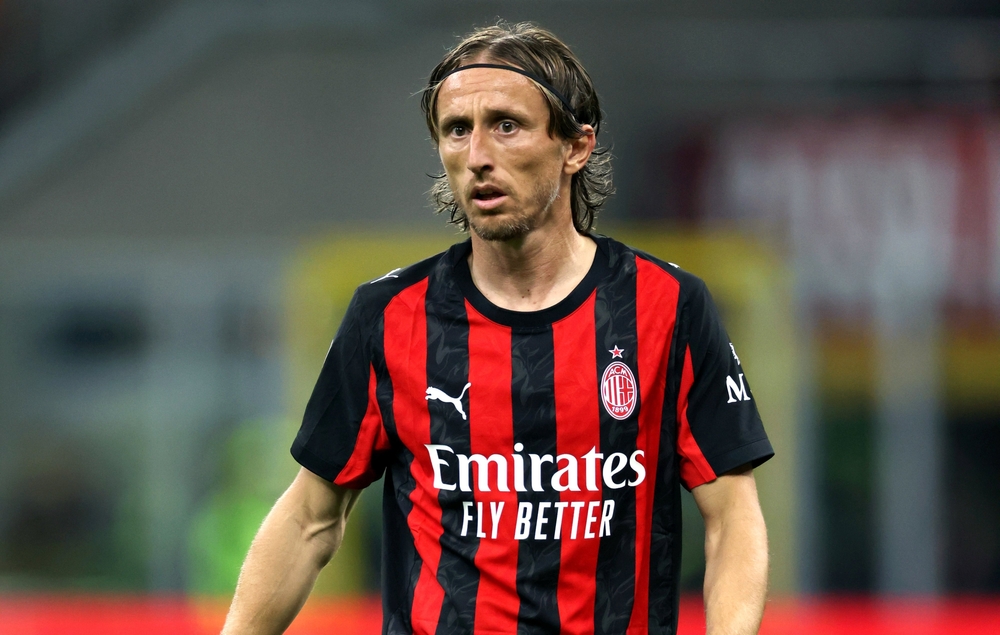
To place the AC Milan salary in biographical context: at the peak of his Real Madrid career between the 2018-19 and 2023-24 seasons, Modrić was earning approximately €21.8 million per year gross – over three times his current wage. The Croatian biography source notes that his career total earnings to 2025 have reached approximately €209 million, with €154.7 million of that accumulated at Real Madrid alone. The voluntary reduction from that peak is not financially necessary – it is a statement about what drives him – and the AC Milan signing was itself described by Modrić as the fulfilment of a childhood dream.
His net worth is estimated at approximately €70 million, incorporating football career earnings, endorsement income and property assets. His primary commercial partner is Nike, who have sponsored him throughout his professional career. He also endorses SofaScore – the Croatian-founded sports data platform that has become one of the world’s most-used football statistics tools – and Olybet, a Baltic and Scandinavian betting operator. In April 2025, Modrić became a co-investor and co-owner of Swansea City, the Championship club, in a deal that he publicly stated was driven by a desire to help the club develop and expand their global recognition.
Modrić’s commercial profile has always been comparatively understated relative to his trophy count – he has never been the most commercially aggressive of football’s elite players, preferring a smaller number of meaningful partnerships to the broad product-endorsement approach that some contemporaries have adopted. His Swansea investment, his SofaScore ambassadorship and his long Nike relationship all share a quality of alignment with his personal interests and values rather than pure commercial opportunism.
Personal Life: Vanja Bosnić, Three Children and a War-Marked Childhood
The biographical fact that most consistently appears in profiles of Modrić – and that most consistently moves those who encounter it – is the detail of his grandfather’s execution and the hotel car park where he first learned to play football as a refugee child. It is a childhood defined by the Croatian War of Independence’s most traumatic dimensions, and the resilience it required has been offered by Modrić himself as the explanation for qualities – composure under pressure, the ability to perform in the highest-stakes moments, the fundamental conviction that setbacks can be recovered from – that are visible in every aspect of his playing style.
He married Vanja Bosnić on 12 May 2010 in a civil ceremony in Zagreb, followed by a Catholic church wedding on 11 June 2011. They had met in 2007, when Vanja was working as a sports agent at the Mamic Sports Agency, where Modrić was also represented. After their marriage, Vanja became his personal agent and was instrumental in negotiating his 2012 move to Real Madrid – the single most consequential career decision Modrić has made – before stepping back from professional management to focus on raising their family. She maintains a deliberately private life and is rarely seen on social media.
The couple have three children: son Ivano (born 6 June 2010), daughter Ema (born 25 April 2013) and daughter Sofia (born 2 October 2017). Modrić has described the grounding influence of family life as essential to his longevity – the stability that Vanja and their children provide is, in his own telling, as significant a factor in his performance maintenance at 40 as the physical preparation and dietary discipline that he has also made famous. He is also the godfather of Mateo Kovačić’s son Ivan, reflecting the depth of the bond between two of Croatia’s defining international footballers of this era.
Modrić at the World Cup 2026: England in the Group and a Final Chapter
For most players, the prospect of playing competitive international football at 40 would be a fantasy. For Modrić, it is a confirmed reality – he has publicly stated his intention to participate at the 2026 World Cup in North America, which he will enter at the age of 40 years and eight months. The tournament takes place in a country where Swansea City, his new business investment, are seeking to grow their American fanbase, adding a commercial dimension to a tournament appearance that is primarily about sporting legacy.
Croatia’s Group L draw – alongside England, Ghana and Panama – creates the specific narrative that UK bettors and Three Lions supporters will find most compelling. Modrić against England’s midfield, in particular against Declan Rice and the system Thomas Tuchel has built around controlling the central areas, is the tournament’s most symbolically loaded individual club matchup: the greatest pure midfielder of his generation against the Premier League’s most respected defensive midfielder, in a group fixture that carries direct qualification consequences for both nations. England are favourites to top the group, but Croatia under Zlatko Dalić have consistently outperformed their resource base in knockout football, and Modrić’s capacity to change matches from set-piece delivery, vision and the specific intelligence of a player who has played in five World Cups remains real.
A cheekbone fracture surgery in late April 2026 has added a fitness concern to the pre-tournament picture, with Modrić’s readiness for the 17 June opener against England at AT&T Stadium in Arlington, Texas the specific selection question Croatia’s staff will be managing carefully. For Croatia’s full squad analysis, Group L predictions and odds, visit our Croatia World Cup 2026 article.
Luka Modrić’s career has been defined by a specific and unusual quality: the capacity to be better than the occasions that would ordinarily overwhelm lesser players, and to produce his finest individual performances in the matches that carry the greatest collective weight. His Luka Modrić salary at AC Milan is a fraction of his career peak – but the motivation has never been the salary, and the 2026 World Cup will provide the grandest possible stage for one final demonstration of what the boy from the hotel car park in Zadar became. For the complete guide to every major player heading to North America, visit our World Cup 2026 players guide.