

 On 31 March 2026, at Wembley Stadium, Kaoru Mitoma dispossessed Cole Palmer, drove at the England defence and finished clinically in the 23rd minute. England failed to register a single shot on target in the first half. The final score was 1-0 to Japan – the first time in history that an Asian nation had defeated the Three Lions on English soil. Three days earlier, Japan had beaten Scotland 1-0 in Glasgow. This is where the Japan World Cup 2026 squad enters the tournament: not as the eternal underdog whose giant-killing results are celebrated as surprises, but as a team that has demonstrated it can beat the world’s best and expects to do so again in North America. Hajime Moriyasu has built the most technically complete Japan squad of the modern era, loaded with players who compete week in, week out in the Premier League, La Liga, Bundesliga and Serie A – a generation whose talent base makes them the most underrated team on the outright market at 50/1. For UK bettors, the Mitoma factor alone – the Brighton winger’s devastating form against Scotland and England’s top clubs this season – makes Japan’s campaign one of the most compelling propositions in the tournament. For the full outright picture, visit our World Cup 2026 betting hub.
Japan’s Road to the World Cup
 Japan’s AFC qualifying campaign delivered results that confirmed, in statistical terms, what their 2022 World Cup performances had announced artistically: the Samurai Blue are no longer an Asian power – they are a genuine global one. Drawn into AFC Group C alongside Australia, Saudi Arabia, China, Indonesia and Bahrain, Japan topped the section with 23 points from ten matches: seven wins, two draws and a single defeat. They scored 30 goals across the ten fixtures – a remarkable attacking output – and the lone defeat, a 1-0 away loss to Australia in June 2025, came after Moriyasu had already secured qualification and deliberately fielded an experimental lineup with competitive matches in mind rather than the result.
The standout results spoke to every dimension of the squad’s quality: a 7-0 thrashing of China – their biggest qualifying victory – and a 6-0 defeat of Indonesia in the final group match, in which Daichi Kamada scored twice in the first half. Australia pushed them hardest: a 1-1 home draw was the closest any opponent came to matching Japan across the entire campaign. Saudi Arabia, China, Bahrain and Indonesia were all dispatched with varying degrees of comfort, and the clean sheets accumulated – Japan’s defensive record in qualifying was the best of any AFC qualifying team – confirmed that Moriyasu’s tactical discipline extends to all phases of the game rather than manifesting only in the attacking moments.
Japan subsequently underlined their pre-tournament credentials with those March 2026 friendly victories against Scotland and England – results that sent a clear message to Group F and the wider tournament field about exactly where this squad believes it stands in the global hierarchy.
Manager & Tactics: Moriyasu’s 3-4-2-1 and the Giant-Killing Blueprint
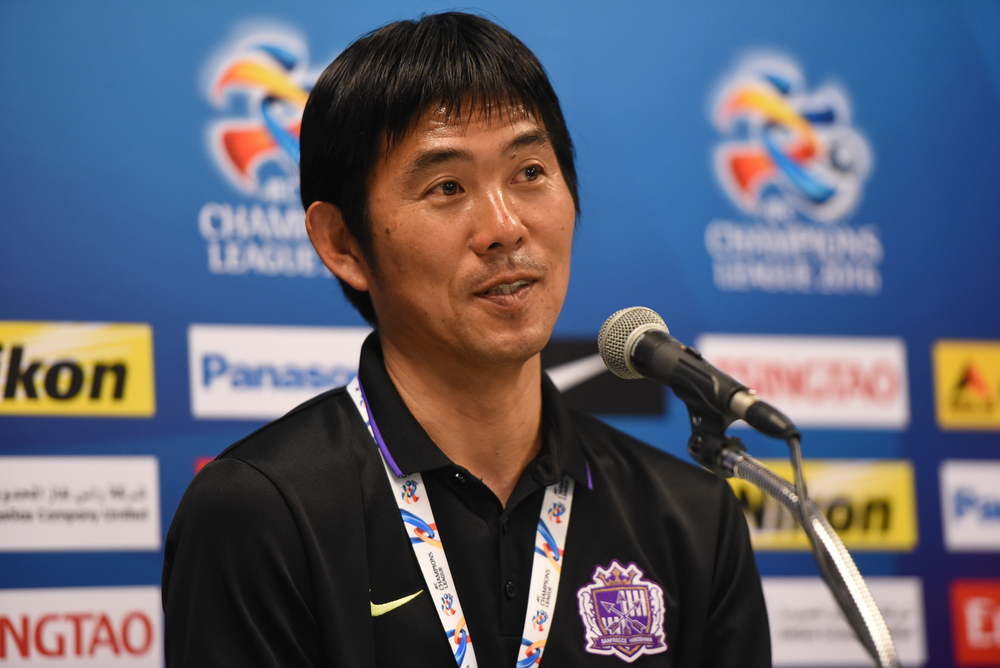
Hajime Moriyasu has managed Japan since 2018 and is the architect of the most successful period in their international football history. His personal connection to the national team’s defining psychological moment runs deep: as a player in 1993, he was on the pitch during the “Agony of Doha” – the final-minute goal that denied Japan World Cup qualification and traumatised a generation of Japanese football supporters. As a manager, he has systematically converted that trauma into a culture of disciplined resilience, and the results speak for themselves: group-stage victories over Germany and Spain in 2022, a round-of-sixteen appearance, and now victories over Scotland and England in the final preparation window before the 2026 tournament.
Moriyasu’s tactical signature is the 3-4-2-1 system, which provides defensive security through the three-man backline and the double pivot while releasing the wide wing-backs – typically Mitoma and Ritsu Doan – to provide attacking width and create the overloads that generate Japan’s most dangerous moments. The two tens behind the striker operate in the half-spaces between opposition midfield and defence, with Takefusa Kubo’s dribbling and Daichi Kamada’s late arrivals from deep creating the specific problems that Spain and Germany could not solve in Qatar. Moriyasu also has a notable tactical habit that opponents have studied but consistently underestimated: he withholds his most explosive attacking options until the second half, using substitute introductions to exploit tired defensive legs.
The three-man backline is anchored by Ko Itakura, Hiroki Ito and Koki Machida, all three of whom are established Bundesliga players capable of playing out from the back under sustained pressure. Zion Suzuki in goal at Parma has established himself as a reliable first choice. Wataru Endo’s double pivot partner – typically Ao Tanaka of Leeds United or Yuto Suzuki – provides the defensive cover that allows the more advanced players their freedom. The system’s weakness is its vulnerability to pace in behind the wing-backs when possession is turned over high, but Moriyasu has trained specific defensive recovery runs to address this and the March results against Scotland and England confirmed the structure holds at the highest level.
Squad & Key Players
Japan’s squad is defined by an extraordinary European concentration. In the Premier League alone: Kaoru Mitoma at Brighton, Wataru Endo at Liverpool, Ao Tanaka at Leeds United, Daichi Kamada at Crystal Palace. In La Liga: Takefusa Kubo at Real Sociedad. Bundesliga: Ko Itakura and Hiroki Ito across German clubs, Ritsu Doan at Eintracht Frankfurt. This is the most European-based Japan squad in history, and the competitive calibre of their weekly football is directly reflected in the results against England and Scotland.
| Position | Player | Club | Age |
| GK | Zion Suzuki | Parma | 22 |
| GK | Keisuke Osako | Sanfrecce Hiroshima | 27 |
| CB | Ko Itakura | Borussia Mönchengladbach | 27 |
| CB | Hiroki Ito | Stuttgart | 25 |
| CB | Koki Machida | Hoffenheim | 27 |
| WB | Yukinari Sugawara | Werder Bremen | 31 |
| WB/MF | Yuito Suzuki | SC Freiburg | 22 |
| MF | Wataru Endo (c) | Liverpool | 31 |
| MF | Ao Tanaka | Leeds United | 26 |
| MF | Daichi Kamada | Crystal Palace | 28 |
| MF | Kaishu Sano | NEC | 23 |
| FW | Takefusa Kubo | Real Sociedad | 23 |
| FW | Kaoru Mitoma | Brighton & Hove Albion | 27 |
| FW | Ritsu Doan | Eintracht Frankfurt | 26 |
| FW | Keito Nakamura | Reims | 24 |
| FW | Ayase Ueda | Feyenoord | 26 |
Kaoru Mitoma – Forward/Wing-back, Brighton & Hove Albion
The Brighton winger who scored the winning goal against England at Wembley is the most explosive one-versus-one threat in this Japan squad. His ability to take on defenders – averaging over five dribble attempts per game in the Premier League – creates the specific half-space penetration that Moriyasu’s system is designed to generate. The England win confirmed Mitoma’s quality at the highest level: winning the ball in midfield, driving at pace, finishing clinically. At 27, he is at his physical peak and his Premier League experience provides the mental preparation for exactly this kind of high-pressure tournament environment.
Wataru Endo – Midfielder, Liverpool (Captain)
The Liverpool defensive midfielder and Japan captain represents the tactical foundation without which the entire system cannot function. His pressing intensity, ball-winning quality and leadership in the double pivot give the more creative players behind Ueda the freedom to operate without defensive anxiety. Endo was notably absent from the March friendly squad – “rested,” confirmed Moriyasu – but remains the tournament’s first choice and the player who sets Japan’s competitive tone from the first whistle. At Liverpool, he has become the first Japanese player to captain a top-six Premier League club regularly, and that Premier League leadership experience is invaluable for the pressure of a World Cup knockout match.
Takefusa Kubo – Forward, Real Sociedad

The Real Sociedad star is Japan’s most technically gifted individual attacking player, combining close-control dribbling with an eye for goal from central positions that gives Moriyasu a different attacking profile to the wide directness of Mitoma. Kubo’s creativity from between the lines – receiving between midfield and defence, turning quickly in tight spaces – produced the combination that led to Japan’s second goal in the 6-0 qualifying rout of Indonesia. In an 11-match sequence before the tournament, he has been Japan’s most consistent source of individual moments of quality.
Daichi Kamada – Midfielder, Crystal Palace
The Crystal Palace player had the kind of season that makes international selection straightforward: an FA Cup winner at Wembley, consistent Premier League minutes, and two goals in the final qualifying win over Indonesia confirming his tournament credentials. His ability to arrive late from midfield positions – the same quality that made him dangerous at Eintracht Frankfurt – provides Japan with goal-scoring capacity from an unexpected source. Against Netherlands’ Van Dijk, his intelligent movement between the lines will be central to Japan’s counter-attacking threat in the group opener.
Ritsu Doan – Forward, Eintracht Frankfurt
The winger who scored the equalising goals against both Germany and Spain off the bench in Qatar 2022 – two of the most celebrated substitute contributions in World Cup history – arrives in 2026 as a starter rather than an impact option. His explosive pace from wide positions and clinical left foot make him the direct complement to Mitoma on the opposite flank. Against the Netherlands in the group opener, Doan’s ability to stretch the Dutch backline and arrive in the far post will be a central component of Japan’s attacking plan.
Strengths & Weaknesses
Strengths
Japan’s counter-attacking system is the most precisely calibrated in Asian football and one of the most dangerous in the world tournament field. The combination of Moriyasu’s deep defensive shape, Endo’s screening in midfield, and the explosive transitions through Mitoma, Kubo and Doan creates exactly the tactical blueprint that destroyed Germany and Spain in Qatar – and that resurfaced in March 2026 against England and Scotland. The speed from defensive recovery to goalscoring opportunity is quantifiably elite: the goal against England at Wembley required just four passes from Mitoma’s defensive interception to the finish. Against a Netherlands side with a high defensive line and wing-backs committed forward, that transition speed creates specific problems that cannot be solved by conventional positioning.
The Premier League presence in this squad is substantial and directly relevant to tournament performance. Mitoma, Endo, Kamada and Tanaka all play in an environment where every match carries pressure, physicality and tactical sophistication. The mental preparation for playing against the Netherlands in a World Cup group match – in terms of familiarity with that level of intensity – is not meaningfully different from playing Brighton against Manchester City or Crystal Palace against Liverpool. That normalisation of elite competitive football is perhaps the most undervalued aspect of this generation of Japanese players.
Moriyasu’s tactical flexibility is a genuine competitive advantage. His ability to use the bench – the 2022 World Cup demonstrated conclusively that his substitutions change games rather than merely manage them – means opponents cannot simply defend Japan’s starting lineup and consider the threat neutralised. Against Sweden in the final group fixture, if Japan need a win, the bench options can transform the shape entirely.
Weaknesses
Japan’s striker position remains the squad’s least settled area. Ayase Ueda provides a physical presence in the central role but has not yet confirmed the consistent finishing that a tournament striker needs across four to six matches. Japan’s reliance on the wider players for goals – Mitoma, Doan and Kubo rather than the centre-forward – means that if those players are contained or tired in knockout rounds, the goal-scoring source is less reliable than the squad’s overall quality suggests. The occasional tendency to play “one pass too many” in front of goal – a recognised pattern in qualifying matches against lower-ranked opposition – must be corrected against the Netherlands and Sweden.
Sustainability across six or seven matches is the second concern. Japan’s counter-pressing system requires enormous physical output, particularly in the Mitoma and Doan wing-back roles. In a 2022 round-of-sixteen penalty shootout against Croatia, there was already visible fatigue in the second half that contributed to the collapse after going ahead. Against Sweden, who qualified with a combination of physicality and Viktor Gyökeres’ directness, that physical attrition will be tested in the final group fixture.
Qualifying Campaign
Japan’s AFC Third Round Group C campaign was dominant from beginning to end. Seven wins, two draws and one late-tournament defeat against Australia – a match in which Moriyasu deliberately rested key players – across ten fixtures produced 23 points, 30 goals scored and the best defensive record among the direct AFC qualifiers. The 7-0 win over China and the 6-0 win over Indonesia in the opening and closing fixtures respectively bookended a campaign of consistent excellence, while the 1-1 draw at home against Australia was the only occasion in which a genuine rival tested Japan over 90 competitive minutes.
| Team | P | W | D | L | GF | GA | GD | Pts | Status |
| Japan | 10 | 7 | 2 | 1 | 30 | 3 | +27 | 23 | Qualified |
| Australia | 10 | 6 | 1 | 3 | 16 | 7 | +9 | 19 | Qualified |
| Saudi Arabia | 10 | 4 | 1 | 5 | 7 | 8 | -1 | 13 | 4th Round |
| Indonesia | 10 | 3 | 3 | 4 | 9 | 20 | -11 | 12 | 4th Round |
| China | 10 | 3 | 0 | 7 | 7 | 20 | -13 | 9 | Eliminated |
| CBahrain | 10 | 1 | 3 | 6 | 5 | 6 | -11 | 6 | Eliminated |
World Cup History: Giant-Killers Who Are Building Towards Something Greater
Japan have appeared at the World Cup eight consecutive times since their first appearance at France 1998, a run that confirms them as Asia’s most consistently qualified nation in the tournament’s modern era. The progression of results across those eight appearances tells a compelling story of continuous improvement: group-stage exits in 1998 and 2002 before a memorable round-of-sixteen run on home soil, further round-of-sixteen appearances in 2010 and 2018, and then the Qatar 2022 campaign that changed everything.
In Qatar, Japan won a group that contained both Germany and Spain – both former World Cup winners – with results that rewrote the tournament’s tactical narrative. The 2-1 comeback win over Germany, inspired by Doan and Ritsu Asano’s second-half introductions, and the identical result against Spain three days later, produced two of the 2022 tournament’s most discussed individual and collective performances. The round-of-sixteen loss to Croatia on penalties – Japan led through Daizen Maeda before Croatia equalised through Ivan Perišić and ultimately prevailed 3-1 on spot kicks – remains their furthest advance at a senior World Cup despite dominating stretches of normal time.
Japan have never progressed beyond the round of sixteen, never reached a quarter-final. The 2026 tournament, with the expanded format providing a more forgiving initial path to the knockout stages and with the squad now demonstrably capable of defeating the Three Lions on their home ground, represents the clearest opportunity this programme has had to change that historical ceiling. The Moriyasu era has been building towards this moment since the 2022 campaign, and the tactical coherence of the 2026 squad suggests this is the year Japan finally go beyond the last sixteen.
Group F & Fixtures: The Netherlands Opener and the Wembley Ghost
Japan were drawn into Group F alongside the Netherlands, Sweden and Tunisia – a section that Football Whispers described as potentially the tournament’s most balanced group, with no obvious “sacrificial lamb” among the four nations. The Netherlands are group favourites at around 8/11 to top the section, but Japan at 7/2 to win the group has been highlighted by several analysts as one of the tournament’s more interesting outright group prices, given the specific tactical matchup of Japan’s transition speed against the Netherlands’ high defensive line.
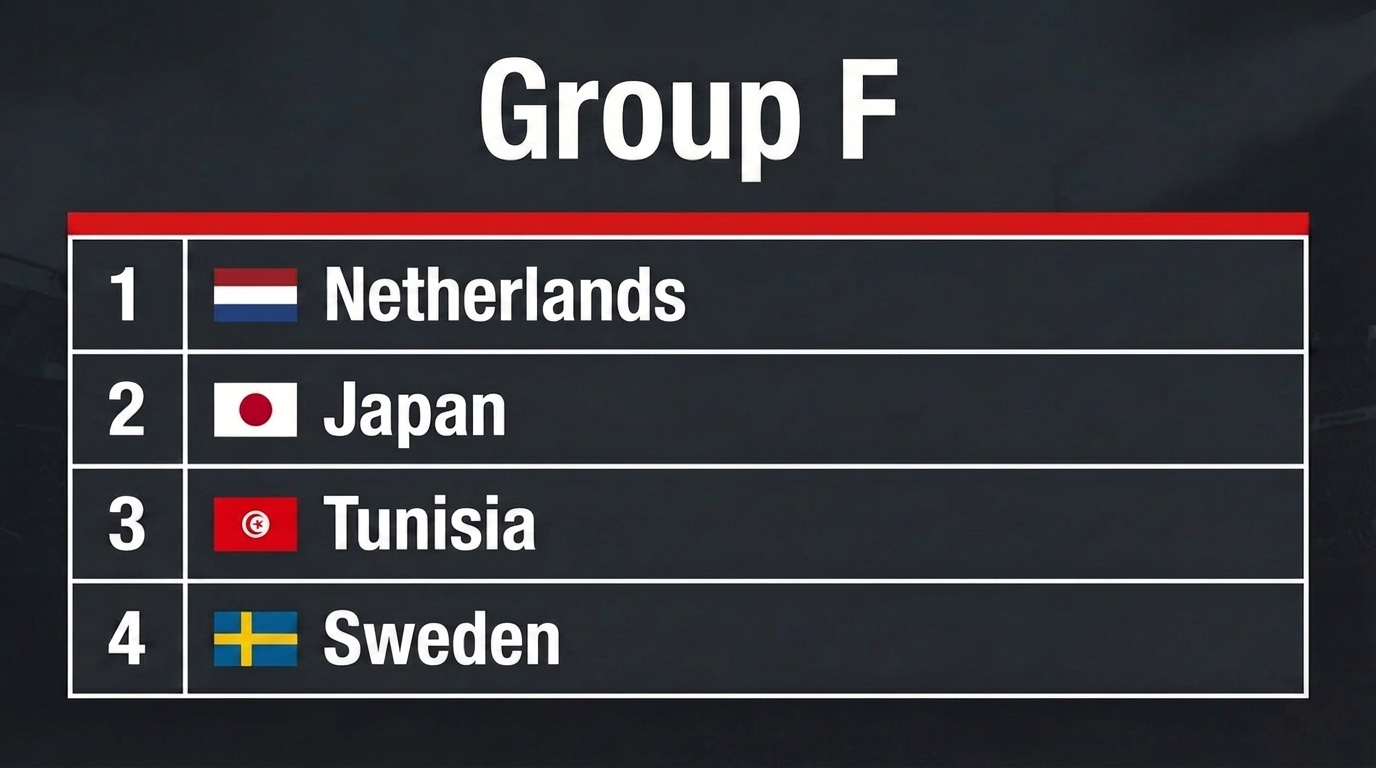
The opening fixture against the Netherlands at AT&T Stadium in Arlington, Texas on 14 June is the group’s defining contest and one of the tournament’s most eagerly anticipated matchups. Japan’s 2022 blueprints against Germany and Spain – the same type of possession-heavy sides with high defensive lines that the Dutch employ – make this a tactically loaded encounter. Mitoma against the Netherlands left side, Kubo in the pockets between the lines against Van Dijk and the Dutch centre-backs, and Moriyasu’s second-half substitution patterns all create a specific set of problems that Koeman’s side will need specific answers for.
Sweden in the final group fixture on 25 June – also at AT&T Stadium – will determine second place if the group is tight after the opening two matches. Graham Potter’s Sweden, with Viktor Gyökeres and Alexander Isak, represent a different physical challenge to the Netherlands, and Japan’s aerial defensive vulnerability in a back three against powerful strikers is the specific matchup concern. Tunisia in Monterrey on 20 June should provide three points if Japan are organised and clinical, though the North Africans’ defensive discipline makes even this fixture far from straightforward.
| Date (BST) | Match | Venue | Stage |
| 14 June, 21:00 21:00 | Netherlands vs Japan | AT&T Stadium, Arlington (Dallas) | Group F |
| 20 June, 05:00 05:00 | Tunisia vs Japan | Estadio BBVA, Monterrey | Group F |
| 25 June, 00:00 00:00 | Japan vs Sweden | AT&T Stadium, Arlington (Dallas) | Group F |
As group runners-up, Japan would face the winner of Group C (Brazil’s group) in the Round of 32. Group winners face the runner-up of Group C. See our World Cup 2026 groups guide for the full bracket.
Odds & Predictions: Japan at 50/1 – The Most Undervalued Team in the Market
Japan are currently priced at around 50/1 to win the 2026 World Cup outright with the major UK bookmakers, placing them joint twelfth or thirteenth in the market alongside Japan and Morocco. The implied probability at 50/1 is approximately 2%, and our editorial team’s assessment is that this price significantly undervalues what the March 2026 evidence demonstrates about this squad’s genuine tournament ceiling. A team that beats England at Wembley and Scotland in Glasgow in consecutive fixtures in the final preparation window before the tournament is not a 2% probability tournament winner – it is a quarter-finalist at the very minimum.
The Japan at 7/2 to win Group F is arguably the tournament’s most interesting individual group market. The tactical matchup with the Netherlands creates genuine uncertainty – RotoWire’s group preview rated Japan’s implied 25% group-winning probability as approximately correct, and Football Whispers nominated Japan at 7/2 as their top group-stage tip. If Japan take points from the Netherlands in the opener – a 1-0 Japan win against the Netherlands would send the betting market into a spin reminiscent of the Germany and Spain results in 2022 – the second-place position at minimum is near-certain, and group victory a real possibility.
For the tournament outright, Japan at 50/1 is a long shot that deserves a modest each-way position for bettors who believe the historical evidence. If the bracket aligns – second-place Group F faces the winner of Group C (Brazil), first-place Group F faces Group C’s runner-up – the round of sixteen is achievable regardless of group position, and the quarter-final beyond that is the first occasion where Japan’s physical limitations against elite sides with sustained possession dominance might be exposed. At 50/1, the implied probability of winning the tournament is less than the probability they reach the quarter-finals, which underlines the value. For the latest Japan odds, visit our World Cup 2026 odds hub.
Our prediction: Japan to finish second in Group F behind the Netherlands, advance through the Round of 32, and exit at the Round of 16 in a match that will confirm whether this generation’s tournament ceiling is genuinely higher than any Japan squad before them.
Japan’s 2026 World Cup campaign is the culmination of a decade of meticulous planning, elite-level European development and Moriyasu’s tactical genius. From the Agony of Doha in 1993 – when Japan’s manager-in-waiting missed the World Cup in the cruelest final minute – to victory at Wembley in March 2026, this programme has built something genuine and compelling. The Samurai Blue are no longer a team the world underestimates. They are a team the world watches with caution – and 50/1 is the market’s last opportunity to back them before the giant-killing begins again.