

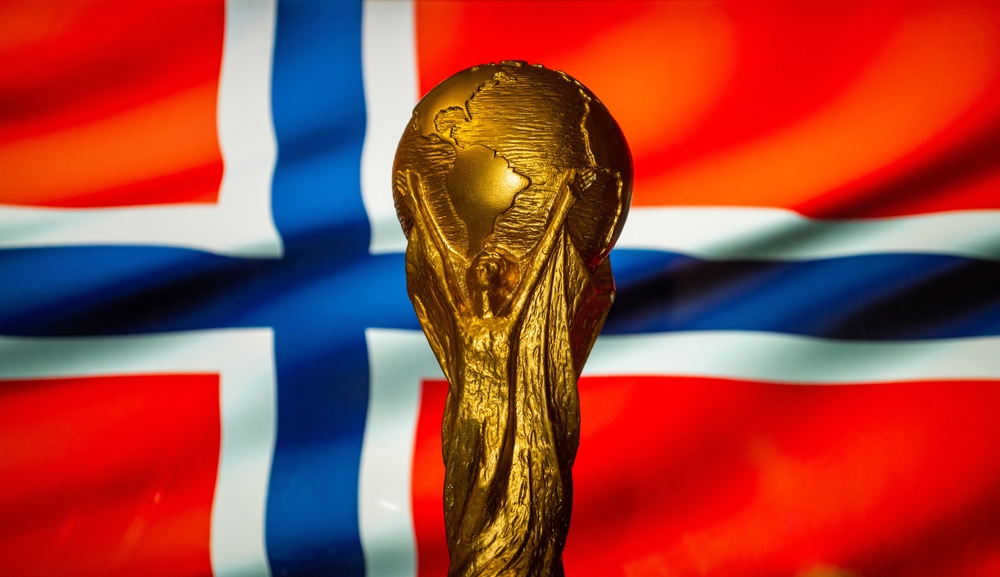
 They qualified, they scored 37 goals in eight games, and Erling Haaland – the most prolific striker in the history of the Premier League, a player whose goal rate defies statistical credibility – is finally about to play at a major international tournament. Norway’s World Cup 2026 campaign is one of the tournament’s most compelling narratives: a nation returning to the global stage after a 28-year absence, powered by arguably the most potent centre-forward on the planet and captained by one of Arsenal’s most influential creative forces in Martin Ødegaard. The Norway World Cup 2026 squad has been described repeatedly as a “dark horse” by the betting community, and that label has genuine substance. Ståle Solbakken’s side beat Italy home and away in qualifying, conceded just five goals across eight matches, and arrive in North America ranked inside the global top 15. Group I is formidable – France are the overwhelming group favourites, Senegal are reigning AFCON champions and Iraq make an emotional return after 40 years – but Norway’s route to the knockout stages is entirely achievable. The question every serious bettor must answer is whether this generation, making its first World Cup appearance, can convert extraordinary attacking talent into tournament results when Kylian Mbappé is on the other side of the pitch. For the full Norway World Cup 2026 odds picture and outright comparison, visit our World Cup 2026 betting hub.
Norway’s Road to the World Cup
 Norway’s qualification campaign for the 2026 World Cup was, by any measure, one of the finest in European football history. Drawn into UEFA Group I alongside Italy, Israel, Estonia and Moldova, Solbakken’s side delivered a perfect record: eight wins from eight matches, 37 goals scored and just five conceded. The headline results were two victories over Italy – 3-0 at home in June and a dramatic 4-1 triumph at San Siro on the final matchday of the campaign – results that carried enormous symbolic weight for a programme that had failed to qualify for the previous twelve major tournaments and ended Italy’s involvement in another World Cup cycle for the third successive time.
Haaland’s 16 qualifying goals made him the top scorer across the entire European qualifying programme, and the broader attacking statistics were equally eye-catching: 11-1 against Moldova, 5-0 against Israel, and not a single defeat across the entire campaign. Norway’s defensive record – just five goals conceded in eight qualifying fixtures – was the second-best of any five-team European group, and Solbakken consistently rotated his second and third-choice attackers while resting the headline names in the less demanding fixtures, confirming that the squad depth is real rather than illusory.
The campaign clinched Norway’s place at the World Cup for the first time since France 1998, ending a 28-year absence that had encompassed failed qualifying campaigns under several different managers. Solbakken, who has been in charge since 2020, becomes the first manager in almost three decades to take Norway to the tournament – a feat that carries even greater poignancy given the heart attack he suffered during training in 2001 that left him clinically dead for several minutes before his revival.
Manager & Tactics: Solbakken’s Direct System and the Haaland Conundrum
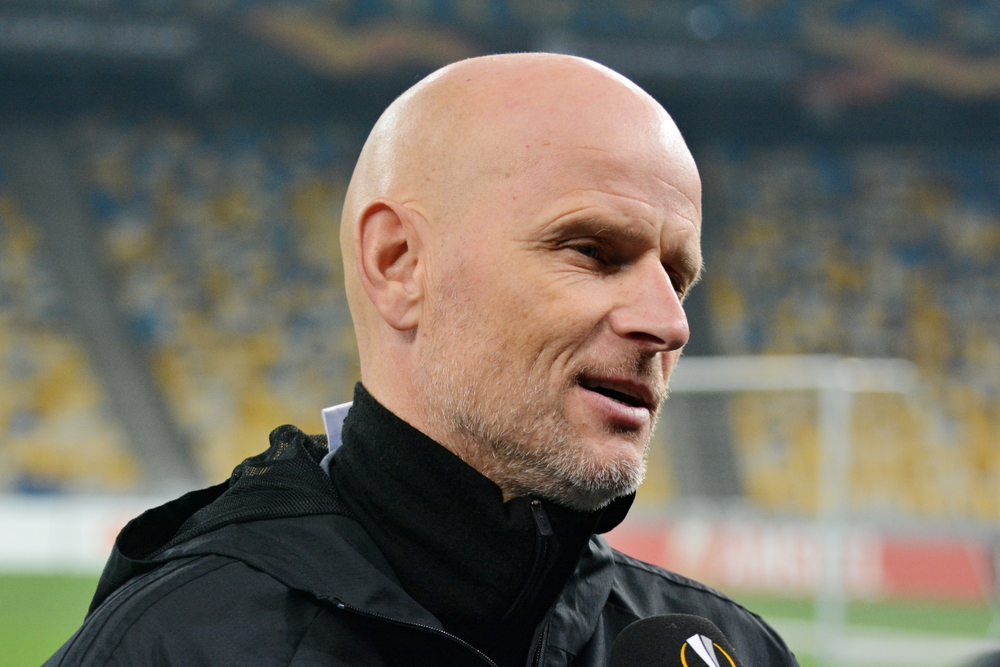 Ståle Solbakken is one of Scandinavian football’s most experienced managers, with extensive stints at Danish side FC Copenhagen – where he won multiple Danish Superliga titles and developed the club into a consistent European competitor – as well as spells at Köln and Wolverhampton Wanderers in the Premier League. His appointment as Norway manager in 2020 came with the mandate of finally delivering the country to a major tournament, and after a failed attempt at Euro 2020 qualification, he has now accomplished the ultimate version of that mission.
Tactically, Solbakken’s preferred system is a 4-3-3 or 4-2-3-1 that prioritises direct vertical passing into Haaland’s physical profile, rapid transitions and the creative interplay between Ødegaard and the wide attackers. The system is built from a double midfield pivot – typically Sander Berge and a more aggressive ball-winner – that screens the defence and allows Ødegaard the freedom to operate as the creative playmaker between midfield and attack. Norway’s attacking game plans have two distinct phases: when in possession, Ødegaard’s 25 qualifying chances created provide the creative engine; in transition, the pace of Antonio Nusa and Aron Dønnum on the flanks complement Haaland’s central dominance.
The fundamental tactical dilemma for Solbakken is how to balance the extraordinary goal output of the qualifying campaign against the reality of Group I’s quality. The 11-1 against Moldova and the dominant wins over Estonia were constructed against sides ranked outside the global top 50; France and Senegal represent a categorically different defensive challenge. Norway without Haaland – confirmed by a goalless March friendly against the Netherlands, in which they failed to generate a significant scoring chance despite Haaland’s absence – is a fundamentally different team. With him, they are dangerous to anyone; without him, the attacking system’s dependency becomes apparent.
Ødegaard’s fitness is the secondary concern. The Arsenal captain missed the March international window through a knee injury, and while he is expected to be fully available for the tournament, Solbakken has been cautious about his workload management. When both Haaland and Ødegaard are available and operating at full capacity, Norway’s ceiling is genuinely high; when either is missing or compromised, the tactical identity loses its defining sharpness.
Squad & Key Players
Norway’s squad blends world-class attacking talent with solid, if unspectacular, depth across the defensive and midfield positions. The Premier League concentration is significant – Haaland and Oscar Bobb at Manchester City, Ødegaard at Arsenal, Kristoffer Ajer at Brentford, Jørgen Strand Larsen at Crystal Palace – giving the squad a genuine familiarity with elite English football’s physical and tactical demands.
| Position | Player | Club | Age |
| GK | Ørjan Nyland | Seville | 33 |
| GK | Egil Selvik | Watford | – |
| RB | Julian Ryerson | Borussia Dortmund | 27 |
| CB | Kristoffer Ajer | Brentford | 26 |
| CB | Leo Skiri Østigård | Genoa | 25 |
| CB | Torbjørn Heggem | Bologna | 24 |
| LB | David Møller Wolfe | Wolves | 26 |
| MF | Sander Berge | Fulham | 27 |
| MF | Martin Ødegaard (c) | Arsenal | 27 |
| MF | Fredrik Aursnes | Benfica | 28 |
| MF | Oscar Bobb | Fulham | 21 |
| MF | Thelo Aasgaard | Rangers | 22 |
| FW | Erling Haaland (c) | Manchester City | 25 |
| FW | Alexander Sørloth | Atlético Madrid | 29 |
| FW | Antonio Nusa | RB Leipzig | 20 |
| FW | Aron Dønnum | Toulouse | 27 |
| FW | Jørgen Strand Larsen | Crystal Palace | 25 |
| FW | Andreas Schjelderup | Benfica | 21 |
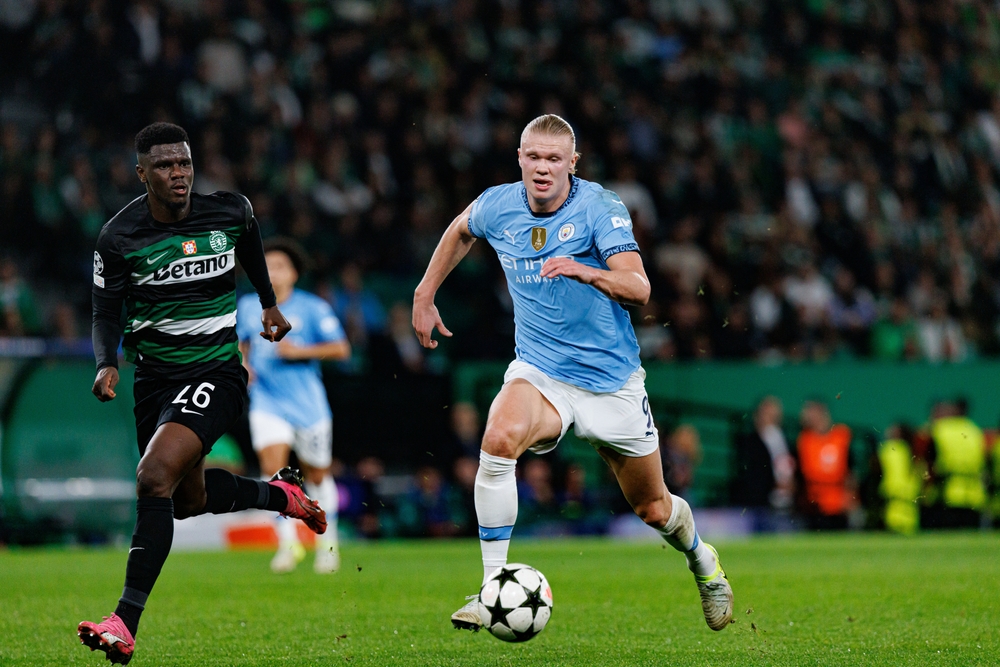
Erling Haaland – Forward, Manchester City (Joint Captain)
The statistics are almost offensive in their clarity: 16 qualifying goals in 8 matches, a Norway career record of 55 goals in 48 international appearances, and a Premier League record of more than 100 goals achieved in fewer games than anyone in the competition’s history. At 25, Haaland arrives at his first major tournament at the absolute peak of his physical powers – the 2024-25 season at Manchester City has confirmed that neither injury nor the burden of expectation has diminished his goal rate. His combination of aerial dominance, intelligent movement in behind, and first-touch finishing from any angle or distance represents the most straightforward tournament proposition in the betting markets: the Golden Boot. Norway’s entire attacking system exists to find him the ball in the spaces he occupies most frequently, and Ødegaard’s 25 qualifying chances created were predominantly designed with Haaland as the primary beneficiary. In the Golden Boot market with major UK bookmakers, Haaland at around 7/1 behind only Mbappé and Kane is the clearest value Norway angle available.
Martin Ødegaard – Midfielder, Arsenal (Captain)
The Arsenal captain has been Norway’s creative heartbeat for five years, and his 25 qualifying chances created – the highest of any Norwegian player and among the highest of any European player across the campaign – confirm his central importance to everything Solbakken builds. At 27, Ødegaard is at his peak creative age, combining Premier League rhythm at one of the world’s most technically demanding clubs with the leadership qualities of a captain who plays in the world’s most scrutinised league. The knee injury that kept him out of March’s friendlies is the only significant concern heading into the tournament; if he arrives fully fit, the Haaland-Ødegaard combination is the most potent club-to-international transfer of talent at this World Cup.
Alexander Sørloth – Forward, Atlético Madrid
The Atlético Madrid striker provides Norway with an attacking depth option that most nations would be delighted to have as their first choice. Sørloth’s five qualifying goals from eight appearances – combined with his Atlético form and his 26 international goals across 68 caps – confirm he is a match-winner in his own right rather than merely a reserve for Haaland. His aerial quality and hold-up play give Solbakken the flexibility to deploy different attacking configurations depending on the opponent, and his physicality in the channels creates the space that benefits Nusa’s and Dønnum’s direct running from wide positions.
Antonio Nusa – Forward
The 20-year-old has been one of qualifying’s brightest emerging talents, with three assists and a consistent goal threat from wide areas that makes him the most exciting young player in this Norway squad. His directness in one-versus-one situations – he left behind two defenders in the 3-0 qualifying win over Italy and finished with a powerful drive – confirms he has the technical ability to compete at the highest level. With the experience of a World Cup at 20, Nusa represents Norway’s clearest transitional asset: the player most likely to carry the attacking burden into the next international cycle.
Sander Berge – Midfielder
The defensive midfield anchor of Norway’s qualifying campaign, Berge provides the disciplined ball-winning and physical presence in front of the back four that allows Ødegaard and the front three to operate with attacking freedom. His 36 qualifying duels won – the highest of any Norwegian outfield player – confirm his importance as the team’s defensive shield. Without Berge’s screening, the back four is exposed; with him, Norway’s defensive shape is coherent enough to contain any attacking system for sustained periods.
Strengths & Weaknesses
Strengths
Haaland is the tournament’s most unignorable individual attacking weapon, and that fact alone transforms Norway’s group-stage prospects beyond anything their historical record would suggest. Against Iraq in the opening fixture, against Senegal in the second – a team that conceded fewer than 1.05 expected goals in their two 2022 group-stage matches against England and the Netherlands – and even against France, Haaland’s aerial and physical dominance creates problems that no defensive system can fully prepare for. The Premier League’s greatest ever goalscorer will be playing his first-ever major tournament, and the combination of freedom from expectation and the specific hunger of a player who has waited years for this moment is a potent psychological cocktail.
The Ødegaard-Haaland axis, when both are fit and sharp, produces one of the most technically refined striker-creator partnerships at this tournament. Ødegaard’s 25 qualifying chances created, delivered primarily in the pockets between opposition midfield and defence, feed directly into Haaland’s movement patterns. The relationship between the two is established across years of Premier League competition rather than intermittent international training camps, and that institutional understanding of each other’s movement and timing is not replicated by any other striker-creator combination in Norway’s potential bracket opponents.
The qualifying defensive record – five goals conceded in eight matches, including two victories over Italy – provides genuine evidence that this is not simply a team that scores goals without regard for defensive structure. Berge’s screening, Ajer’s aerial dominance and Solbakken’s disciplined defensive shape are capable of containing mid-table international opposition for extended periods.
Weaknesses
The dependency on Haaland is Norway’s most fundamental structural vulnerability. A goalless March friendly at the Netherlands – in which Norway failed to generate a single clear scoring chance without their centre-forward – confirmed that the attacking system collapses in his absence. Against France’s defensive resilience, and against Senegal’s organised low block, the question is not whether Haaland will score but whether Norway can create enough from other sources to avoid placing the entire tournament burden on a single player. No team has won the World Cup on the back of one striker’s goals alone.
The defensive depth behind the first-choice XI is a genuine concern at this level. Norway have never been tested by the quality of attacking movement that France, with Mbappé and Dembélé, will produce. The back four – solid but unspectacular in European terms – has not faced an attacking combination of that quality in any of the eight qualifying matches. Against Bolivia or Moldova, Ajer and Østigård were dominant; against Kylian Mbappé in transition, they face an entirely different category of problem.
Tournament inexperience is also a real factor. This is Norway’s first World Cup in 28 years, and no player currently in the squad has experienced a major tournament with the national team. The psychological adjustment from qualification excitement to the specific pressure of a group-stage match against France – where a defeat could eliminate them before a ball is kicked against Senegal – requires a collective resilience that can only be assumed, not confirmed.
Qualifying Campaign
Norway’s UEFA Group I qualifying campaign produced the highest goals-per-game average of any European group – 90 goals from 20 matches across the section – and the Scandinavians were the primary cause. Eight wins, no draws, no defeats, 37 goals scored and five conceded across a dominant campaign that dismissed Italy twice, annihilated Moldova 11-1 in their most memorable result, and confirmed Norway as European qualifying’s standout performers. Haaland’s 16 goals in the campaign made him the top scorer in the entire European qualifying programme.
| Team | P | W | D | L | GF | GA | GD | Pts | Status |
| Norway | 8 | 8 | 0 | 0 | 37 | 5 | +32 | 24 | Qualified |
| Italy | 8 | 5 | 0 | 3 | 21 | 12 | +9 | 15 | Play-offs (eliminated) |
| Israel | 8 | 4 | 0 | 4 | 19 | 20 | -1 | 12 | Eliminated |
| Estonia | 8 | 1 | 1 | 6 | 8 | 21 | -13 | 4 | Eliminated |
| Moldova | 8 | 0 | 1 | 7 | 5 | 32 | -27 | 1 | Eliminated |
World Cup History: A Generation Finally Gets Its Chance
Norway have appeared at the World Cup on just three previous occasions – 1938, 1994 and 1998 – a historically modest record for a nation that produced some of continental football’s finest moments in the 1990s. The 2026 tournament is their fourth appearance and the first since France 1998, ending what became a 28-year absence from football’s greatest stage – the longest gap between World Cup appearances of any European nation currently ranked in the global top 30.
The 1938 appearance produced a 2-1 extra-time defeat to Italy in the round of sixteen – the only match played in a tournament without a group stage. Norway then qualified for 1994 in the United States, where they exited at the group stage despite opening with a memorable 1-0 victory over Mexico through Jan Age Fjørtoft. The 1998 appearance in France represented the golden generation’s pinnacle: Norway finished second in their group behind Brazil, and in their final group match produced one of the tournament’s most famous upsets – a 2-1 victory over Brazil at Stade Vélodrome in Marseille, with Tore André Flo and Kjetil Rekdal (penalty) scoring. The round of sixteen brought another defeat to Italy, 1-0 in Marseille.
Norway have never progressed beyond the round of sixteen at a World Cup, and have never reached the quarter-finals. With Haaland, Ødegaard and a squad of players competing in top-five European leagues, the 2026 tournament represents the clearest opportunity this programme has ever had to change that historical ceiling. The betting market agrees: at 28/1, Norway are rated higher than Italy and Belgium for tournament progression prospects, despite their absence from major football’s stage for almost three decades.
Group I & Fixtures: France the Mountain, Senegal the Trap
Norway were drawn into Group I alongside France, Senegal and Iraq – confirmed as the final inter-confederation play-off qualifier in late March 2026 after defeating Bolivia. The group has been described as the tournament’s most balanced and most difficult from top to bottom, with three genuinely competitive sides and a France team ranked among the pre-tournament title favourites. Norway’s opening fixture against Iraq is the critical starting point: three points there are almost a prerequisite for anything beyond group qualification, given the difficulty of their remaining two matches.
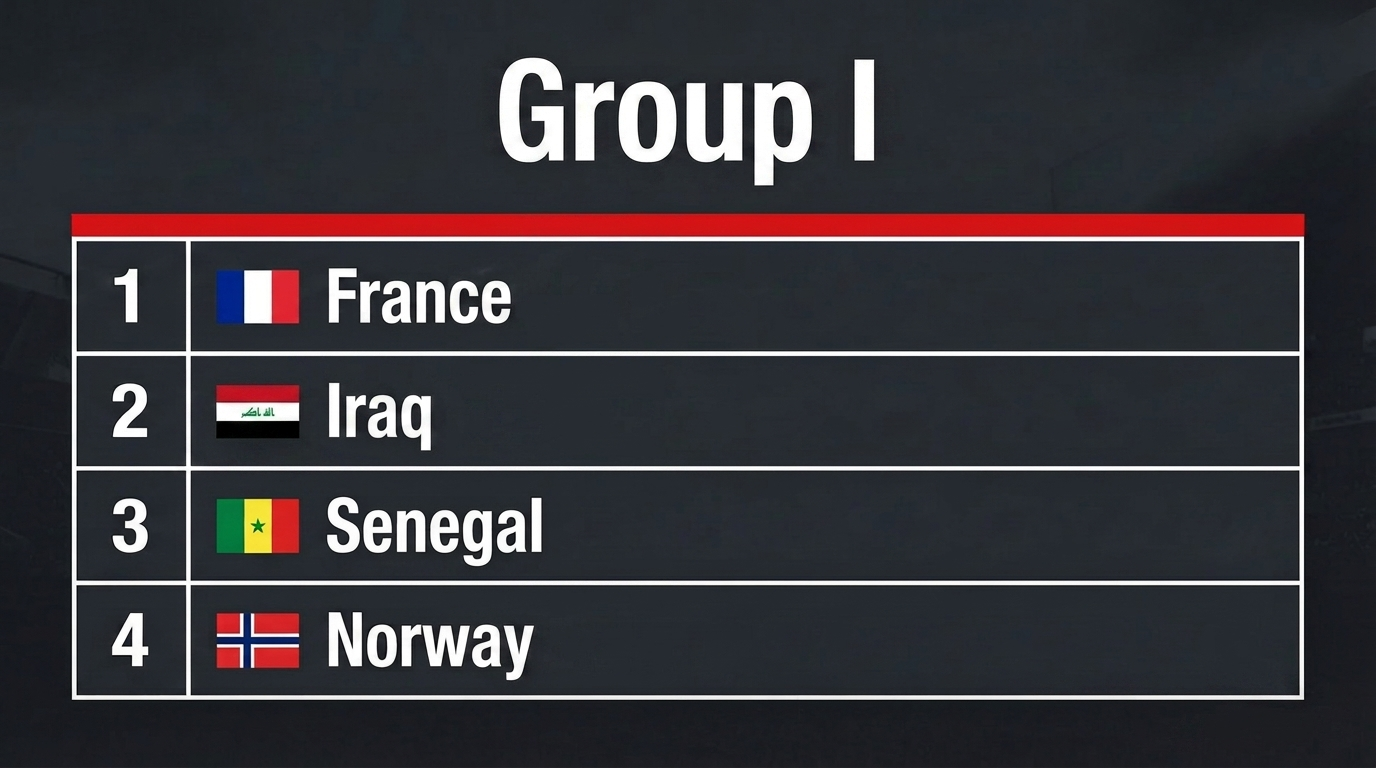
The Norway vs Senegal fixture is the group’s key second-place decider. Senegal are reigning AFCON champions and present exactly the type of organised, physical defensive challenge against which Haaland’s aerial game can be disrupted. The 2022 World Cup confirmed that Senegal can suppress elite European attacking talent – keeping England and the Netherlands under 1.05 xG in their group matches – and Solbakken will have prepared specific attacking patterns to break the Senegalese defensive structure that will be different from anything Norway faced in qualifying. And then France – a head-to-head with Mbappé, Dembélé and one of the tournament’s deepest squads. That fixture will most likely determine whether Norway top the group or qualify as runners-up.
| Date (BST) | Match | Venue | Stage |
| 16 June, 23:00 | Norway vs Iraq | Gillette Stadium, Boston/Foxborough | Group I |
| 22 June 01:00 | Norway vs Senegal | MetLife Stadium, New Jersey | Group I |
| 26 June 20:00 | Norway vs France | Gillette Stadium, Boston/Foxborough | Group I |
As group runners-up, Norway would face the winner of Group E (Germany’s group) in the Round of 32 – most likely Germany. See our World Cup 2026 groups guide for the full bracket.
Odds & Predictions: Why 28/1 Deserves Serious Attention
Norway are currently priced at around 28/1 to win the 2026 World Cup outright with the major UK bookmakers – placing them tenth or eleventh in the global market, behind the established powers but ahead of Italy, Belgium and Colombia. From a standing start of 100/1 before the qualifying campaign began, the market has moved considerably on the strength of the qualifying evidence, and our editorial view is that 28/1 remains genuinely interesting value for a specific reason: Haaland’s individual impact at a tournament creates a positive expected value scenario that no other player outside Mbappé and Kane provides.
The Golden Boot market is where Norway’s most compelling individual bet sits. Haaland at around 7/1 to be the tournament’s top scorer is historically underpriced for a player of his goal rate, tournament motivation and the specific group draw that places two manageable opponents in his path before the France fixture. The third-placed Premier League Golden Boot conversation this season, combined with 16 qualifying goals, makes this the sharpest single-player betting angle at this World Cup beyond the established Mbappé and Kane prices.
For outright tournament progression, Norway at 9/4 to reach the quarter-finals represents the cleanest value marker. The probability of qualifying from Group I – likely as runners-up behind France – is high. The round of sixteen against a potential Germany or Ecuador-calibre opponent from Group E is winnable with Haaland fit. It is the quarter-final and beyond where France and Spain’s superior squad depth would most likely end Norway’s run. But at 9/4 for the last eight, the historical value of a team with the best striker in the world cannot be dismissed.
Our prediction: Norway to finish second in Group I behind France, advance through the round of sixteen, and exit at the quarter-finals in a match that will confirm both the limits of their current squad and the extraordinary potential of the next chapter. For the full outright market and group specials, see our World Cup 2026 odds hub.
After 28 years away from the world stage, Norway’s return is one of 2026’s great stories – and unlike most romantic sporting narratives, this one comes with the most statistically extraordinary centre-forward the game has ever produced. Back Haaland for the Golden Boot, back Norway to reach the last eight, and watch this team with the knowledge that you are witnessing something genuinely new: a player of his generation, finally on the grandest stage, with the freedom and the team to write the history that has been denied him for his entire international career.