

 The 2026 FIFA World Cup is coming home – or rather, it is coming to the home of one of its co-hosts, and for the United States Men’s National Team, the weight of that privilege has never felt heavier or more energising simultaneously. Playing in front of their own crowds, on their own turf, in cities that will generate the kind of atmospheres only a home World Cup produces, the USMNT enter this tournament with a generation of talent that finally matches the scale of the occasion. Mauricio Pochettino – former manager of Tottenham Hotspur, Paris Saint-Germain and Chelsea, a man who has prepared players for Champions League finals and title deciders – has spent 19 months building towards this moment. Christian Pulisic leads a squad that includes Premier League stalwarts Chris Richards of Crystal Palace and Antonee Robinson of Fulham alongside European-based stars in Weston McKennie at Juventus and Tyler Adams at Bournemouth. The USA World Cup 2026 campaign opens against Paraguay in Los Angeles on 12 June, and the question that will define the summer is whether Pochettino can finally take this generation of American players beyond the quarter-finals – the ceiling the USMNT has never broken in the tournament’s modern era. For those tracking the USA World Cup 2026 odds and betting markets, this is the most interesting and most complex version of the USMNT proposition in a generation. Our complete squad guide, tactical analysis and predictions are below. For the full outright picture, visit our World Cup 2026 betting hub.
USA’s Road to the World Cup
 The United States qualified for the 2026 World Cup automatically as one of three co-hosts – alongside Canada and Mexico – a status confirmed by the FIFA Council in February 2023. Unlike every other nation at this tournament, the USMNT did not navigate the CONCACAF qualifying process, a double-edged reality that has shaped Pochettino’s preparation in ways that the other 47 nations have not had to consider. Without the pressure of qualifying matches to forge tactical coherence and competitive rhythm under live tournament conditions, Pochettino has had to use friendlies and the Gold Cup to test his ideas, integrate new players and establish the squad hierarchy.
The results of that process have been uneven. Highlights include a 5-1 victory over Uruguay in late 2025, a run to the Gold Cup final (ultimately lost 2-1 to Mexico), and wins over Australia and Japan in the autumn window that closed the year with genuine momentum. The lows are more instructive: a 5-2 defeat to Belgium on 28 March 2026 in Atlanta – in which the Americans led at half-time before conceding four unanswered second-half goals – followed by a 2-0 loss to Portugal three days later. Pochettino publicly described the Belgium result as a “reality check” and insisted it provided valuable information. What it undeniably confirmed is that when the defensive structure is breached and Pulisic is not producing at his peak, this team currently lacks the depth to compensate at the highest level.
Two further warm-up fixtures – against Senegal on 31 May and Germany on 6 June – represent the final data points before Pochettino names his 26-man squad on 26 May, and will determine the final decisions at goalkeeper, centre-back and in the striker competition.
Manager & Tactics: Pochettino’s System and the Formation Question
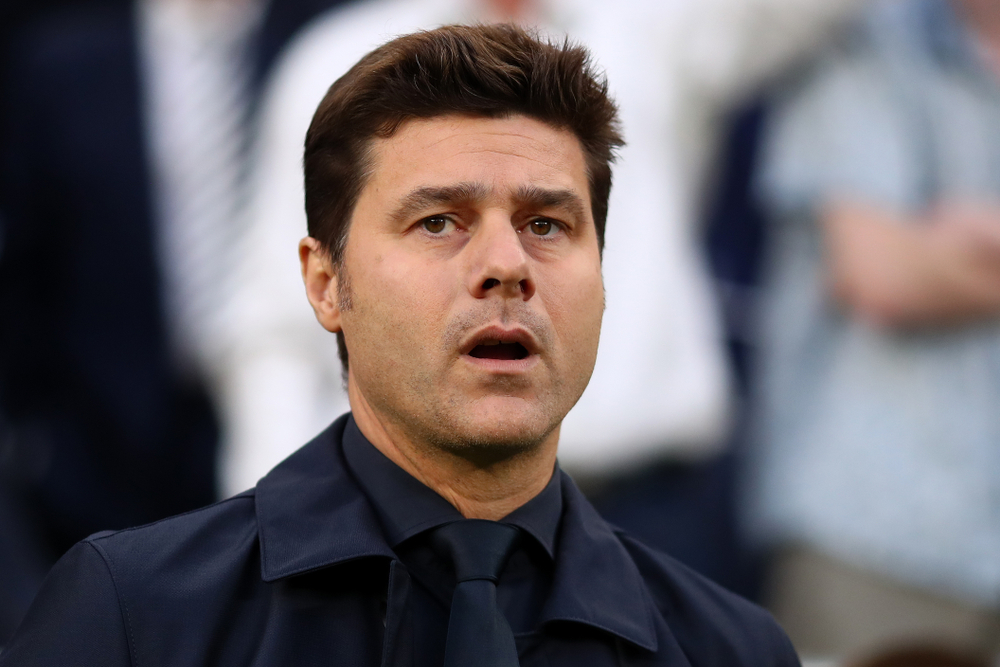
Mauricio Pochettino’s appointment as USMNT manager in September 2024 represented the most high-profile hire in US Soccer history. The Argentine, who built Tottenham Hotspur into Champions League finalists and managed PSG’s galaxy of talent, brings a level of tactical sophistication and player-management experience that no previous USMNT manager has possessed. His appointment was widely interpreted as a statement of intent: this is a programme that now expects to compete with the world’s best rather than merely participate.
What Pochettino has been building is a high-pressing, positionally flexible system that demands technical quality in tight spaces and rapid transitions. In his preferred 4-2-3-1, Tyler Adams and either Tanner Tessmann or Johnny Cardoso sit as the double pivot – Adams the defensive anchor and tempo-setter, the second man providing the progressive carrying. Weston McKennie’s versatility is central to Pochettino’s system: he can operate at the base of the midfield, as an eight or as a ten, giving the manager the ability to adapt the shape without changing the personnel. Above that double pivot, Pulisic has been deployed as the number ten with significant freedom to drift, with Balogun as the central striker and pace on both flanks.
The formation has not yet fully settled. Pochettino used a 3-4-3 heavily in the autumn 2025 window, before reverting to a 4-2-3-1 against Belgium and a 4-3-3 against Portugal in March, suggesting the staff are still identifying the optimal structure. The back three gives more natural coverage behind the wing-backs and suits Antonee Robinson’s attacking instincts from the left, but demands greater ball-playing quality from the central defenders than the current options reliably provide.
The central tactical concern remains Pulisic’s form. The AC Milan captain has gone eight consecutive USMNT appearances without scoring, extending his international drought into an alarming pattern for a tournament in which his team’s chances of deep progress depend substantially on him producing at his 2023-24 peak. Pochettino has been careful to manage expectations publicly while privately ensuring Pulisic retains his starting place and the creative freedom the system requires of him. The hope – and it is currently a hope rather than a certainty – is that the tournament’s unique emotional environment of playing at home in front of enormous American crowds will unlock a level of performance that recent club and international form has not consistently delivered.
Squad & Key Players
The USMNT squad is defined by a core of European-based players – many with multiple seasons of top-five league football behind them – supplemented by select MLS contributors whose fitness and form under Pochettino’s system have earned their inclusion. The final 26-man list will be announced on 26 May 2026, with the decisions at goalkeeper, centre-back and striker the most genuinely open positions.
| Position | Player | Club | Age |
| GK | Matt Freese | New York City FC | 25 |
| GK | Matt Turner | New England Revolution | 30 |
| RB | Sergiño Dest | PSV | 25 |
| CB | Chris Richards | Crystal Palace | 24 |
| CB | Tim Ream | Charlotte FC | 37 |
| CB | Mark McKenzie | Toulouse | 25 |
| CB | Miles Robinson | FC Cincinnati | 28 |
| LB | Antonee Robinson | Fulham | 28 |
| MF | Tyler Adams | Bournemouth | 26 |
| MF | Weston McKennie | Juventus | 27 |
| MF | Tanner Tessmann | Lyon | 24 |
| MF | Johnny Cardoso | Atlético Madrid | 23 |
| MF | Malik Tillman | Bayer Leverkusen | 24 |
| MF | Yunus Musah | Atalanta | 23 |
| FW | Christian Pulisic (c) | AC Milan | 27 |
| FW | Folarin Balogun | AS Monaco | 24 |
| FW | Tim Weah | Juventus | 25 |
| FW | Ricardo Pepi | PSV | 23 |
| FW | Haji Wright | Coventry City | 25 |
Christian Pulisic – Forward/Midfielder, AC Milan (Captain)
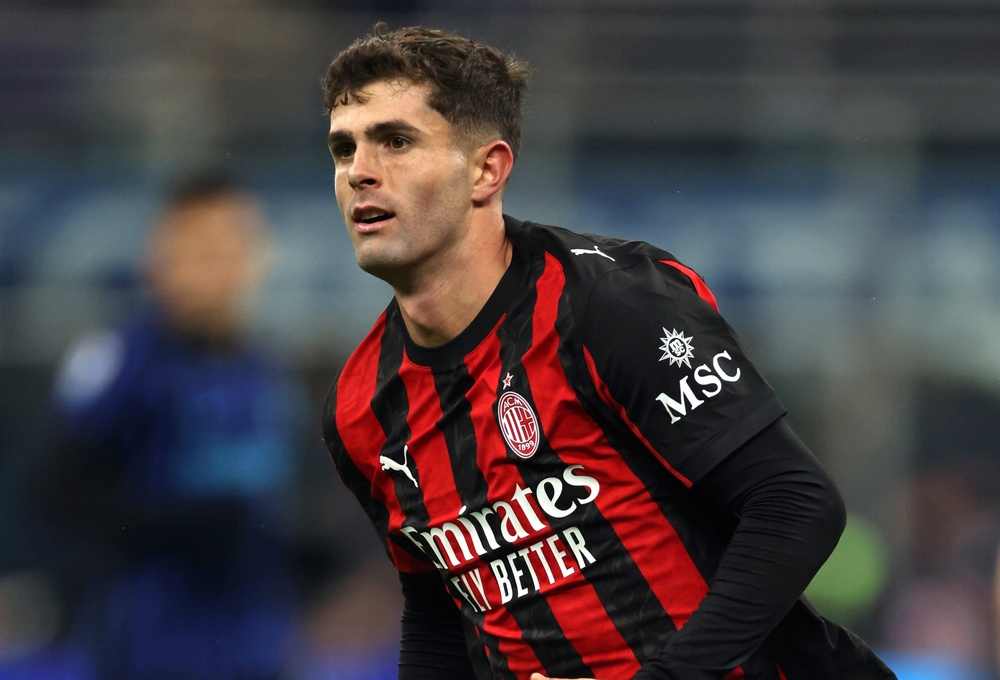
The 27-year-old captain is the undisputed leader and the face of the entire USMNT project. His 32 international goals and record appearance tally among active American players place him in unambiguous distinction from every other player in the squad. His performances at AC Milan – scoring the derby winner and delivering Champions League moments – confirm the talent is genuinely elite when fit and motivated. The concern heading into the tournament is a goalscoring drought that has stretched across eight consecutive USMNT appearances, and a club form since late December that has been inconsistent. The home tournament factor – and the emotional intensity of a World Cup in his own country – is Pochettino’s primary reason for confidence that the real Pulisic will appear in June.
Tyler Adams – Midfielder, Bournemouth
The Bournemouth defensive midfielder is, by consensus, the single most important player in Pochettino’s system. His tenacious ball recovery, precise passing under pressure and defensive intelligence in front of the back four provide the organisational foundation without which the USA’s creative players cannot function. Adams wore the captain’s armband at the 2022 World Cup and his absence through injury has been the clearest indicator of how much the team relies on him – without their Bournemouth pivot, the USMNT have struggled to impose themselves against top-20 opposition. His fitness for the opener against Paraguay is the tournament’s first major selection question for Pochettino.
Folarin Balogun – Forward, AS Monaco
The 24-year-old Monaco striker has become Pochettino’s first-choice number nine and his form in the second half of the 2025-26 season – 10 goals in his last 13 Ligue 1 and Champions League appearances – is the most encouraging positive development in the squad’s preparation. Born in London and raised between England and New York, Balogun represents the technical evolution of American striking: intelligent movement, crisp finishing and the ability to hold the ball in tight spaces rather than relying purely on pace. His eight goals in 23 international caps confirm international delivery as well as club consistency, and he is the player most likely to top the USA’s internal scoring charts at this tournament.
Weston McKennie – Midfielder, Juventus

The 27-year-old Texan has been having a career-best season at Juventus – scoring and assisting in Serie A and Champions League with a frequency that confirms his development into one of the most complete box-to-box midfielders outside the absolute elite. His versatility across multiple midfield roles gives Pochettino the tactical flexibility to adapt the team’s shape depending on the opponent without losing the quality required at the highest level. When McKennie is operating at this level, the USMNT’s midfield becomes genuinely competitive against European opposition.
Chris Richards – Centre-back, Crystal Palace
The Crystal Palace centre-back is the I-beam of a USMNT defensive structure that has otherwise struggled for consistency. His aerial ability, Premier League-forged composure under pressure and leadership qualities in the back line make him the one defensive player Pochettino arguably cannot do without. The concern is that his partner is currently Tim Ream at 37, or a combination of McKenzie and Robinson who are talented but untested at the highest level. Getting Richards fit – he missed the Belgium and Portugal March tests through injury – is a prerequisite for confidence in the defensive structure.
Strengths & Weaknesses
Strengths
Home advantage at a World Cup is one of the most statistically significant factors in tournament football. Of the 22 host nations in World Cup history, 21 have reached the knockout rounds – a near-perfect record that speaks to the combination of crowd support, stadium familiarity and the psychological impact of playing in front of one’s own nation at the highest-stakes tournament in the sport. The USMNT will open in Los Angeles, play in Seattle, and close the group in Los Angeles again – venues where the reception will be uniquely intense and where the pressure, paradoxically, may serve as fuel rather than burden for a squad of young, ambitious players raised on American competitive sport’s culture of pressure performance.
The quality of the European-based core is genuinely impressive in its depth. McKennie’s Juventus form, Balogun’s Monaco production, Richards’ Crystal Palace development, Robinson’s Fulham solidity and Cardoso’s Atlético Madrid emergence represent a generation of American players who have truly established themselves in top-five European leagues rather than merely featuring as squad members. When these players are all fit and operating at their club-level output, the USMNT is competitive against the world’s best on a good day.
Pochettino himself is a structural advantage. His experience managing Premier League title challengers, Champions League finalists and a Paris squad built around Neymar, Messi and Mbappé provides exactly the high-pressure man-management skill set that a home World Cup demands. His players have spoken about the tactical clarity and confidence he has installed in the programme, and his stated ambition of reaching the semi-finals signals an internal expectation that the squad respects.
Weaknesses
The defensive structure is the campaign’s primary vulnerability. Against Belgium in March, a team that ranks below the top-three favourites, the USA conceded five. Against Portugal, without several of their biggest names, they conceded two. Tim Ream at 37 does not provide the pace or aerial dominance required against quick, technical European strikers, and if Chris Richards is not at full fitness, the back line becomes a genuine liability in knockout matches against elite opposition. The high defensive line that Pochettino’s system demands creates space behind that better organised counter-attacking sides will identify and target.
Pulisic’s form, as noted, is the central offensive concern. The USA are built around his creative capacity and goal threat from an advanced ten position, and when he is not producing – eight scoreless USMNT appearances heading into the tournament – there is no other player in the squad capable of providing the same individual quality in one-versus-one situations or the same variety of attacking threat. Balogun can score goals, McKennie can contribute from midfield, but neither replaces what Pulisic delivers at his best.
The lack of competitive qualifying experience is also a genuine disadvantage relative to every other team at this tournament. While Pochettino has managed the preparation intelligently with test matches against Belgium and Portugal, there is no substitute for the competitive intensity of must-win qualification matches in terms of forging the collective resilience that knockout football demands.
Qualifying Campaign
The United States qualified for the 2026 World Cup automatically as a co-host nation, bypassing the CONCACAF qualification process entirely. Their berth was confirmed by the FIFA Council on 14 February 2023. Canada and Mexico, the other two host nations, similarly qualified automatically. This means there is no qualification table to assess for the USA – the preparation has been conducted entirely through friendlies and the CONCACAF Gold Cup.
Key results under Pochettino since his September 2024 appointment provide the clearest indication of the squad’s development trajectory. The Gold Cup run to the final – and the 2-1 defeat to Mexico in that match – delivered competitive tournament experience and settled several positional battles. The autumn 2025 five-match unbeaten run, culminating in a 5-1 victory over Uruguay, set the stage for what should have been a strong March 2026 final impression, only for the Belgium and Portugal results to interrupt the momentum. Pochettino has faced 24 matches in his tenure, with his final roster to be named on 26 May.
| Match | Result | Competition | Date |
| USA vs Uruguay | 5-1 W | Friendly | Nov 2025 |
| USA vs Gold Cup Final vs Mexico | 1-2 L | Gold Cup Final | Jul 2025 |
| USA vs Belgium | 2-5 L | Friendly | 28 Mar 2026 |
| USA vs Portugal | 0-2 L | Friendly | 31 Mar 2026 |
| USA vs Senegal | TBC | Friendly | 31 May 2026 |
| USA vs Germany | TBC | Friendly | 6 Jun 2026 |
World Cup History: The Tournament That Could Finally Define a Generation
The United States have appeared at eleven previous World Cups, with a record of tournament participation that belies the sport’s perceived lesser status within American culture. Their best-ever finish came at the very first tournament in 1930, when the USA reached the semi-finals before a 6-1 defeat to Argentina, subsequently claiming bronze in the third-place play-off. In the modern era, the high-water mark was the 2002 World Cup in South Korea and Japan, when Bruce Arena’s side reached the quarter-finals before a 1-0 defeat to Germany – a result and tournament run that remain the peak of the USMNT’s competitive achievements.
The 1994 home tournament – the last time the USA hosted the World Cup – produced a round-of-sixteen exit against eventual winners Brazil, with the famous Bebeto and Romário partnership proving one quality too many for Tab Ramos and company. The 2010 World Cup in South Africa delivered another round-of-sixteen appearance, this time eliminated by Ghana in extra time in one of the tournament’s great upsets. In 2022 in Qatar, under Gregg Berhalter, the USA made the round of sixteen before losing 3-1 to the Netherlands.
The pattern is consistent: the USMNT has reached the knockout rounds in three of the last four tournaments but has never progressed beyond the quarter-finals. Pochettino has stated explicitly that reaching the semi-finals is his target. The history makes it clear that achieving that would be the most significant result in the programme’s history, and the first confirmation that American football has truly arrived at the sport’s top table.
Group D & Fixtures: A Manageable Draw with a Dangerous Turkish Subplot
The USA were drawn into Group D alongside Paraguay, Australia and Turkey (Türkiye), who qualified for the tournament via the UEFA play-offs in March 2026 after defeating Kosovo and Romania. The group presents a realistic path to qualification and potentially to topping the section – the market reflects this with the USA priced around evens to win Group D – though Turkey’s presence is more dangerous than a casual glance at the bracket suggests. Turkey reached the quarter-finals of Euro 2024, carry players of genuine quality in Hakan Çalhanoğlu and Kenan Yıldız, and will approach the USA fixture in Los Angeles on 25 June as a genuine opportunity to top the group rather than merely finish second.
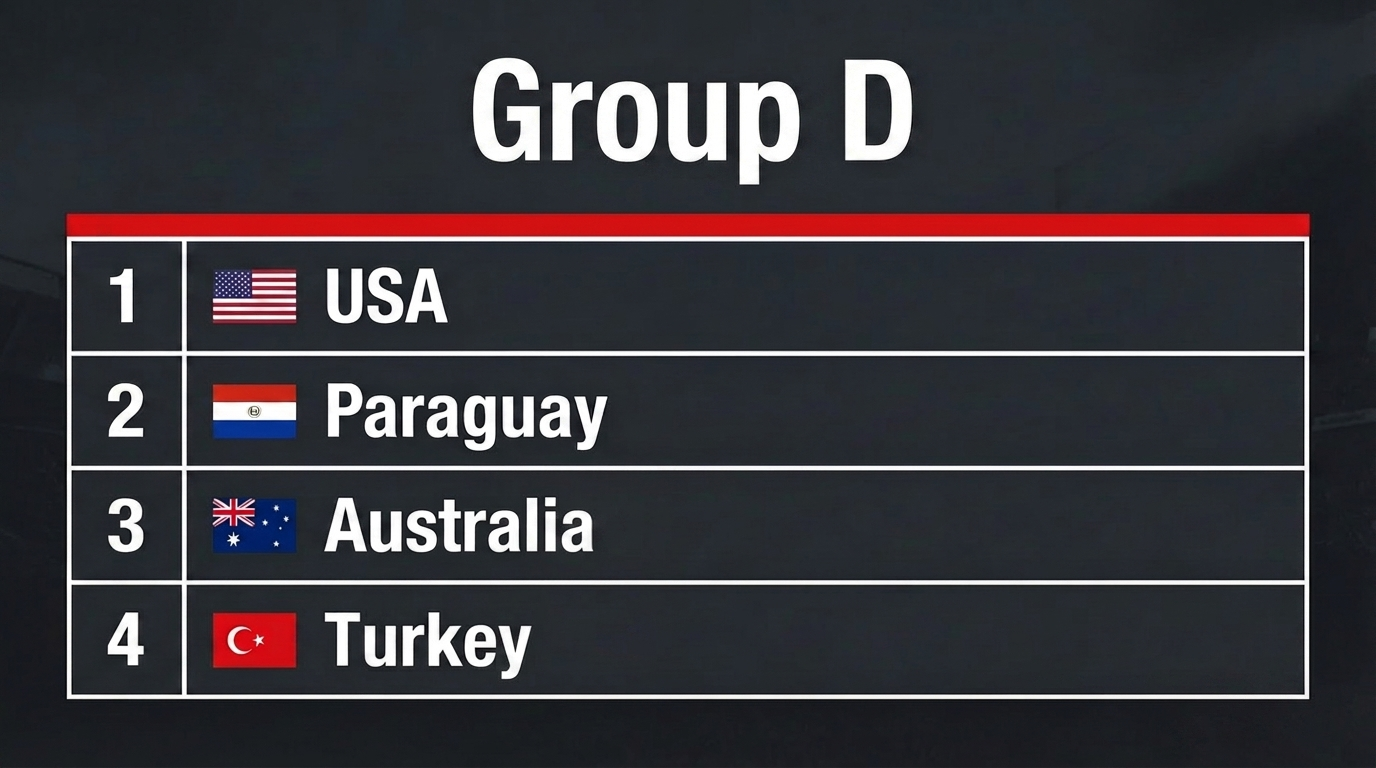
The opener against Paraguay at SoFi Stadium in Los Angeles on 12 June is the most critical fixture for establishing tournament momentum. Paraguay are disciplined and physically robust but have chronic goalscoring issues – no Paraguayan player scored more than three goals in CONMEBOL qualifying – and the combination of American home support and Pochettino’s attacking system should be sufficient to win. The Australia fixture in Seattle on 19 June carries the additional significance of playing in a city with considerable Premier League affinity, and the Socceroos’ physical approach will test the USA’s defensive set-up in a different way from Paraguay’s organisation.
| Date (BST) | Match | Venue | Stage |
| 13 June, 02:00 | USA vs Paraguay | SoFi Stadium, Los Angeles | Group D |
| 19 June, 20:00 20:00 | USA vs Australia | Lumen Field, Seattle | Group D |
| 26 June, 03:00 | USA vs Turkey | SoFi Stadium, Los Angeles | Group D |
As group winners, the USA would face a third-placed team from a specific group bracket in the Round of 32. See our World Cup 2026 groups guide for the full knockout bracket.
Odds & Predictions: The Case for and Against the USA at 65/1
The USA are currently priced at around 65/1 to win the 2026 World Cup outright with the major UK bookmakers – placing them outside the top twelve in the market, broadly equivalent to Mexico and Uruguay. The implied probability at 65/1 is approximately 1.5%, which our editorial team considers a market that has correctly identified the structural ceiling while underweighting the specific home advantage factor in the near-term progression markets.
The outright market for the USA is, bluntly, difficult to recommend. The defensive vulnerabilities exposed by Belgium and Portugal are exactly the type of problems that elite knockout opposition in the quarter-final and beyond will identify and exploit systematically. The Portugal result – 2-0 against a side missing Ronaldo, Fernandes and Bernardo Silva – was particularly concerning from a betting perspective, as it suggests the team’s ceiling against top-20 European opposition without full squads is genuinely limited.
However, the near-term progression markets are a different proposition entirely. The USA at around 1/7 to qualify from Group D is fair value as a multi-bet foundation. The quarter-final markets – the USA reaching the last eight is priced at around 5/1 – reflect the genuine possibility that home advantage, a manageable bracket through the Round of 32 and the Round of 16, and Pochettino’s tactical acumen can deliver the deepest USMNT run in the tournament’s modern era. The most likely Round of 16 opponent would be Belgium – a team that is past its peak despite beating the USA in March, and one where the revenge narrative and home-crowd factor would be extreme.
Our prediction: USA to top Group D, exit in the Round of 16 or quarter-finals. For full outright prices, group markets and player specials, see our World Cup 2026 odds hub.
The 2026 World Cup represents the most important moment in American football’s history, and the USMNT are carrying a nation’s expectations with a squad that is – for the first time – genuinely equipped to validate them. Pulisic’s form, Adams’ fitness and the resolution of the defensive questions will determine whether this is the summer America falls in love with its national team. The world will be watching, and at home, the Stars and Stripes will have every conceivable advantage except the one that matters most: a proven pedigree of winning the biggest matches when everything is on the line.