

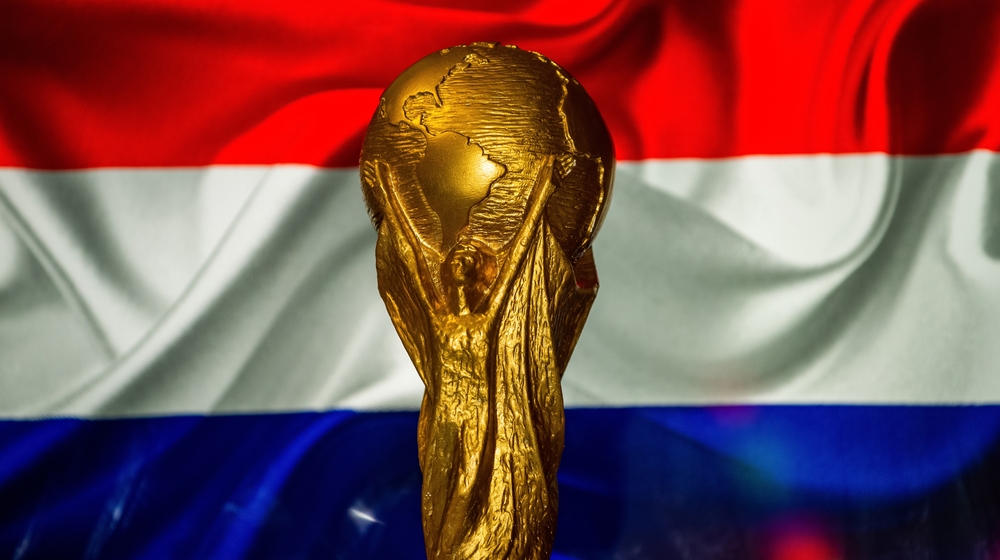
 Football has produced few more tantalising recurring questions than this one: when will the Netherlands finally win a World Cup? Three runners-up finishes, a European Championship in 1988, and a global reputation as the spiritual home of Total Football – yet the trophy remains conspicuously absent from the Dutch cabinet. As Ronald Koeman’s Oranje prepare for their campaign in North America this summer, the case for optimism has rarely been stronger. The Netherlands World Cup 2026 squad is built on Premier League backbone – Virgil van Dijk, Ryan Gravenberch, Cody Gakpo, Jurriën Timber, Jeremie Frimpong – and supplemented by elite Continental talent in Frenkie de Jong, Tijjani Reijnders and an attacking pool that, on paper, gives Koeman more tactical options than any predecessor. They qualified top of their group, reached the Euro 2024 semi-finals before a heartbreaking late defeat to England, and enter this tournament ranked in the global top ten. Yet the pattern of tournament football – of the Oranje reaching the final stages only to fall short at the decisive moment – creates a paradox that shapes every betting angle. For those weighing up the Netherlands World Cup 2026 odds, this is a team with the talent to lift the trophy and the history to make you hesitate. Our World Cup 2026 betting hub has the full outright market for comparison.
Netherlands’ Road to the World Cup
 The Netherlands arrived at the 2026 World Cup qualification draw having been eliminated from the Nations League quarter-finals on penalties by Spain. That placed them in UEFA Group G alongside Poland, Finland, Lithuania and Malta – a five-team section that was challenging enough to demand consistency, if not the most intimidating group available to a side of their quality.
Over eight fixtures played from June to November 2025, the Oranje were unbeaten throughout. They opened in emphatic fashion in June: a 2-0 win in Helsinki against Finland, followed by an 8-0 demolition of Malta at home that sent an early statement of intent. The Poland double-header, played in September and November, was the campaign’s most significant examination – two 1-1 draws against Michał Probierz’s side confirmed that the Netherlands’ defensive structure remains imperfect against well-organised opposition, but their superior goal difference over Poland ultimately settled the group in their favour. The campaign’s headline result was the 4-0 home win over Finland in October, with a 4-0 victory over Lithuania completing qualification with a match to spare in November.
Cody Gakpo emerged as the standout individual performer, his versatility and direct running causing problems for every opposition defence across the campaign. The qualifying record of six wins, two draws and zero defeats from eight matches, with 27 goals scored and just four conceded, gave Koeman’s squad a level of confidence heading into the tournament that the Netherlands have rarely carried into a major competition at such early strength.
Manager & Tactics: Koeman’s Pragmatic Reinvention of Dutch Football
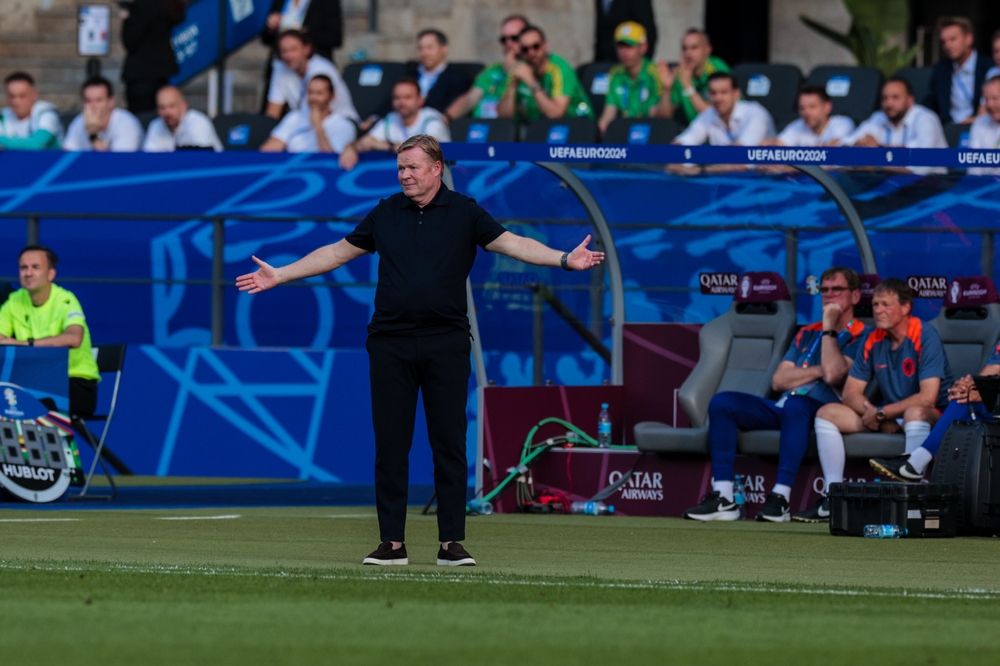
Ronald Koeman returned to the Netherlands job in January 2023 for his second spell in charge, replacing Louis van Gaal following the 2022 World Cup quarter-final exit on penalties to Argentina. His first tenure, from 2018 to 2020, had successfully rebuilt Dutch football after the shameful failures to qualify for Euro 2016 and the 2018 World Cup, guiding them to the Nations League final in 2019 and Euro 2020 qualification. His return has taken that rebuilding further, with Euro 2024’s semi-final appearance – ending in a 2-1 defeat to England in the dying minutes in Dortmund – representing the squad’s most competitive performance at a major tournament since the 2010 World Cup final.
Tactically, Koeman has moved the Netherlands away from the rigid positional play of the classic Dutch school towards a more flexible 4-3-3 or 4-2-3-1 depending on opponent. The double pivot of Gravenberch and De Jong is central to everything: Gravenberch’s box-to-box energy and pressing intensity, honed under Arne Slot at Liverpool, provides the defensive cover that allows De Jong the freedom to operate higher and carry the ball forward with the progressive passing range that distinguishes him from any other midfielder in the squad. The key attacking tension is on the left, where Gakpo’s directness and Donyell Malen’s pace create width, with Reijnders arriving late from midfield to add a third goal threat from that side.
The most significant tactical concern for the tournament is the vulnerability behind the high defensive line when possession is lost in transition. Japan – the group’s most dangerous opponent – exploited precisely this weakness against Germany and Spain in 2022, using rapid transitions to attack the space behind elite defensive lines before they could recover their shape. Koeman has been developing a counter-pressing response to this threat, but its effectiveness against Japan’s speed in the final third remains untested at the highest level.
A significant personnel concern is Xavi Simons, who has been ruled out of the tournament with a knee injury. The Paris Saint-Germain playmaker’s creative spark from the number ten position was a key weapon for Koeman, and his absence places additional creative responsibility on Reijnders – an excellent player, but a different profile to the fleet-footed Simons. Frenkie de Jong’s recurring ankle injury history also means Koeman must carry contingency plans into every match.
Squad & Key Players
The Netherlands squad is defined by its extraordinary Premier League representation. At the World Cup, Koeman will be able to call upon players who have spent an entire season competing at the highest level of English football – a crucial psychological and physical advantage that few other nations can match for the number of top-flight minutes accumulated by their key players.
| Position | Player | Club | Age |
| GK | Bart Verbruggen | Brighton & Hove Albion | 22 |
| GK | Mark Flekken | Bayer Leverkusen | 32 |
| GK | Justin Bijlow | Genoa | 26 |
| RB | Denzel Dumfries | Inter Milan | 29 |
| RB | Jeremie Frimpong | Liverpool | 24 |
| CB | Virgil van Dijk (c) | Liverpool | 34 |
| CB | Micky van de Ven | Tottenham Hotspur | 24 |
| CB | Jurriën Timber | Arsenal | 24 |
| CB | Nathan Aké | Manchester City | 30 |
| CB | Jan Paul van Hecke | Brighton & Hove Albion | 25 |
| MF | Frenkie de Jong | Barcelona | 28 |
| MF | Ryan Gravenberch | Liverpool | 23 |
| MF | Tijjani Reijnders | Manchester City | 27 |
| MF | Teun Koopmeiners | Juventus | 27 |
| FW | Cody Gakpo | Liverpool | 26 |
| FW | Memphis Depay | Corinthians | 32 |
| FW | Donyell Malen | Borussia Dortmund | 26 |
| FW | Wout Weghorst | Ajax | 33 |
Squad reflects Koeman’s March 2026 selection. Xavi Simons (Paris Saint-Germain) has been ruled out with a knee injury. Final 26-man list confirmed by 1 June 2026. Jurrien Timber withdrew from the March squad through injury but is expected to recover for the tournament.
Virgil van Dijk – Centre-back, Liverpool (Captain)
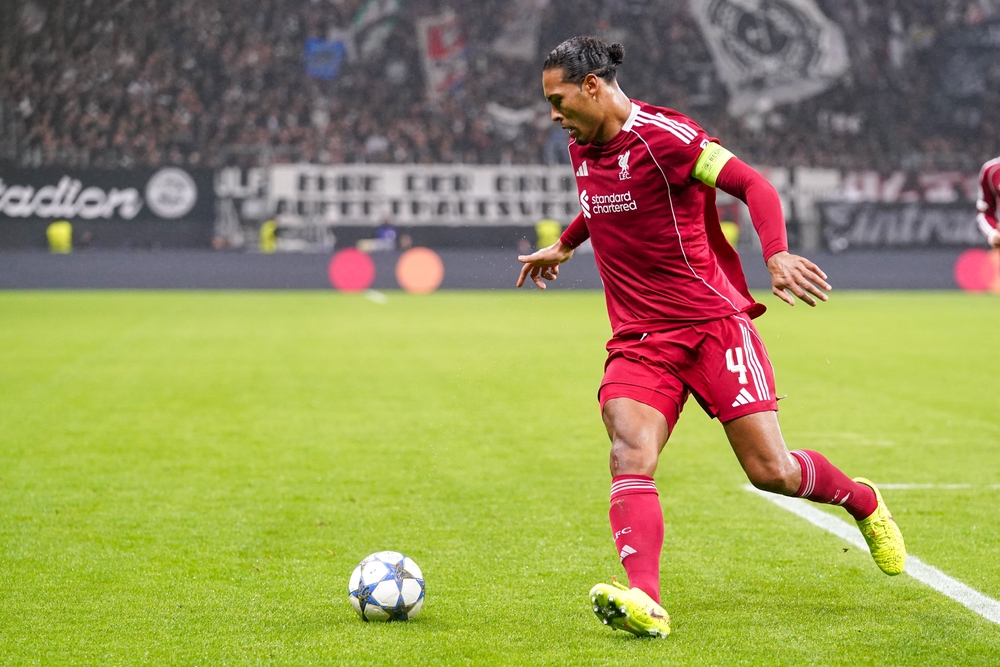
The Liverpool captain and Netherlands skipper turns 35 during the tournament, making this almost certainly his final World Cup. Ranked as the finest centre-back in world football by multiple sources, Van Dijk brings aerial dominance, organisational authority and a passing range from deep that initiates the attacking play Koeman’s system depends upon. His value extends beyond the defensive metrics: his ability to read the game and impose psychological authority on both his own defenders and opposing forwards is an irreplaceable quality in knockout football. A difficult Liverpool season has raised questions about his form, but at a major tournament, Van Dijk has historically elevated his performance relative to club level.
Cody Gakpo – Forward, Liverpool
The Liverpool forward is the Netherlands’ most versatile attacking threat and their top qualifying scorer. His ability to play as a central striker, left winger or attacking midfielder gives Koeman flexibility that no other Dutch forward provides, and his six goals across the previous two major tournaments confirm he performs when the pressure is highest. After Simons’ injury, Gakpo carries an even greater creative and goal-scoring burden for this squad. At 26, this is his peak tournament.
Ryan Gravenberch – Midfielder, Liverpool
The transformation Gravenberch has undergone under Arne Slot at Liverpool represents one of the most compelling development stories in European football. From a peripheral figure at Bayern Munich, the 23-year-old has emerged as a complete box-to-box midfielder – pressing intensely, winning the ball, carrying forward and arriving in the box at the right moments. His partnership with De Jong gives the Netherlands a midfield pivot that can both protect the defence and transition to attack with equal fluency. His experience of high-pressure Premier League matches across a full season is exactly the preparation a World Cup requires.
Frenkie de Jong – Midfielder, Barcelona
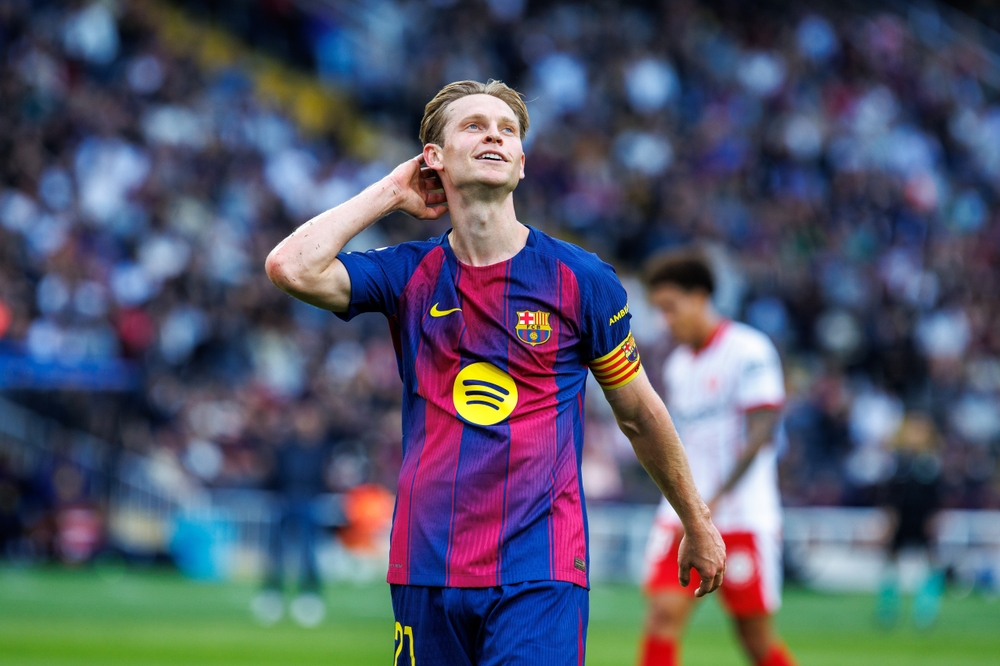
The Barcelona midfielder remains, when fit, the most technically distinctive player in the Dutch squad. His ability to receive the ball under intense pressure, turn in tight spaces and drive forward with progressive carries disrupts defensive structures in ways that no other Dutch midfielder can replicate. The caveat, always, is fitness: a recurring ankle issue has periodically disrupted his campaign, and Koeman’s squad preparations have included contingency planning for a tournament in which De Jong may need careful management across eight potential matches.
Tijjani Reijnders – Midfielder, Manchester City
Reijnders moved to Manchester City last summer and has continued to perform at the level that made him one of Serie A’s standout midfielders at AC Milan. His passing accuracy, ability to receive under pressure and late arrivals from midfield into dangerous areas – his goal against Norway in the March friendly was a textbook illustration of this quality – make him a crucial player in the creative role left vacant by Simons. At 27, he is in his best years and fully fit heading into the tournament.
Strengths & Weaknesses
Strengths
The Premier League contingent is extraordinary in both depth and quality. Van Dijk and Gravenberch at Liverpool, Timber and Aké at Arsenal and Manchester City, Reijnders at Manchester City, van de Ven at Tottenham, Frimpong at Liverpool – this concentration of top-flight English football experience means the Netherlands arrive at the World Cup as perhaps the most battle-hardened squad in the tournament in terms of the competitive standard of their weekly club football. When pressure situations arise in knockout rounds, that familiarity with elite-level intensity is the difference between squads that freeze and squads that perform.
The defensive structure, anchored by Van Dijk, is among the most reliable in European football at this tournament. Their conceding record in qualifying – just four goals in eight matches – is exceptional for a five-team group, and Van Dijk’s organisational authority means Koeman can deploy an attacking-minded full-back pairing without the defensive fragility that such an approach creates for most sides. Dumfries from the right and either Frimpong or a converted midfielder from the left provide attacking width that stretches opposition defensive lines consistently.
Set-piece delivery is another genuine weapon. Van Dijk’s aerial threat at corners, Memphis Depay’s delivery from dead-ball situations, and the option of Van Dijk, Timber and Koopmeiners all arriving into the box creates a threat that compact defensive sides cannot fully neutralise through conventional positioning.
Weaknesses
The attacking department is the clearest area where the Netherlands lack genuine elite-level quality relative to the tournament’s top seeds. Memphis Depay, now 32 and playing in Brazil, remains the squad’s all-time top scorer with 55 international goals – but his consistency at club level has declined markedly, and his ability to produce decisive performances across a full World Cup campaign over multiple weeks is uncertain. Without Simons, the creative spark behind Gakpo and Depay is less reliably present, and Koeman has yet to fully solve the question of where decisive goalscoring comes from against organised high-block defences.
The defensive transition vulnerability is the tactical concern that every analyst, and every opponent’s coaching staff, will have identified. The Netherlands’ high defensive line – essential for their possession-based system – leaves space behind that rapid counter-attacking sides can exploit. Japan’s 2022 performances against Germany and Spain demonstrated the specific blueprint that the Oranje’s group-stage opponents will study. Koeman has worked on his press triggers and recovery runs, but the structural weakness has not been eliminated, merely managed.
The history, too, weighs heavily. Three World Cup finals, zero titles. Penalties eliminations have become a recurring theme. The ability to win decisive knockout matches – which Argentina managed to deny them in 2022 via spot-kicks – remains the fundamental unanswered question about this generation of Dutch players and whether Koeman’s approach can finally change the pattern.
Qualifying Campaign
The Netherlands’ UEFA Group G campaign was the most dominant of any team in a five-team qualifying section, producing an unbeaten eight-match run that included the tournament’s joint-highest qualifying margin within Europe. The 8-0 home defeat of Malta was the campaign’s most spectacular result, but more telling were the controlled wins over Poland – the group’s second-placed finisher – which demonstrated that Koeman’s side could manage the big fixtures without the expansive scoring that gave the campaign its character.
Gakpo’s contribution throughout underlined his status as the squad’s most important attacking player: his positional intelligence and goal-scoring efficiency drove the campaign’s attacking statistics, while the defensive structure conceded in only four of eight matches. Poland, finishing second on 17 points, were the only side to take points off the Oranje, with both meetings ending 1-1.
| Team | P | W | D | L | GF | GA | GD | Pts | Status |
| Netherlands | 8 | 6 | 2 | 0 | 27 | 4 | +23 | 20 | Qualified |
| Poland | 8 | 5 | 2 | 1 | 17 | 7 | +10 | 17 | Play-offs |
| Finland | 8 | 3 | 1 | 4 | 10 | 13 | -3 | 10 | Eliminated |
| Lithuania | 8 | 1 | 2 | 5 | 7 | 19 | -12 | 5 | Eliminated |
| Malta | 8 | 0 | 1 | 7 | 3 | 21 | -18 | 1 | Eliminated |
World Cup History: Three Finals, Zero Trophies – the Greatest Riddle in Football
The Netherlands’ World Cup record presents the most compelling paradox in the sport’s history. They have reached the final on three occasions – 1974, 1978, and 2010 – without once lifting the trophy. The 1974 side, guided by the Total Football philosophy of Johan Cruyff and Rinus Michels, is widely regarded as the finest team ever to lose a World Cup final, beaten 2-1 by West Germany in Munich in a match that football purists still debate. The 1978 final, played without Cruyff, produced a 3-1 extra-time defeat to hosts Argentina. And in 2010, a pragmatic, defensive Dutch side – perhaps the most contentious to ever represent the Netherlands – lost 1-0 to Spain in Johannesburg through Andrés Iniesta’s extra-time winner.
The intervening years brought a period of World Cup inconsistency: quarter-finals in 1994 and 2022, a semi-final in 1998 and 2014, complete absence in 2002, 2018 and the group stage in 2006. The 2014 semi-final, in which the Netherlands defeated Argentina’s host co-favourites Spain 5-1 in the opening game before Louis van Gaal’s penalty-shootout discipline sent them to the final four, remains the high-water mark of recent World Cup campaigns.
The Euro 1988 triumph – when a side containing Van Dijk’s predecessor at Liverpool, Ronald Koeman himself, Marco van Basten and Ruud Gullit won the European Championship in West Germany – stands as the only major international title in Dutch football history. The World Cup remains the conspicuous gap that Koeman’s current squad is tasked with filling for the first time.
Group F & Fixtures: Japan the Defining Test in a Deceptively Difficult Group
The Netherlands were drawn into Group F alongside Japan, Sweden and Tunisia – a section that looks manageable on paper but contains two opponents capable of inflicting genuine damage. Japan, who eliminated Germany and Spain from the 2022 World Cup group stage, are ranked in the global top 15 and arrive having beaten both Scotland and England in pre-tournament warm-up fixtures, with their win at Wembley marking the first occasion an Asian nation has defeated the Three Lions. Sweden, managed by the Premier League’s Graham Potter, qualified via the UEFA play-offs and bring the physical intensity of Viktor Gyökeres and Alexander Isak – a forward pairing with combined double-digit international goals – to every fixture. Tunisia are defensively organised and historically competitive against European opposition.
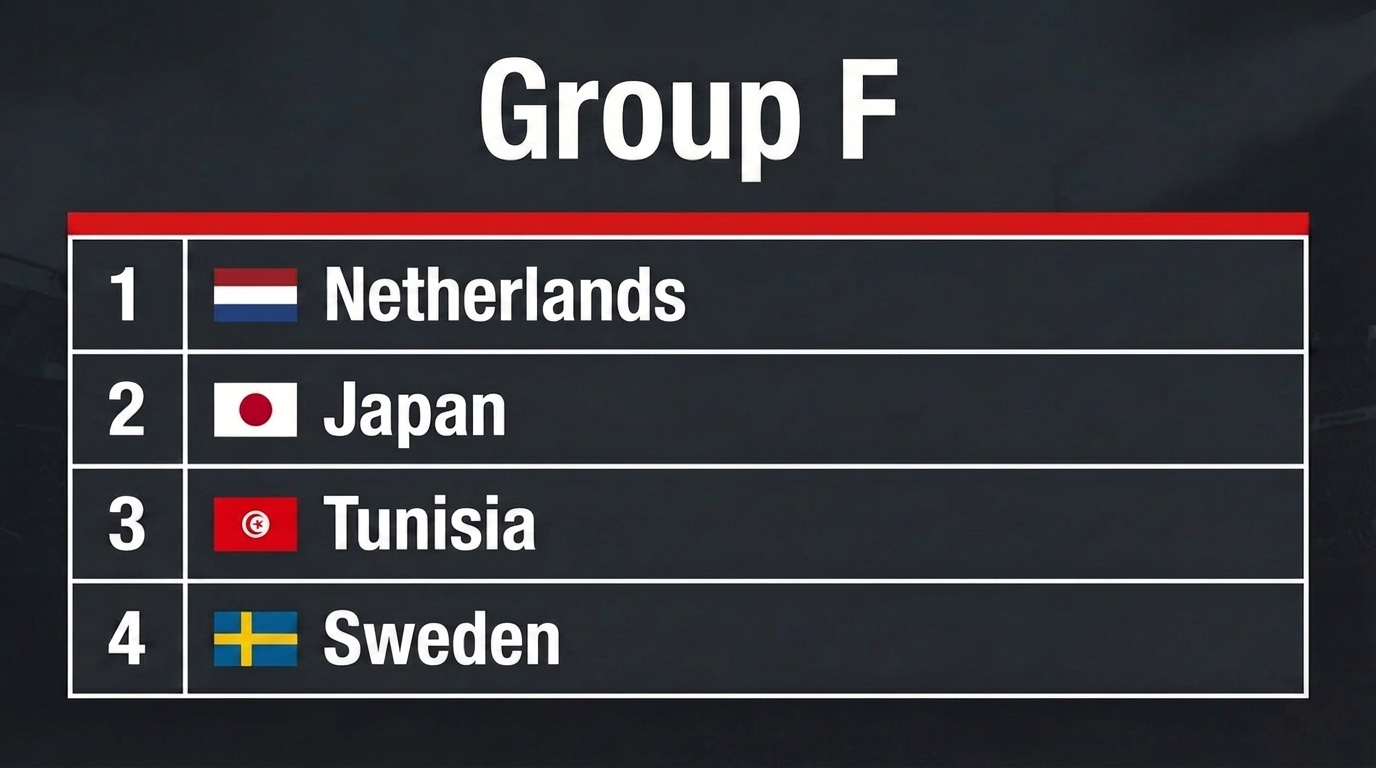
The Netherlands vs Japan fixture on the opening matchday is the group’s defining contest and one of the tournament’s most fascinating tactical matchups. Group F is widely described as the most balanced section in the draw behind Group I (France, Norway), and the possibility that all three of Japan, Sweden and the Netherlands advance as the group stages third-placed qualifiers alongside the top two is a genuine scenario the market has begun to price.
| Date (BST) | Match | Venue | Stage |
| 14 June 21:00 | Netherlands vs Japan | AT&T Stadium, Arlington (Dallas) | Group F |
| 19 June 18:00 | Netherlands vs Sweden | NRG Stadium, Houston | Group F |
| 25 June 00:00 | Netherlands vs Tunisia | Arrowhead Stadium, Kansas City | Group F |
All dates and kick-off times BST to be confirmed closer to the tournament. The Netherlands’ Group F opener against Japan at AT&T Stadium has been confirmed as a 14 June fixture. As group winners, the Netherlands would face the runner-up of Group C (Brazil’s group) in the Round of 32. See our complete World Cup 2026 groups guide for the full bracket breakdown.
Odds & Predictions: Value in the Quarter-Final Progression Market
The Netherlands are currently priced at around 20/1 to win the 2026 World Cup outright with the major UK bookmakers – placing them eighth in the market behind France and Spain (both ~5/1), England (~13/2), Brazil and Argentina (~8/1), Portugal (~10/1) and Germany (~14/1). The implied probability at 20/1 is approximately 4.8%, and our editorial assessment is that this price broadly reflects the squad’s genuine ceiling: a team capable of reaching the semi-finals or final on the right run of form, but one that carries sufficient structural vulnerabilities and historical baggage to make the outright market difficult to recommend at the expense of more targeted bets.
The best Netherlands betting angle is the quarter-final advancement market. Priced at around 5/2 to reach the last eight, the Dutch have a realistic path from Group F – the Oranje should progress, even if they finish second behind Japan – and a bracket that keeps them away from France, Spain and England until the semi-finals at the earliest. The squad quality, the Premier League battle-hardening of the key players, and the Van Dijk leadership factor all support the argument that reaching the quarter-final is more likely than the 40% implied probability suggests.
For group markets, the Netherlands at 8/11 to top Group F looks thin given Japan’s quality and the specific tactical vulnerability Koeman’s side has yet to solve against rapid transitional play. Backing the Dutch to qualify from the group rather than win it is the safer construction for those wanting Netherlands involvement in a multi-bet.
Our prediction: Netherlands to the quarter-finals, eliminated there. The bracket makes a semi-final theoretically achievable, but the question of whether this generation can finally win a decisive knockout match against elite opposition – the fundamental question their entire World Cup history poses – remains stubbornly unanswered. For the full range of Netherlands markets and the latest prices, visit our World Cup 2026 odds hub.
Over a century of iconic Dutch football has produced Total Football, three World Cup finals, the greatest player to never win the tournament in Johan Cruyff, and an enduring national mythology built around beautiful football. Ronald Koeman has a squad good enough to end the wait. Whether he has the tactical solutions to the specific problems this draw presents – the Japan transition threat, the knockout-match pressure – will define whether the Netherlands finally write a different ending to their most compelling story.