

 Portugal arrive at the 2026 FIFA World Cup in North America carrying the weight of an entire nation’s unfulfilled dream – and the footballing world’s most obsessive desire for a farewell fitting the greatest scorer in men’s international history. Cristiano Ronaldo, 41 when the tournament kicks off, makes his sixth and almost certainly final World Cup appearance for the Seleção this summer. Yet to frame Roberto Martínez’s team purely through the Ronaldo prism would be to miss the bigger story: this Portugal squad is genuinely one of the most talented collections of players the country has ever produced, and for the first time in a generation, the supporting cast is arguably more compelling than the lead actor. The Nations League title won in June 2025 – defeating Spain on penalties in the final after eliminating Germany – provided the competitive proof of concept Martínez had been building towards. The message was unambiguous: this team can beat anyone. Whether the Portugal World Cup 2026 campaign finally delivers the trophy that has eluded them at every previous attempt is the tournament’s most emotionally compelling question. For those weighing up World Cup 2026 outright odds, the Seleção at around 10/1 represent one of the most genuinely difficult calls on the entire board.
Portugal’s Road to the World Cup
 Portugal’s path to the 2026 World Cup was defined by moments of brilliance, occasional controversy, and a final-night statement that silenced every doubter. Drawn into UEFA Group F alongside Hungary, the Republic of Ireland and Armenia – the weakest four-team group available – Martínez’s side were expected to top the section with minimal drama. What transpired was considerably more eventful.
Portugal opened the September window convincingly, beating Armenia 5-0 away from home and seeing off Hungary 3-2 in Budapest. When they then defeated the Republic of Ireland 1-0 at home in the October window, qualification seemed imminent. Then came the wobble: a 2-2 draw with Hungary was followed by a 2-0 loss in Dublin in November, a match in which Ronaldo received a straight red card for an elbow on Dara O’Shea. Suddenly, with two points dropped and Ireland and Hungary circling, the final matchday carried genuine jeopardy.
What followed was extraordinary. Portugal, at home against already-eliminated Armenia, delivered a 9-1 hammering that included hat-tricks from Bruno Fernandes and João Neves, simultaneously confirming group victory while Ireland’s dramatic 3-2 comeback over Hungary in Budapest settled the runners-up spot. Portugal finished with 13 points from six matches – four wins, one draw, one defeat – and 20 goals scored, the highest tally in their group by a considerable margin. The group exit belied the campaign’s true complexity, but Martínez used the difficult moments as tactical learning opportunities rather than crises. That pragmatism is one of his most underrated qualities.
Manager & Tactics: Martínez’s Quest to End 60 Years of Waiting
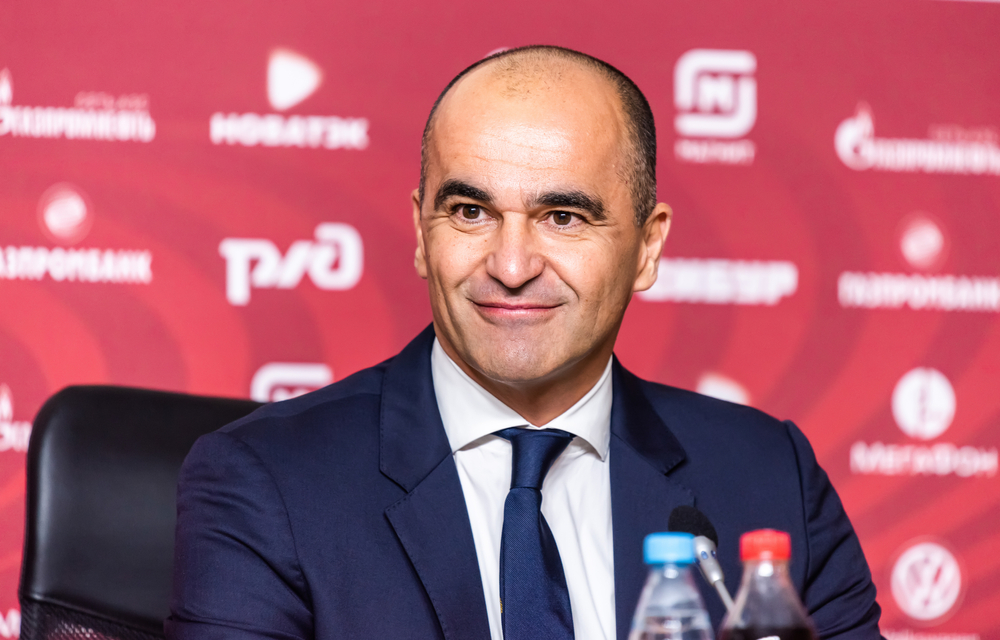
Roberto Martínez took charge of Portugal in January 2023 following Fernando Santos’ departure after the Morocco quarter-final exit at the 2022 World Cup. His appointment prompted scepticism – his Belgium tenure, for all its Nations League success, was defined by tournament failure, including a catastrophic group-stage exit at Euro 2020. But Martínez has been a different manager with Portugal. Through 32 matches heading into this tournament, the Spaniard has won 24, drawn four and lost just four. Crucially, his biggest result – the 2024-25 UEFA Nations League title, won with a 5-3 penalty shootout victory against Spain after a 0-0 draw in Munich – came under knockout pressure.
Tactically, Martínez operates a possession-dominant 4-3-3 system that averages above 70% of the ball and creates through intricate central combinations rather than direct service. The engine room of Vitinha, João Neves and Bruno Fernandes is one of the most technically polished midfield trios at this tournament, capable of controlling tempo and, when required, pressing intelligently to win the ball high up the pitch. Diogo Costa, arguably Europe’s best goalkeeper for the past two seasons, provides a modern sweeper-keeper foundation that allows the defensive line to sit high and compress space.
The central tactical tension Martínez must navigate is how to integrate Ronaldo – who will be 41 and operating in his most physically limited phase – within a possession system that demands pressing and positional discipline. The manager has been clear-eyed about this publicly: Ronaldo is selected on current merit, not legacy, and his spatial value – the defensive attention he draws from opposition centre-backs – creates the pockets of space that Fernandes, Leão and Bernardo Silva exploit. The challenge comes in knockout football against elite defensive blocks, where Ronaldo’s reduced mobility could be a tactical liability rather than an asset.
The loss of Diogo Jota – who died tragically in a car accident with his brother in July 2025 – has cast a long shadow over this squad’s preparations. Jota’s Premier League title with Liverpool and his Nations League involvement made him one of Martínez’s most trusted rotational forwards. That pressing energy and finishing quality from a second-striker position has not been replaced like-for-like, and it represents the one area where the squad’s depth is genuinely thinner than it should be.
Squad & Key Players
Portugal possess world-class quality at every position. The spine of the squad – Costa, Dias, Cancelo, Nuno Mendes, Fernandes, Vitinha, Neves, Bernardo Silva, Leão, Ramos – would arguably be the strongest starting XI at this tournament if you removed Ronaldo entirely. With him included, the attacking options are simply extraordinary.
| Position | Player | Club | Age |
| GK | Diogo Costa | Porto | 25 |
| GK | José Sá | Wolverhampton Wanderers | 31 |
| RB | João Cancelo | Barcelona [VERIFICAR] | 31 |
| CB | Rúben Dias | Manchester City | 27 |
| CB | António Silva | Benfica | 21 |
| CB | Gonçalo Inácio | Sporting CP | 23 |
| LB | Nuno Mendes | Paris Saint-Germain | 22 |
| MF | Vitinha | Paris Saint-Germain | 25 |
| MF | João Neves | Paris Saint-Germain | 21 |
| MF | Bruno Fernandes | Manchester United | 31 |
| MF | Bernardo Silva | Manchester City | 31 |
| MF | Rúben Neves | Al Hilal | 28 |
| MF | Mateus Fernandes | West Ham United | 22 |
| FW | Cristiano Ronaldo | Al Nassr | 41 |
| FW | Rafael Leão | AC Milan | 25 |
| FW | Gonçalo Ramos | Paris Saint-Germain | 24 |
| FW | Francisco Conceição | Juventus | 22 |
| FW | Pedro Neto | Chelsea | 25 |
Squad reflects Martínez’s selections across the 2025-26 international windows. Final 26-man list to be confirmed by 1 June 2026. Diogo Jota is a tragic absentee following his death in July 2025.
Cristiano Ronaldo – Forward, Al Nassr
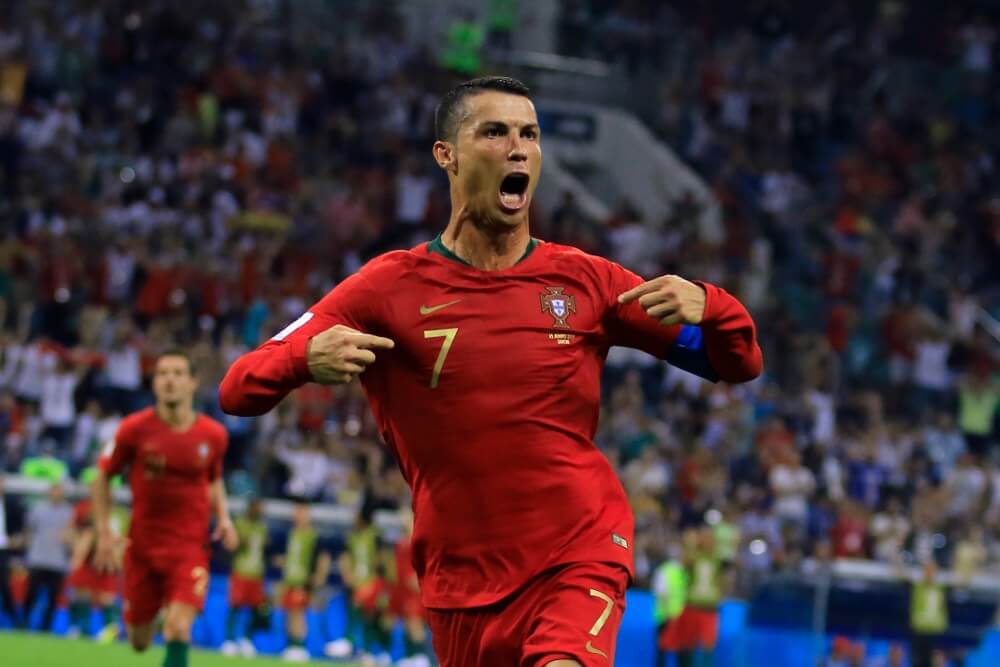
The facts are extraordinary: 143 international goals, six World Cup tournaments, a record that defines an era. At 41, Ronaldo arrives having scored the most goals in the 2024-25 Nations League – the tournament Portugal won – and Martínez’s data on his last 30 international appearances show 25 goals. A recent hamstring strain ruled him out of the March 2026 friendlies against Mexico and the United States, but his manager remains unequivocal about his participation. Whether he can deliver the one trophy that has always eluded him is the defining question of this World Cup.
Bruno Fernandes – Midfielder, Manchester United
The Manchester United captain is the heartbeat of this Portugal side, and his qualifying campaign figures – including a hat-trick in the 9-1 Armenia rout – confirm he is operating at the peak of his powers. His ability to arrive late into the penalty area from deep midfield positions makes him uniquely difficult to defend against, and his delivery from set pieces is among the finest in international football. In Martínez’s system, Fernandes carries more creative responsibility than almost any midfielder at this tournament.
Rúben Dias – Centre-back, Manchester City
The Manchester City defender has been one of the world’s finest central defenders for four consecutive seasons and arrives at the World Cup with Champions League pedigree and the leadership qualities of a natural captain. His partnership with the younger Gonçalo Inácio or António Silva offers Portugal a centre-back pairing that combines experience with outstanding technical quality. Dias is the defensive cornerstone on which Martínez’s high defensive line depends.
João Neves – Midfielder, Paris Saint-Germain
At 21, Neves is already one of the most complete midfielders in European football. His hat-trick against Armenia in the final qualifier – including a stunning free-kick – announced his arrival as a player ready to perform on the biggest stage. His ability to press, break lines and arrive in the box makes him the most exciting young talent in this Portugal squad, and potentially in the entire tournament. He will be the face of the Seleção for the decade after Ronaldo’s international career ends.
Rafael Leão – Forward, AC Milan
The AC Milan winger’s pace, directness and finishing from wide positions give Portugal an attacking threat that no defensive structure can fully neutralise. In a system that demands wide forwards capable of driving at defenders, Leão’s one-versus-one ability is among the most dangerous qualities on the pitch at this World Cup. His consistency at Milan over the past three seasons suggests he is finally ready to deliver across a full major tournament, not just in flashes.
Strengths & Weaknesses
Strengths
The midfield is, in our assessment, the strongest of any team at this tournament. The combination of João Neves’ pressing and line-breaking, Vitinha’s technical control, and Bruno Fernandes’ creativity and goal threat from deep creates a unit that can both dominate possession and transition at pace. No other nation at the 2026 World Cup has comparable depth in central areas – Rúben Neves and West Ham’s Mateus Fernandes provide rotation quality that many group-stage favourites would envy.
Defensively, Rúben Dias and Diogo Costa form a partnership as reliable as any in international football. Costa’s sweeper-keeper distribution is elite, and his shot-stopping has developed into world-class territory. Portugal conceded just seven goals in six qualifying fixtures – fewer than any other team in the four-team UEFA groups. That frugality, against direct opposition including Ireland and Hungary, is a meaningful data point rather than mere statistical noise.
The squad’s experience at Champions League level is remarkable. Multiple players – Dias, Fernandes, Silva, Vitinha – have contested knockout Champions League matches in the current season. That familiarity with high-pressure, high-stakes eliminator football is an underrated psychological advantage when a tournament reaches the quarter-finals and beyond.
Weaknesses
Ronaldo’s age is the elephant in the room. At 41, playing in a competitive system that demands pressing contributions, he is – by any objective measure – a liability in phases of the game that do not involve the ball. Against low-block sides who are content to absorb possession and hit on the counter, the space he leaves behind his defensive position will be targeted ruthlessly by elite opposition. Martínez’s ability to manage his minutes, use him as an impact substitute in knockout matches, and construct a starting XI that does not require him to cover ground he can no longer cover is the single most important tactical question of Portugal’s campaign.
The death of Diogo Jota has left a gap in the squad that has not been filled. His ability to play as a second striker, press relentlessly and convert from inside the box was a unique skill set in the Seleção’s forward options. Gonçalo Ramos and Francisco Conceição offer different qualities – Ramos is a clinical finisher from central positions, Conceição a direct runner – but neither replicates Jota’s work-rate and pressing contribution in the spaces behind the striker.
The historical pattern is also worth noting: Portugal have exited at the quarter-final stage in each of their last two major tournaments (World Cup 2022, Euro 2024), and despite the squad quality, they have struggled to consistently impose their style against compact elite defensive sides. That tendency to freeze in knockout eliminator moments – illustrated by the 2022 defeat to Morocco – must be confronted directly if this generation is to leave an appropriate legacy.
Qualifying Campaign
Portugal’s UEFA Group F campaign was broadly dominant, though the full picture – a defeat to Ireland and a red card for Ronaldo – tells a more nuanced story than the final table suggests. Six matches across September and November 2025, with Portugal entering the final matchday needing a win to guarantee top spot. They delivered it emphatically, ending with 20 goals scored in the group – comfortably the most in any four-team UEFA section – from just six fixtures.
The 9-1 demolition of Armenia on the final matchday remains the group stage’s defining result: a hat-trick from Bruno Fernandes (including two penalties) and a hat-trick from João Neves sent Portugal to the World Cup in style. Across the campaign, they averaged 3.33 goals per game at home and maintained a goal difference of +13.
| Team | P | W | D | L | GF | GA | GD | Pts | Status |
| Portugal | 6 | 4 | 1 | 1 | 20 | 7 | +13 | 13 | Qualified |
| Republic of Ireland | 6 | 3 | 1 | 2 | 10 | 11 | -1 | 10 | Play-offs |
| Hungary | 6 | 2 | 1 | 3 | 9 | 13 | -4 | 7 | Eliminated |
| Armenia | 6 | 1 | 1 | 4 | 4 | 12 | -8 | 4 | Eliminated |
World Cup History: Waiting 60 Years for the Greatest Stage
Portugal’s World Cup record is modest relative to their talent pool, and that disparity is precisely what drives the intensity of expectation around this tournament. They have appeared at the finals nine times in total, but until the current run of consecutive qualifications from 2002 onwards, their presence was anything but guaranteed.
The landmark moment arrived in 1966, when Eusébio led a generation of talents – many from the great Benfica side of the era – to third place at Wembley, the tournament’s best result for any Iberian nation at the time. Eusébio finished as the tournament’s top scorer with nine goals. That remains Portugal’s finest hour in World Cup football, and it is the explicit benchmark Martínez has set for this squad.
There followed a 20-year absence before Portugal returned in 1986, and meaningful progress resumed only in 2002, when they reached the group stage but exited despite reaching the knockout rounds in 2006 when Luís Figo, Deco and Ronaldo combined to reach the semi-finals – a Zinedine Zidane penalty ultimately ending their run in a 1-0 defeat to the hosts France. The 2010 edition produced a 7-0 destruction of North Korea and a quarter-final exit to eventual champions Spain. The 2014 campaign was a humbling group-stage elimination despite Ronaldo’s presence. In 2018, Ronaldo produced a hat-trick against Spain in a dramatic 3-3 draw before Uruguay ended their run in the last sixteen. And in 2022, the quarter-final – a 1-0 defeat to Morocco after resting Ronaldo for the round of sixteen – ended in recrimination and managerial change.
No World Cup final. No semi-final since 2006. For a nation of this talent, the record demands correction.
Group K & Fixtures: The Definitive Ronaldo Farewell Stage
Portugal are placed in Group K alongside Colombia, Uzbekistan and DR Congo – a manageable group on paper, though one with a genuine tactical puzzle in Colombia. Uzbekistan make their debut as an independent nation under Fabio Cannavaro, with Manchester City’s Abdukodir Khusanov the headline European-based name in their squad. DR Congo return to the World Cup for the first time since 1974, when they competed as Zaire – their qualification via an inter-confederation play-off representing one of the tournament’s most emotional stories.
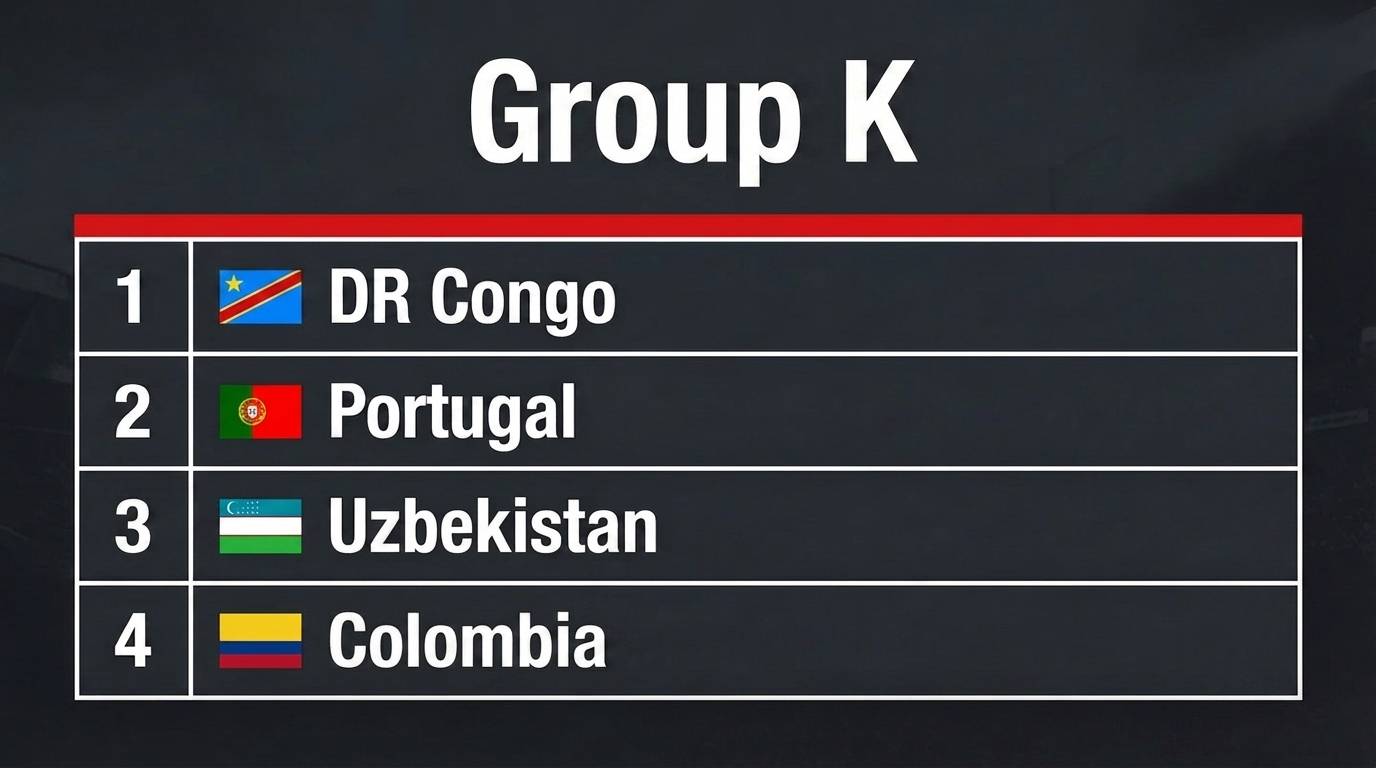
The fixture that will define Group K is Colombia on 27 June in Miami. Luis Díaz and James Rodríguez give the Cafeteros genuine quality capable of testing Portugal’s defensive structure, and any slippage in the first two matches could allow Colombia the initiative heading into that finale. Martínez’s instructions to his squad will almost certainly be to seal qualification against DR Congo and Uzbekistan before using the Colombia match for tactical positioning rather than existential necessity.
| Date (BST) | Match | Venue | Stage |
| 17 June, 18:00 | Portugal vs DR Congo | NRG Stadium, Houston | Group K |
| 23 June, 18:00 | Portugal vs Uzbekistan | NRG Stadium, Houston | Group K |
| 28 June, 00:30 | Colombia vs Portugal | Hard Rock Stadium, Miami | Group K |
All kick-off times BST. Portugal are heavy favourites to top Group K. Should they win the group, they are projected to face a third-placed team from another section in the Round of 32. See our full World Cup 2026 groups breakdown for the complete bracket picture.
Odds & Predictions: Value in Portugal’s Quarter-Final Route
Portugal currently trade at around 10/1 to win the World Cup outright with the major UK bookmakers, placing them sixth in the market behind Spain and France (both around 5/1), England (13/2), Brazil and Argentina (both around 8/1). The implied probability at 10/1 is approximately 9%, and our editorial view is that the market is broadly fair – perhaps even very slightly generous – on Portugal’s chances of going all the way. This is a squad capable of beating Spain, France or Argentina on a given day. Whether they can do it three times in a fortnight, against elite opposition who have spent the tournament studying their patterns, is the more pertinent question.
The historical pattern is the most significant caveat. Portugal have exited at the quarter-finals in each of their last two major tournaments, and there is a recurring tactical problem: against ultra-compact defensive setups, their possession-dominant system can slow to a pedestrian pace, and Ronaldo’s reduced mobility creates a focal point that disciplined sides can neutralise without conceding space elsewhere. That Morocco defeat in 2022 – the tactical blueprint Martínez’s opponents will have studied relentlessly – demonstrated exactly how to frustrate this team.
The best betting angle on Portugal is not the outright market but the route markets. Portugal to reach the semi-finals, available at around 5/1 with major bookmakers, offers genuine value: the bracket places them on a path that avoids France and Spain until the semis at the earliest, meaning they face manageable opposition through the first three knockout rounds. A fit Ronaldo in the kind of tournament-defining form that made Qatar so compelling for Argentina, combined with the Fernandes-Neves-Vitinha midfield operating at full throttle, is a realistic scenario rather than wishful thinking. For Golden Boot markets, Ronaldo at 20/1 looks long for a player who topped the Nations League scoring charts this season, while Bruno Fernandes at around 25/1 is arguably the shrewder value pick given his centrality to Martínez’s system.
Our prediction: Portugal to reach the semi-finals, with the quarter-final as the key test. If they navigate that – and the bracket suggests the opposition is beatable – Ronaldo’s final World Cup could produce the defining chapter of his career. For the full outright market, group-winner prices and Golden Boot specials, visit our World Cup 2026 betting odds hub.
Sixty years after Eusébio’s third-place finish at Wembley, the generation that follows has the talent, the system and the motivation to take Portugal further than they have ever gone. The question is whether tournament football’s merciless knockout format will once again intervene before the final is reached – and whether, this time, a 41-year-old icon can summon one final act of genius to prevent it.