

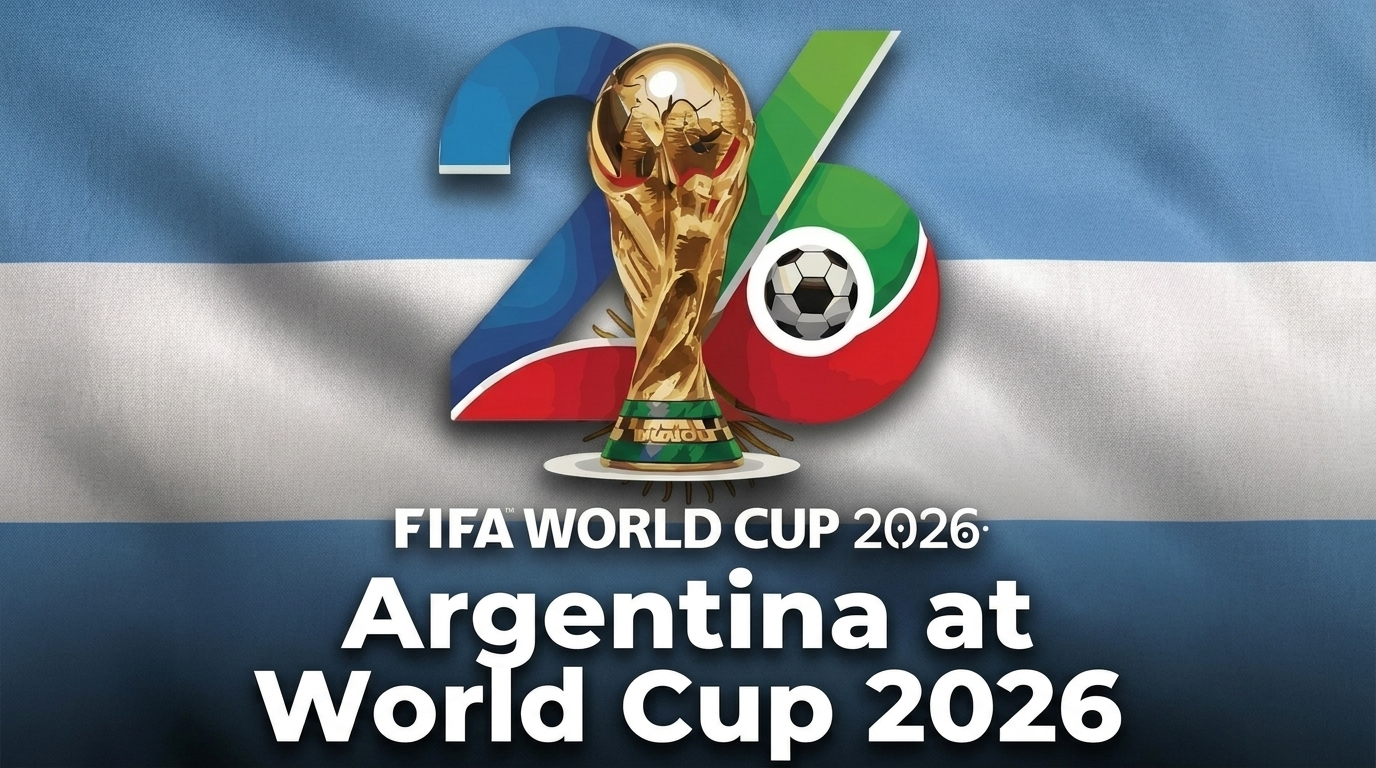
Argentina arrive at the 2026 FIFA World Cup in the United States, Canada and Mexico as defending champions, serial Copa América winners and, quite simply, the most complete international side of their generation. Since lifting the trophy in Qatar in 2022, Lionel Scaloni’s men have not stood still – they added the 2024 Copa América to complete a stunning hat-trick of major titles in four years. Now the Albiceleste face the most daunting challenge in football: defending the World Cup, a feat no nation has managed since Brazil in 1958 and 1962. With Lionel Messi almost certainly making his last appearance on football’s grandest stage, and a squad deep enough to threaten without him, this is a team that every serious bettor must assess carefully. Whether you’re weighing World Cup 2026 outright odds, studying group permutations, or building an accumulator, Argentina’s campaign is central to everything. Read on for our complete squad breakdown, tactical analysis, qualifying data and Argentina World Cup 2026 predictions from the Online-Betting.org editorial team.
Argentina’s Road to the World Cup
 Argentina did not merely qualify for the 2026 World Cup – they dominated the entire CONMEBOL process with an authority that set them apart from every other confederation’s top side. Scaloni’s team topped the ten-nation South American qualifying table with 38 points from 18 matches, finishing a commanding nine points clear of second-placed Ecuador. The campaign was effectively over long before the final whistle of Matchday 18: Argentina clinched their berth as early as March 2025, with four fixtures still to play – an almost unprecedented margin of certainty in a qualifying format renowned for its brutality.
The statistics underline the dominance. Argentina scored 31 goals and conceded just ten, giving a goal difference of +21 that no other CONMEBOL nation came close to matching. Messi alone chipped in eight qualifying goals. Standout results included a 6-0 demolition of Bolivia, in which Messi scored three and assisted two, and a 4-1 victory over Brazil in March 2025 that announced to the world that this squad had not merely maintained its 2022 levels – it had grown. Yes, there were stumbles: a 2-1 defeat to Colombia and a 1-0 loss to Ecuador late in the campaign reminded everyone that CONMEBOL has no easy fixtures. But these were blips rather than signs of structural weakness, and Scaloni rotated intelligently to protect key players ahead of the tournament.
For context, Argentina have now qualified for 19 of 23 World Cups and have never exited at the group stage in any of their last eight tournaments. That record, combined with the quality of this squad, makes them one of the most reliable outright bets on the board.
Manager & Tactics: Scaloni’s Winning Formula
Lionel Scaloni took over as Argentina manager in August 2018 in circumstances that felt, to many, like a stop-gap appointment. What followed was one of the most remarkable managerial ascents in international football history. Under his stewardship, Argentina ended a 28-year major trophy drought, winning the 2021 Copa América, the 2022 Finalissima, the 2022 FIFA World Cup and the 2024 Copa América. No international manager has collected more silverware in that period. His contract runs through the 2026 World Cup and there is every reason to believe he has the squad to add to that tally.
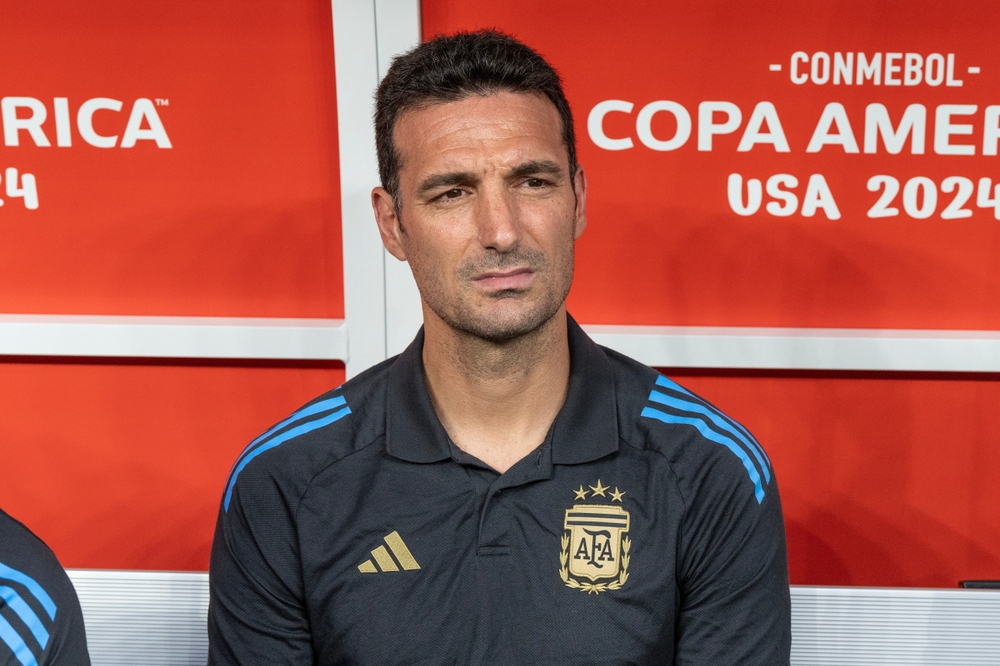
Tactically, Scaloni is a pragmatist with a clear identity. His preferred shape is a 4-3-3 or a 4-4-2 diamond depending on opposition, built around compactness out of possession and devastating transition play. The defensive block is disciplined – Argentina conceded only ten goals across 18 qualifying matches – yet the team can switch instantly to an aggressive press when the ball is won high up the pitch. Rodrigo De Paul is the engine of this system, covering enormous ground in a box-to-box role that provides both defensive protection and the platform for quick attacks.
The key tactical question heading into 2026 is how Scaloni manages Messi’s workload. At 38, the Inter Miami captain cannot be expected to press as relentlessly as he did even in 2022. Scaloni has been road-testing a slightly deeper starting position for Messi, giving him licence to drift centrally and pick passes rather than operate as a pure right-winger. Julian Alvarez and Lautaro Martínez share the central striking burden, and the manager has been gradually blooding Franco Mastantuono and Nico Paz as options to inject energy from the bench.
The biggest tactical void remains the absence of Ángel Di María, who retired after the 2024 Copa América triumph. Di María’s ability to stretch defences and deliver from wide areas was irreplaceable in the short term, but Scaloni has spent the past 18 months auditioning Giuliano Simeone and Alexis Mac Allister’s more advanced positioning as solutions. No single player has nailed down the left wing role, and it remains the one area of genuine tactical uncertainty heading into the tournament.
Squad & Key Players
The spine of Argentina’s 2026 squad is almost identical to the group that lifted the trophy in Qatar. Scaloni has resisted the temptation to over-rotate, instead reinforcing depth positions with exciting young talent while keeping the experienced core fully intact.
| Position | Player | Club | Age |
| GK | Emiliano Martínez | Aston Villa | 32 |
| GK | Gerónimo Rulli | Marseille | 32 |
| GK | Walter Benítez | Crystal Palace | 32 |
| RB | Nahuel Molina | Atlético Madrid | 26 |
| CB | Cristian Romero | Tottenham Hotspur | 26 |
| CB | Lisandro Martínez | Manchester United | 27 |
| CB | Nicolás Otamendi | Benfica | 37 |
| LB | Nicolás Tagliafico | Lyon | 32 |
| LB | Valentín Barco | Strasbourg | 20 |
| MF | Rodrigo De Paul | Atlético Madrid | 30 |
| MF | Alexis Mac Allister | Liverpool | 26 |
| MF | Enzo Fernández | Chelsea | 24 |
| MF | Leandro Paredes | Roma | 31 |
| MF | Franco Mastantuono | Real Madrid | 17 |
| MF | Nico Paz | Como | 20 |
| MF | Thiago Almada | Botafogo | 24 |
| FW | Lionel Messi | Inter Miami | 38 |
| FW | Lautaro Martínez | Inter Milan | 27 |
| FW | Julián Álvarez | Atlético Madrid | 24 |
| FW | Giuliano Simeone | Atlético Madrid | 22 |
| FW | Nicolás González | Juventus | 27 |
Squad reflects Scaloni’s selections for the March 2026 international window. Final 26-man list to be confirmed by 1 June 2026. Valentin Carboni (knee) and Juan Foyth (Achilles) are confirmed absentees.
Lionel Messi – Forward, Inter Miami
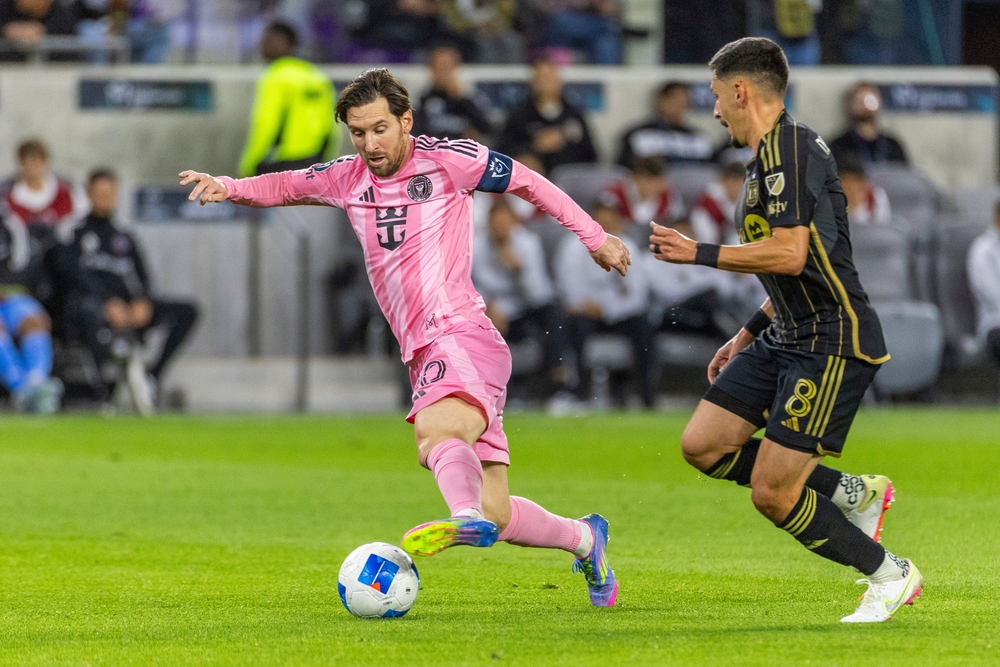
The story of this tournament, whatever else happens. Messi turns 39 during the competition, making this his sixth and almost certainly final World Cup. His 2022 campaign – seven goals, three assists, the Golden Ball – is already enshrined as one of the great individual tournament performances. At Inter Miami, he remains a decisive player capable of producing moments of genius, even if the days of relentless 90-minute pressing are behind him. Every serious long-shot market – Golden Boot, Golden Ball – has his name near the top. Compare the latest World Cup outright odds and you will find Messi consistently inside the top three for individual awards.
Emiliano Martínez – Goalkeeper, Aston Villa
The Villa stopper is, quite simply, the finest goalkeeper in the world when a tournament reaches penalty shootouts. His psychological theatre during spot-kick sequences has become legendary, but his outfield game – commanding, aggressive, an organiser of the highest order – deserves equal billing. Argentina conceded just ten goals in 18 qualifying fixtures. Martínez is a cornerstone of that defensive solidity, and the fact he plays Premier League football week in, week out at the top level is an enormous asset.
Julián Álvarez – Forward, Atlético Madrid
The 24-year-old is arguably the most complete centre-forward at this tournament. His pressing stats at Atlético Madrid under Diego Simeone rank among the elite in La Liga, and he combines that work-rate with clinical finishing and impressive movement off the ball. At 24 and with a World Cup winner’s medal already on his shelf, Álvarez arrives in peak physical and mental condition. If Messi fades during a long tournament, Álvarez is the player Scaloni will turn to for the decisive moments.
Enzo Fernández – Midfielder, Chelsea
The Chelsea man burst onto the global stage in Qatar and has spent three years developing into one of the most complete midfielders in the Premier League. His ability to operate between the lines – sitting and protecting when needed, driving forward when the moment demands – gives Scaloni enormous tactical flexibility. At 24, he enters this tournament at exactly the right age.
Cristian Romero – Centre-back, Tottenham Hotspur
The Spurs defender brings aggression, aerial dominance and leadership to a backline that needs to absorb knockout-stage pressure over five or six matches. His partnership with Manchester United’s Lisandro Martínez is one of the most technically accomplished centre-back pairings heading into any major tournament.
Strengths & Weaknesses
Strengths
The most obvious strength is tournament experience: this squad has been through the highest-pressure moments modern football offers and come out on top repeatedly. Martínez in goal; Romero and Lisandro Martínez in defence; De Paul, Mac Allister and Enzo Fernández in midfield; Messi and Álvarez in attack – each one of these players knows what it takes to win on the biggest stage. The psychological edge that provides cannot be overstated.
The depth in central midfield is genuinely world-class. Where many nations would field three starters and then struggle to maintain quality from the bench, Argentina can call upon Paredes, Mastantuono, Nico Paz and Almada as authentic alternatives without the drop in quality being noticeable. In a 48-team tournament where rotation will be a key variable across a potentially eight-match run to the final, this depth is a decisive advantage.
Emiliano Martínez in penalty shootouts is simply a cheat code. Should Argentina’s knockout-stage matches go to spot kicks, the statistics – and his track record in Doha – suggest the advantage is considerable.
Weaknesses
Age is the central concern. Messi at 38, Otamendi at 37 and Tagliafico at 32 represent a significant chunk of the starting XI that will carry experience into the group stage, and none of those players will get younger as the tournament progresses into July. The question is not whether Argentina start well – Group J all but guarantees that – but whether the physical load of a deep run deteriorates the performances of ageing key contributors.
The left-wing vacancy created by Di María’s retirement has never been convincingly filled. Simeone offers energy and directness, but has not yet been tested at this level, while other options remain inconsistent. Against organised, low-block defences in the latter knockout rounds, the inability to reliably stretch the pitch from the left could become a critical tactical problem.
Finally, the concentration of Atlético Madrid players – Álvarez, De Paul, Molina and potentially Simeone – means a significant portion of the squad will arrive at the tournament having played a gruelling club season under Diego Simeone’s intense system. If any of those players carry fatigue or minor injuries into June, it could unbalance the first-choice line-up.
Qualifying Campaign
Argentina’s CONMEBOL qualifying campaign was a masterclass in consistency under pressure. Across 18 fixtures played over two years, Scaloni’s side recorded 12 wins, two draws and four defeats – the losses coming against Colombia (2-1), Uruguay (2-0), Ecuador (1-0) and Ecuador again (1-0) away from home. Crucially, all four defeats came in circumstances where Argentina had either already qualified or were rotating the squad, underlining that the results never reflected genuine vulnerability.
The final standings confirmed Argentina’s dominance with 38 points – nine clear of second-placed Ecuador on 29. Messi’s eight qualifying goals made him the campaign’s most clinical individual performer for the Albiceleste, while the team’s tally of 31 goals scored at an average of 1.72 per game was comfortably the highest in CONMEBOL.
| Team | P | W | D | L | GF | GA | GD | Pts | Status |
| Argentina | 18 | 12 | 2 | 4 | 31 | 10 | +21 | 38 | Qualified |
| Ecuador | 18 | 8 | 8 | 2 | 14 | 5 | +9 | 29* | Qualified |
| Colombia | 18 | 7 | 7 | 4 | 28 | 18 | +10 | 28 | Qualified |
| Uruguay | 18 | 7 | 7 | 4 | 22 | 12 | +10 | 28 | Qualified |
| Brazil | 18 | 8 | 4 | 6 | 24 | 17 | +7 | 28 | Qualified |
| Paraguay | 18 | 7 | 7 | 4 | 14 | 10 | +4 | 28 | Qualified |
| Bolivia | 18 | 6 | 2 | 10 | 17 | 35 | -18 | 20 | Play-offs |
| Venezuela | 18 | 4 | 6 | 8 | 18 | 28 | -10 | 18 | Eliminated |
| Peru | 18 | 2 | 6 | 10 | 6 | 21 | -15 | 12 | Eliminated |
| Chile | 18 | 2 | 5 | 11 | 9 | 27 | -18 | 11 | Eliminated |
*Ecuador deducted 3 points prior to qualification for fielding an ineligible player. Source: FIFA / AiScore.
World Cup History: A Nation Built for the Biggest Stage
Argentina have contested 19 of the 23 World Cup finals tournaments and their record on the biggest stage is formidable: 57 wins, 16 draws and 15 defeats across 88 matches, with 158 goals scored and 93 conceded. Three titles, three runners-up finishes and a collective record that places them alongside Brazil, Germany and Italy as one of the tournament’s foundational powers.
The 1978 triumph on home soil, delivered by Mario Kempes with two goals in extra time of the final against the Netherlands, remains the country’s first footballing coronation. Diego Maradona’s 1986 campaign in Mexico is widely regarded as the greatest individual World Cup performance in history – featuring the “Hand of God” and the “Goal of the Century” against England in the quarter-final, before a 3-2 final victory over West Germany. The 36-year wait that followed saw near-misses in 1990 (runners-up) and 2014 (runners-up under Alejandro Sabella, defeated by Germany 1-0 in extra time in Brazil), until Messi finally exorcised the demons in Qatar in 2022 with a penultimate performance for the ages – scoring twice in a 3-3 draw before converting his penalty in the shootout as Argentina prevailed 4-2.
Only Italy (1934 and 1938) and Brazil (1958 and 1962) have ever retained the World Cup. If Argentina are to join that exclusive company, they will complete arguably the greatest sustained run of international dominance the sport has ever seen.
Group J & Fixtures: Clear Favourites to Top the Section
Argentina were drawn into Group J at the December 2025 draw in Washington D.C., alongside Algeria, Austria and Jordan. On paper, it is among the more straightforward groups available to the defending champions, though the 48-team expanded format means there are no trivially easy fixtures in this era of international football. Scaloni’s priority will be winning the group to control the bracket advantage that follows.
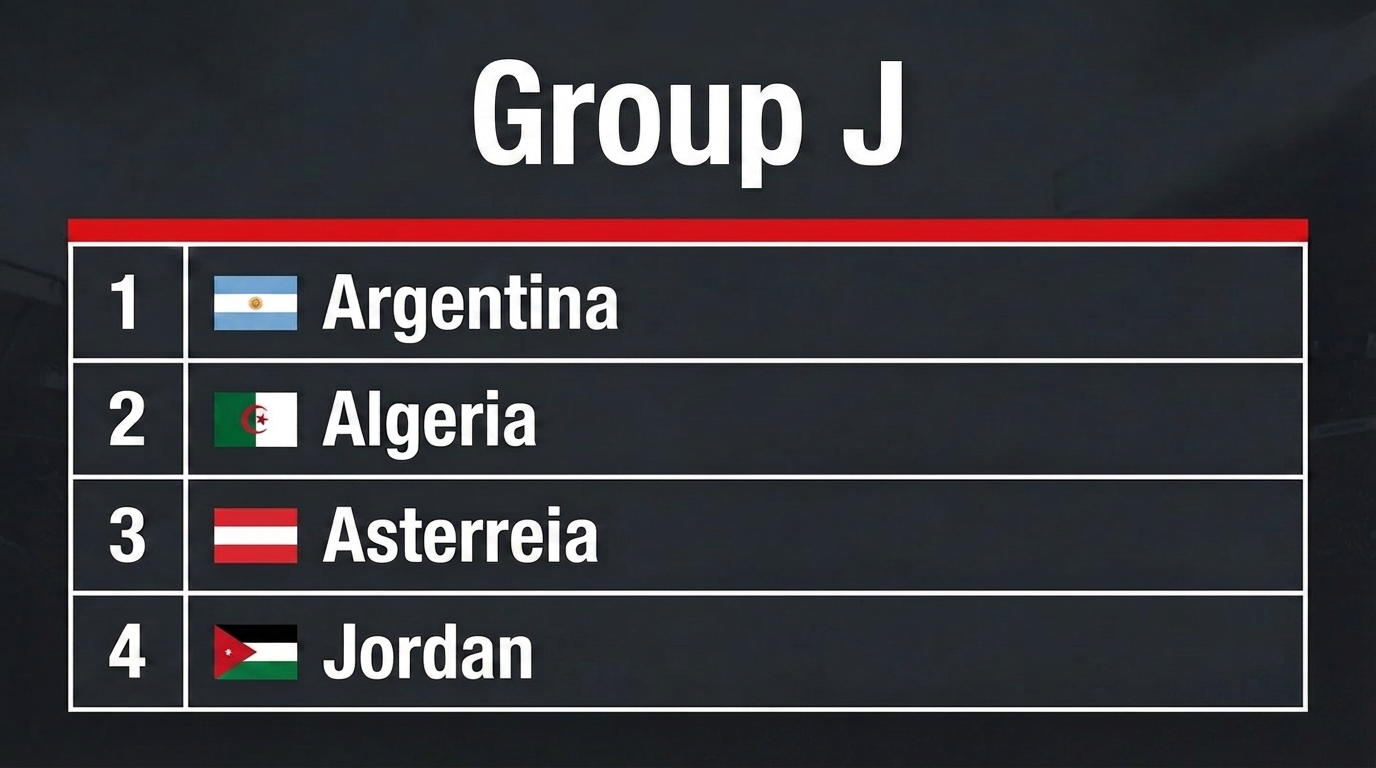
The opener against Algeria on 16 June at Arrowhead Stadium in Kansas City is Argentina’s first competitive meeting with the Desert Foxes – a previous friendly in 2007 ended 4-3 to the Albiceleste. Algeria qualified for their first World Cup since 2014 and will look to frustrate, though the gulf in quality is vast. Austria, under Ralf Rangnick’s high-press system, present the most genuine tactical challenge of the three opponents: Rangnick’s teams are organised, aggressive and difficult to break down, and veterans David Alaba and Marcel Sabitzer give them genuine quality. The final group fixture against Jordan – making their World Cup debut – should complete the formalities.
| Date (BST) | Match | Venue | Stage |
| 17 June, 02:00 | Argentina vs Algeria | Arrowhead Stadium, Kansas City | Group J |
| 22 June, 18:00 | Argentina vs Austria | AT&T Stadium, Arlington (Dallas) | Group J |
| 28 June, 03:00 | Jordan vs Argentina | AT&T Stadium, Arlington (Dallas) | Group J |
All kick-off times BST. Argentina are 1/40 with major bookmakers to qualify from the group. Should they top Group J, they would face the runner-up of Group H (Spain’s group) in the Round of 32. See the full World Cup 2026 groups guide for bracket details.
Odds & Predictions: Can the Albiceleste Make History?
Argentina currently trade at around 8/1 to win the 2026 World Cup outright, making them fifth in the market behind France and Spain (both around 5/1), England (13/2) and Brazil (8/1 joint). The implied probability at 8/1 is approximately 11%, which our editorial team believes is fairly – perhaps even slightly generously – priced given the squad quality and the softness of their group.
The most interesting betting angles are not in the outright market but in the route markets. Argentina at 9/4 to reach the semi-finals and 9/2 to reach the final offer more nuanced value propositions. The group stage exit is almost unthinkable – they are 1/40 to qualify – meaning punters are essentially paying to assess whether Scaloni’s side has the stamina for five knockout matches. Given the ageing spine, that is a legitimate question, but the squad depth in the younger positions suggests Scaloni can manage the load cleverly.
On individual markets, Messi is available at around 14/1 for the Golden Boot with major bookmakers, behind only Kylian Mbappé and Harry Kane. Given his age and the likelihood of Scaloni protecting him across 90 minutes, that looks short. Lautaro Martínez at around 25/1 and Álvarez at 40/1 are more attractive profiles: both will play full minutes, both will operate in central positions where goals are most likely to accumulate.
Our prediction: Argentina to reach the semi-finals at minimum. The group stage is a formality. The knockout bracket sets them on a potential collision course with Brazil and then Spain or France in the final four. Against any of those opponents, this Argentina side has the experience and the players to prevail. The unique wildcard is Messi – if he arrives fit and motivated for one final major tournament, the 8/1 for outright glory starts to look like compelling value. For those who prefer to structure it across multiple bets, Argentina to top Group J, reach the quarter-finals and then evaluate the draw looks the sensible accumulator construction. For full market analysis and the latest prices, visit our World Cup 2026 betting hub.
Argentina have demonstrated time and again that they perform at their best when the stakes are at their highest. The pressure of defending the title adds a new dimension, but this is a group of players forged in exactly that kind of adversity. Back them to go deep – and if the bracket aligns, Messi’s farewell could be a champion’s exit.