

Prices correct as of 09:00 on 04 March 2026 and subject to change. Always check current odds before placing.
Australian Grand Prix Overview
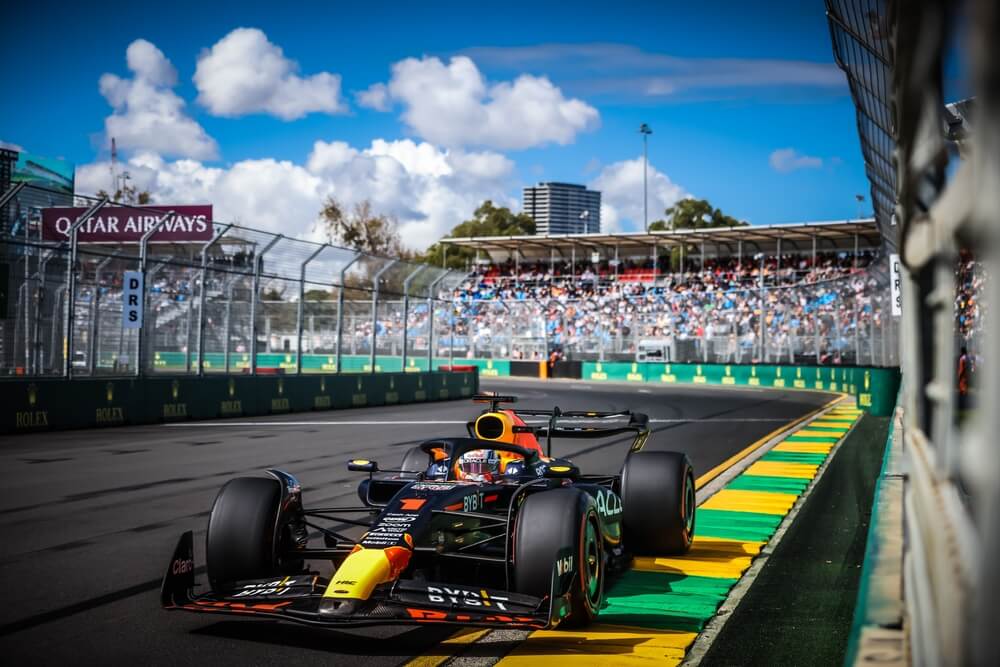
Race: Formula 1 Australian Grand Prix 2026 Circuit: Albert Park Street Circuit, Melbourne Race Date: Sunday, 15 March 2026 Lights Out: 15:00 local time (05:00 GMT) Race Distance: 58 laps / 307.574 km Defending Race Winner: Lando Norris (McLaren, 2025)
The Formula 1 season opens in Melbourne for the seventh consecutive year, with Albert Park firmly established as the traditional curtain-raiser. For bettors, the Australian Grand Prix creates both opportunity and uncertainty in roughly equal measure: you get the first look at genuine competitive pace under race conditions, but with limited data from which to judge new-regulation baselines, reliability risks are elevated and form from pre-season testing carries inherent caveats.
This year, the grid lines up under a significant regulatory cycle. Updated power unit regulations for 2026 have reshuffled the development pecking order over the winter, and the teams that extracted the most from the rule changes in Bahrain testing may not reflect the eventual hierarchy once updates begin arriving in earnest. Melbourne rewards you for focusing on what you can verify: track-specific history, one-lap pace, and proven race management rather than speculative extrapolations from test mileage.
Albert Park Circuit Guide
Albert Park is a 5.278 km temporary street circuit built around a public park lake in the Melbourne suburb of St Kilda. Unlike most modern permanent circuits, it has a distinctive character that consistently separates drivers and teams from the field in specific ways.
Surface: The asphalt is resurfaced periodically but retains a relatively low-grip characteristic early in the race weekend. Track evolution across practice, qualifying and the race itself is pronounced — lap times drop significantly as rubber is laid down, which creates an information gap when reading practice times in isolation.
Layout: The circuit features a mix of fast sweeping corners (turns 1–3 opening sector), a technical middle sector with tight chicanes and braking zones, and a back straight where DRS is activated. The layout rewards qualifying pace more than almost any other venue on the calendar. Overtaking opportunities are limited outside of DRS zones, which means track position at the start and through the pit stop window shapes most race outcomes.
Pit strategy: The majority of recent Australian GPs have been decided by one-stop strategies, with teams managing tyre degradation carefully to avoid the slower two-stop route. Safety car and VSC periods — which occur with above-average frequency in Melbourne due to the circuit’s barriers and urban environment — regularly disrupt the strategic picture and can compress the field at critical moments.
Weather: Melbourne in mid-March sits at the tail end of the Australian summer. Temperatures typically range from 22–30°C, though afternoon storms are possible and the circuit’s proximity to the coast can introduce localised wind changes that affect car balance. A wet qualifying or warm-up session at Albert Park has historically produced significant upset results.
Key corners: Turn 1 is a heavy braking zone and a frequent site of first-lap incidents — crucial for outright win bets given the compression of the field. The Turn 9–10 complex (Waite Straight chicane) and Turn 15 test mechanical grip and front-end response, which historically suits Ferrari and Red Bull’s car characteristics.
2026 Regulation Changes: What Bettors Need to Know
The 2026 technical regulations represent one of the most significant regulation changes in the sport’s modern era, covering both the chassis and power unit simultaneously. The key areas affecting betting assessment:
Power unit changes: All manufacturers have introduced substantially revised power units under the 2026 PU regulations. The electrical deployment ratio has increased significantly, meaning hybrid energy recovery and deployment is a larger proportion of total power output. Teams and manufacturers who have invested most heavily in the electrical architecture — historically Mercedes and Honda — may have a stronger baseline than their 2025 performance suggested. Ferrari’s winter programme reportedly focused heavily on PU integration, which partially explains the optimism around their Bahrain testing pace.
Chassis regulations: A shift to narrower front wing specifications and revised underfloor geometry changes the aerodynamic balance characteristics that teams have spent three years optimising. The teams with the largest simulator and CFD departments (Red Bull, Mercedes, Ferrari) typically adapt quickest in the early races of a new regulation cycle.
Implication for round 1 betting: Regulation changes increase the variance of race-one outcomes. A car that tested quickly in Bahrain may have been optimising for a short-run window rather than race pace. Conversely, teams known for conservative testing (Red Bull have done this in multiple regulation-change years) may have more in reserve than their test timesheets showed. Single-race bets in a regulation-change year carry higher uncertainty than mid-season betting — factor this into your stake sizing.
2026 Driver Championship Context
Russell leads the pre-season market having shown consistently strong pace in Bahrain testing, but the competitive picture at the front of the grid involves at least four genuinely credible title contenders heading into Melbourne.
| Driver | Team | 2025 Championship Finish | Current Win Odds (Melbourne) |
|---|---|---|---|
| George Russell | Mercedes | 2nd | 7/4 |
| Lando Norris | McLaren | 1st (Champion) | 5/2 |
| Charles Leclerc | Ferrari | 3rd | 9/2 |
| Max Verstappen | Red Bull | 4th | 6/1 |
| Lewis Hamilton | Ferrari | 5th | 8/1 |
| Oscar Piastri | McLaren | 6th | 12/1 |
Odds indicative, correct at 09:00 on 04 March 2026.
Norris arrives as defending champion but McLaren’s winter has attracted more questions than answers. Their Bahrain pace appeared conservative and several updates expected for Melbourne did not materialise in testing. Verstappen’s Red Bull relationship with the revised PU regulations will be closely watched — Red Bull’s Honda partnership and the new hybrid demands will be a determining factor in how competitive they are across the opening flyaway races.
Australian Grand Prix Best Bets 2026
| Selection | Odds | Bookmaker |
|---|---|---|
| Charles Leclerc to Win | 9/2 | Spreadex |
| Lewis Hamilton Top-Three Finish | 6/4 | BoyleSports |
| Oliver Bearman to Score Points | 11/10 | 10bet |
Charles Leclerc to Win — 9/2 (Spreadex)
The case for Leclerc starts with what he has already done at this circuit. He won the 2022 Australian Grand Prix, one of his most dominant displays of that season, and returned to the podium with second place in 2024. No active driver in the current field has a stronger single-circuit record at Albert Park.
The circuit characteristics align with Leclerc’s strengths in a specific and measurable way. Albert Park’s emphasis on one-lap qualifying pace — where overtaking is genuinely limited and starting position matters more than almost anywhere else — plays directly to his greatest asset. Leclerc extracted more from Ferrari in qualifying trim than in race trim across the 2025 campaign; Melbourne’s layout minimises that distinction and maximises the value of his qualifying ability.
Ferrari’s winter has been notably positive. Leclerc topped the timesheets across multiple sessions in Bahrain, and sources within the team indicated the car behaved predictably across the full tyre compound range — historically a weakness that Ferrari have worked to address. The 2026 power unit integration reportedly advanced further than rivals anticipated.
The competition is real and you should price it in. Russell’s Mercedes looked formidable in testing and will start the season with strong momentum. Norris is a defending champion whose race management has improved markedly over the past two years. Verstappen remains capable of finding performance from a car others would consider underpowered.
At 9/2, Leclerc represents value relative to his track record, current form indicators, and the specific circuit demands. He is not the favourite — the market prices him as a 18% implied probability — but a driver who won here four years ago, returned to the podium two years ago, and arrives with Ferrari in improved shape is worth backing at that price.
Stake suggestion: Each way if available, or a level-stake win bet at controlled sizing given first-race regulation uncertainty.
Lewis Hamilton Top-Three Finish — 6/4 (BoyleSports)
This is a top-three bet rather than an outright win case, and the distinction matters. Hamilton arrives at Ferrari as a fresh partnership in its second season — 2025 was an adaptation year that produced sixth in the championship, one position behind Leclerc, but with the pair regularly separated by fine margins rather than car-class gaps.
The track record at Albert Park is one of the strongest of any driver in the current field. Since 2015, Hamilton has accumulated one victory and five podium finishes at Albert Park across the intervening seasons — a consistency that reflects genuine comfort with the circuit’s medium-to-high-speed layout and the race management demands. His tyre management at tracks requiring smooth, consistent inputs rather than outright aggression is well-documented.
The 6/4 top-three price requires Hamilton to finish in the first three — not to win. If Ferrari are competitive across both cars (which Bahrain testing suggested is plausible), Hamilton’s race craft and Albert Park experience provide a reasonable path to the podium without needing a perfect qualifying performance or a race-leading strategy call.
The risk factors are clear: a poor qualifying position in Melbourne makes the podium significantly harder to achieve given the circuit’s limited overtaking. If Ferrari’s race pace does not match their testing pace, Hamilton may find himself scrapping in the lower part of the top five rather than the top three.
At 6/4 the implied probability is approximately 40%. For a driver with Hamilton’s Albert Park record arriving at a Ferrari that looks meaningfully improved, that strikes us as a realistic and slightly underpriced assessment.
Stake suggestion: Standard unit. The 6/4 reflects fair value with modest upside — size accordingly.
Oliver Bearman to Score Points — 11/10 (10bet)
Bearman’s 2025 season was one of the more quietly impressive rookie campaigns in recent F1 history. The 20-year-old Haas driver finished 13th in the championship with nine top-10 finishes across the season — a points-scoring rate that comfortably outperformed what many pre-season assessments of the Haas package expected. He managed race situations, tyre windows, and pressure situations with increasing composure as the year progressed, and there were few genuinely costly errors.
The Haas package in 2026 testing gave no indication of a significant step backward. They appear to sit in a realistic window for lower-top-ten finishes — the band of midfield teams (Williams, Haas, Alpine, Kick Sauber, RB) who compete for positions seven through ten depending on race-day specifics. A points finish at Albert Park requires Bearman to perform at the level he demonstrated multiple times in 2025.
Melbourne is not an inherently difficult circuit for midfield teams. The safety car frequency, the sensitivity to qualifying position, and the potential for attrition among front-running teams all create opportunities for organised midfield runners to benefit. Bearman’s race management style — measured, consistent, rarely over-extended — suits a circuit where staying out of trouble earns you as much as raw pace.
At 11/10, the implied probability is approximately 48%. Given nine top-10 finishes in a full 24-race season last year, that price seems fair rather than generous — but it represents a realistic opening-round wager on a driver who has already demonstrated the specific level of performance required.
Stake suggestion: Standard unit. A disciplined points-finish market rather than a high-upside bet — appropriate for an opening-round selection on a midfield runner.
Markets to Watch: Beyond the Top Three
Fastest Lap: If you identify a driver starting from a top-five position who is likely to pit late and have new tyres in the final stint, the fastest lap market carries decent value. Leclerc in particular has a history of posting fastest laps at Albert Park.
Safety Car in Race: The Melbourne circuit’s enclosed environment and frequency of incidents makes safety car appearances in any given race statistically common — over 60% of Australian GPs since the circuit’s return in 2022 have featured at least one safety car or VSC period. This does not constitute a standard market recommendation, but it is useful context for in-play strategy.
Constructor markets: Ferrari at current ante-post prices for the Constructors’ Championship look interesting given the apparent step in form — if both Leclerc and Hamilton are consistently challenging in the top five, the compounding points advantage over a season is significant.
Responsible Betting
The Australian Grand Prix marks the start of a 24-race season. It is sensible to approach the opening round with controlled stakes. New regulations increase variance, pre-season testing data is limited, and reliability factors in race one are historically elevated. Treat Melbourne as one data point in a long campaign rather than a make-or-break opportunity.
Set a budget for the round, not just the race. Qualifying, sprint events (where applicable) and the race itself are separate betting events — an undisciplined approach to each in sequence can accumulate to a significant exposure you did not intend. For support, contact the National Gambling Helpline on 0808 8020 133 (free, 24/7) or visit begambleaware.org.