

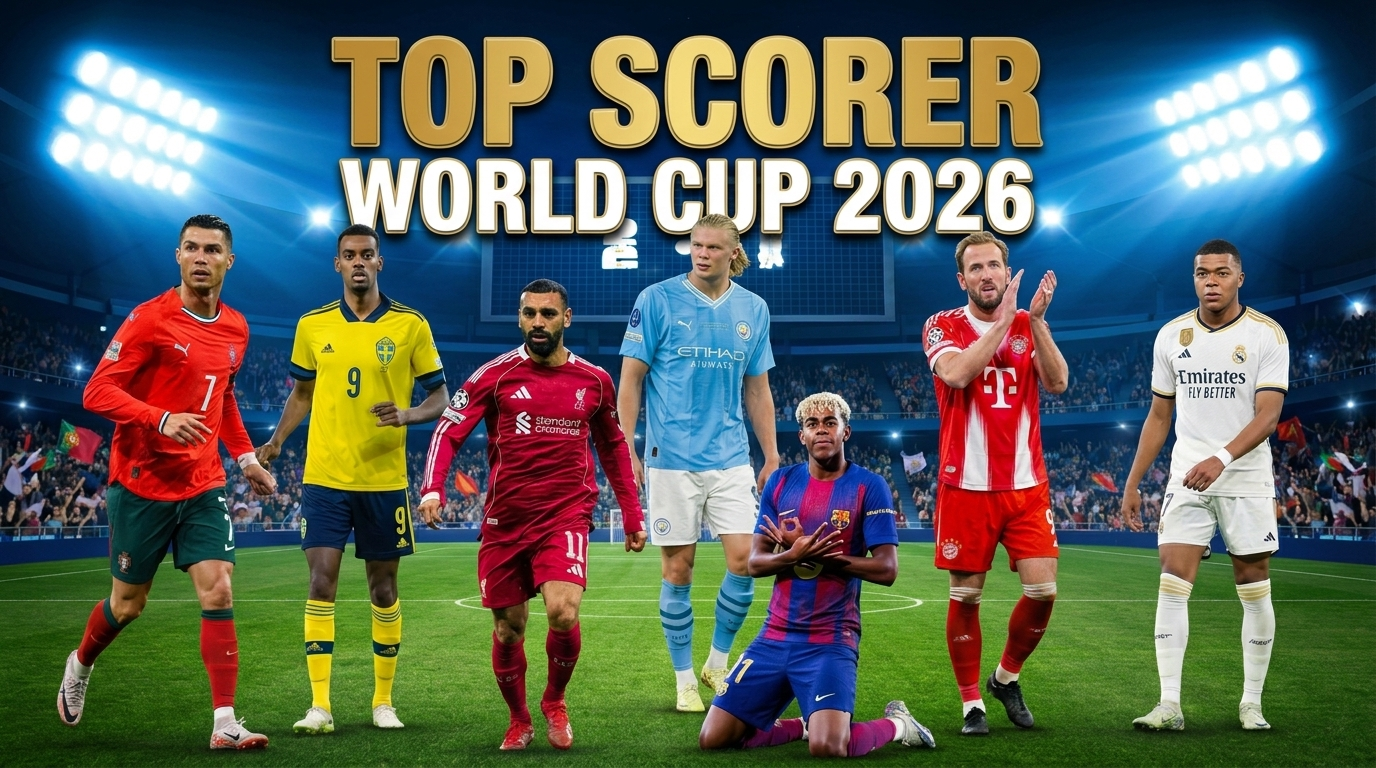
The race for the World Cup 2026 Golden Boot is the most open in the tournament’s history. An expanded field of 48 teams, a brand-new Round of 32, and a maximum of eight matches for finalists means the top scorers will have more opportunities than at any previous World Cup. Four of the five candidates with the shortest odds – Kylian Mbappé, Harry Kane, Lionel Messi and Erling Haaland – are operating at or approaching the peak of their careers, and each brings a genuine argument. At the head of the market with UK bookmakers: Mbappé at 6/1, Kane at 7/1, Messi at 12/1 and Haaland at 14/1. For England supporters, the key number is 7/1 – a price that reflects Kane’s genuine candidacy rather than patriotic optimism. He is the only active player to have won the Golden Boot before, claiming six goals in Russia in 2018, and this summer may be his finest opportunity to claim it again. This page covers every significant candidate, the historical data on what it takes to win, and how to find the best value in this market. For full tournament odds across all markets, see our World Cup 2026 odds guide, and for the complete tournament overview visit our World Cup 2026 hub.
104 Matches, One Trophy: Why 2026 Is the Golden Boot Race of a Generation
The 2026 World Cup’s expansion from 64 to 104 matches fundamentally changes the mathematics of the Golden Boot. At Qatar 2022, Mbappé’s eight goals were enough to claim the award comfortably – and eight goals in seven matches across the group stage and knockout rounds was an extraordinary rate of scoring. At 2026, finalists will play eight matches rather than seven. That single additional fixture creates the possibility of ten-goal hauls at the top end of the market – something not seen since Gerd Müller’s iconic ten at Mexico 1970. The group stage alone now features mismatch fixtures against genuine minnows: Germany vs Curaçao, Brazil vs Haiti, Argentina vs Jordan, Spain vs Cape Verde. In each case, the top-seed’s primary striker faces three group fixtures that include at least one opponent against whom a hat-trick is a legitimate expectation rather than a surprise.
The tiebreaker system adds tactical nuance. If two players finish level on goals, the award goes first to the player with more assists; if still level, fewest minutes played determines the winner. Penalty-takers carry a structural advantage – Kane, Mbappé, Messi and Haaland are all confirmed penalty takers for their respective nations, and at a tournament where set-piece goals and penalties will be more frequent in mismatch group fixtures, that distinction is not trivial. The 2010 Golden Boot was decided entirely by assists and minutes played, with Thomas Müller’s three assists giving him the award over David Villa and Wesley Sneijder on identical goal tallies. Understanding the tiebreaker creates angles that casual bettors miss: back a player who is both a primary goalscorer and a primary creator.
The 10 Leading Golden Boot Candidates: Odds, Form and Verdict
Harry Kane 🏴 – 7/1 (England, Group L)
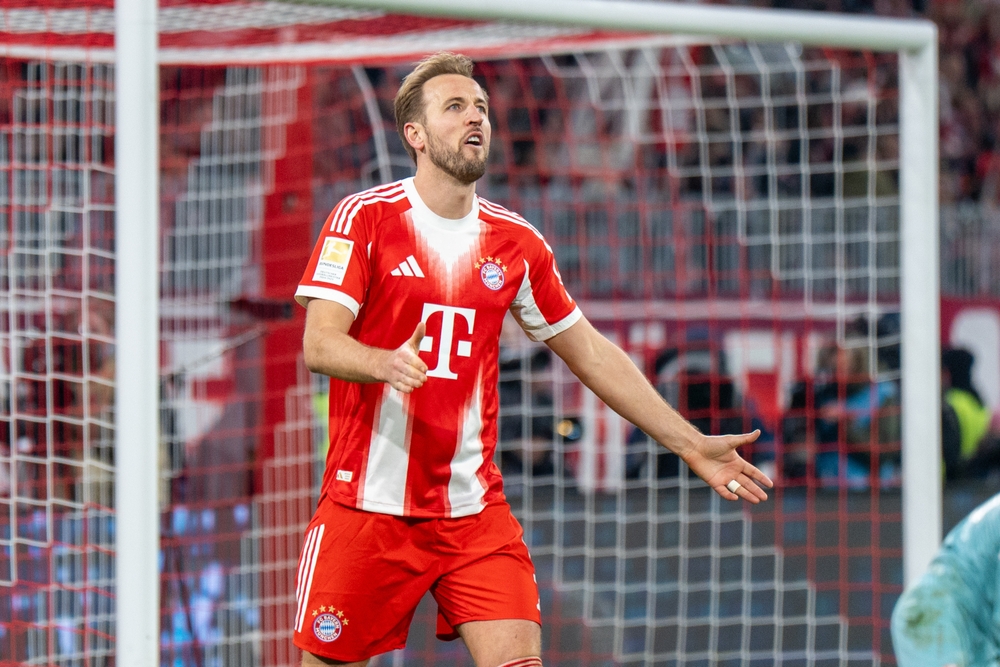
Harry Kane is the only active player to have won the World Cup Golden Boot. In Russia 2018, his six goals – including a penalty hat-trick in the 6-1 demolition of Panama – secured the award and announced him as the finest international striker of his generation. In the seven years since, he has become England’s all-time leading scorer and continued to improve as a technical footballer as well as a pure finisher. At Bayern Munich this season, Kane has been in extraordinary form – registering 50+ goals across all competitions in 2025-26 – and arrives in North America with a point to prove after his penalty miss ended England’s 2022 quarter-final campaign against France.
The structural case for Kane is compelling on multiple levels. England’s Group L (Croatia, Ghana, Panama) offers progression opportunities: Panama in particular, the last group fixture, represents Kane’s best chance of a goal burst against a side England should dominate. Kane is England’s designated penalty taker, and Tuchel’s system is built so comprehensively around his movement and distribution – the manager himself has said “there is no second Harry Kane, no team in the world has the same threat” – that every England set-piece and dead-ball situation flows through him. If England progress through the Round of 32, Round of 16 and into a quarter-final, Kane will have played six matches with legitimate goal-scoring opportunities in each. The only concern is England’s dependency: without him, as March’s 1-0 loss to Japan demonstrated, they are toothless. The pressure may weigh heavily in early matches where a cautious England could produce frustratingly low-scoring performances. At 7/1, Kane represents the best value in the market for English bettors who believe in both the player and the team’s tournament prospects.
Kylian Mbappé – 6/1 (France, Group I)
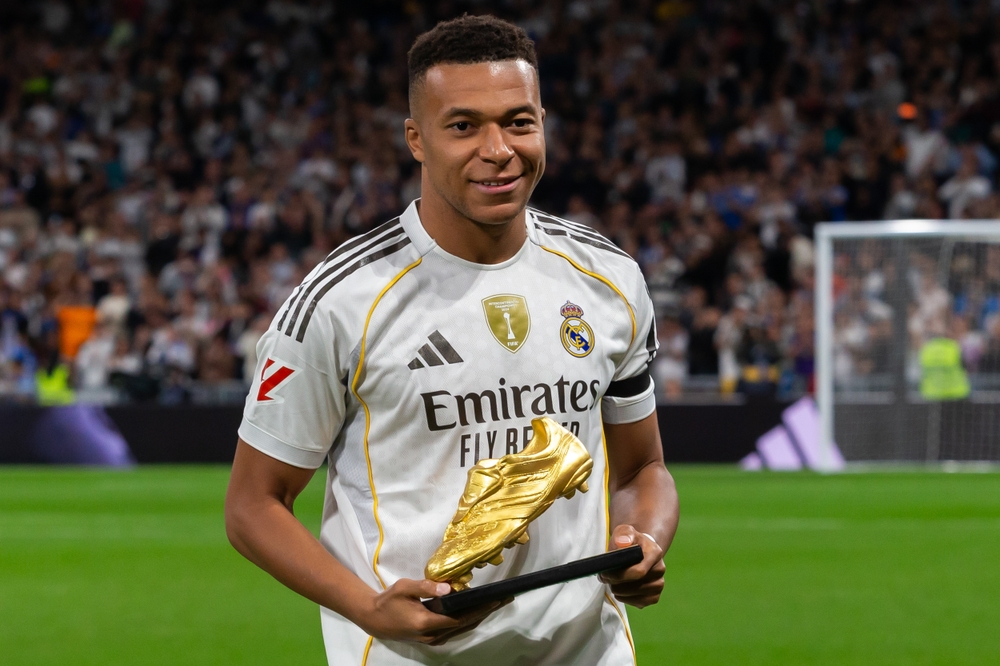
The reigning Golden Boot holder and market favourite. Mbappé claimed eight goals in Qatar 2022 – including a hat-trick in the final – and enters the 2026 tournament with 56 international goals, one short of Olivier Giroud’s all-time France record. At 27, he is the tournament’s most dangerous forward in terms of both ability and career trajectory. His club form at Real Madrid has been formidable, and France’s March preparations – a 2-1 win over Brazil and a 3-1 win over Colombia on American soil – demonstrated both his effectiveness and his involvement in the primary attacking plan.
The complication is France’s Group of Death assignment. Group I (Senegal, Norway, Iraq) is the toughest faced by any major favourite, and Mbappé may find goals harder to accumulate in the group stage than his counterparts in weaker groups. Against Iraq he should be prolific; against Norway and Senegal, two well-organised and physically imposing sides, the margin narrows. However, if France advance deep into the knockout rounds as their underlying quality strongly suggests, Mbappé’s involvement in matches against top opponents in the quarter-final and beyond will be where his scoring record surges. No other player combines the certainty of deep tournament progression with Mbappé’s individual finishing quality. The 6/1 price is slightly tight – Kane at 7/1 offers marginally better value – but the case for Mbappé is structurally the strongest in the field. He could also become the first player in history to win the Golden Boot at consecutive World Cups.
Lionel Messi – 12/1 (Argentina, Group J)
 Messi turns 39 during the tournament and arrives at what will almost certainly be his final World Cup carrying 13 career World Cup goals – joint fourth all-time. In 2022, his seven goals were narrowly beaten by Mbappé’s eight, a result that still stings. Argentina’s Group J draw is the most generous any top seed received: Algeria, Austria and Jordan represent three beatable opponents, and Messi could plausibly enter the knockout rounds with four or five goals from the group stage alone. He finished Argentina’s CONMEBOL qualifying campaign as top scorer with eight goals, demonstrating that his international form remains elite even if the pace and directness of his club football has reduced at Inter Miami.
The concern at 12/1 is two-fold. First, Messi at 38 will be managed carefully – Argentina have enough depth that resting him for dead-rubber group fixtures is entirely plausible once qualification is secured, reducing his match count. Second, his style has evolved: fewer goals from volume of touches, more from moments of individual genius. Against Jordan and Algeria, both goals are realistic; against Austria, a less predictable outcome. The 12/1 reflects both the romance of the occasion and the genuine probability – this is a player who could finish as tournament top scorer purely on the weight of genius and opportunity. As an each-way speculation rather than a primary selection, Messi offers real appeal.
Erling Haaland – 14/1 (Norway, Group I)
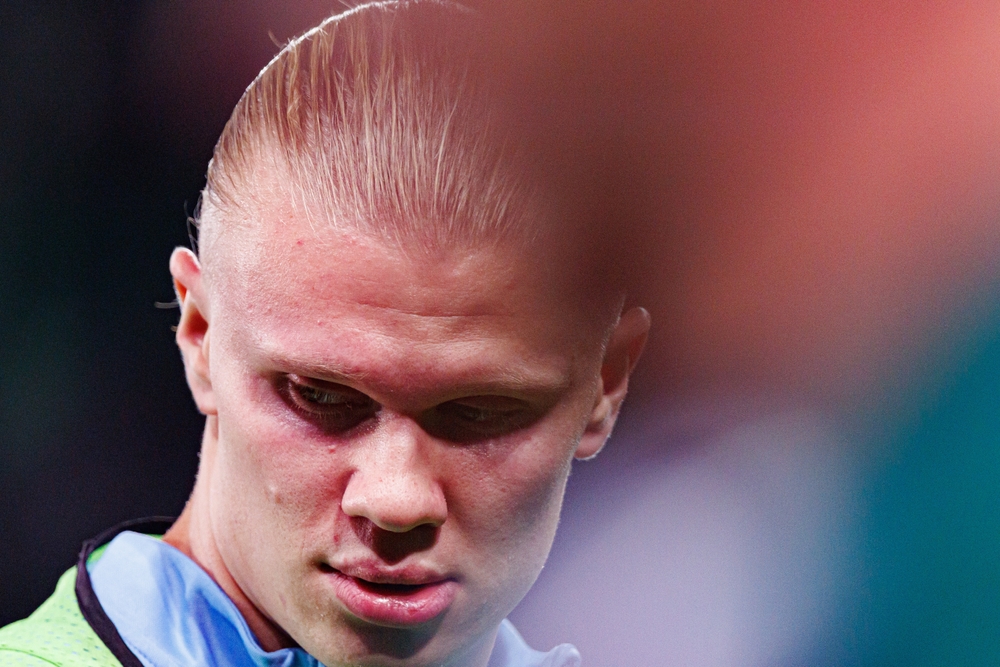 The most talked-about Golden Boot candidate in terms of raw scoring potential but the one whose market opportunity is most constrained by fixture difficulty. Haaland’s international record is staggering: 55 goals in 48 Norway appearances, including 16 in the eight-match qualifying campaign – equalling Robert Lewandowski’s record for a single European qualifying cycle. He arrives at his first World Cup as the most prolific scorer per game in the history of international football. Against Senegal and Iraq in the group stage, hat-tricks are not merely possible – they should be planned for in betting markets.
The structural problem is France. Norway’s group concludes with a meeting against Mbappé’s side that Norway need to win to have any realistic hope of progressing. Against France, Haaland will be limited to counter-attack and set-piece opportunities rather than the sustained dominance in which he thrives. And it is worth noting a form dip: Flashscore data shows Haaland scored only three open-play goals across 19 Manchester City appearances through late winter and early spring 2026, with his xG conversion rate falling noticeably below his career average. Whether that dip represents fatigue or a temporary blip remains to be seen. At 14/1, he is the most polarising Golden Boot candidate – the ceiling is the highest in the field, the floor is an early exit with five or six goals.
Lamine Yamal – 16/1 (Spain, Group H)
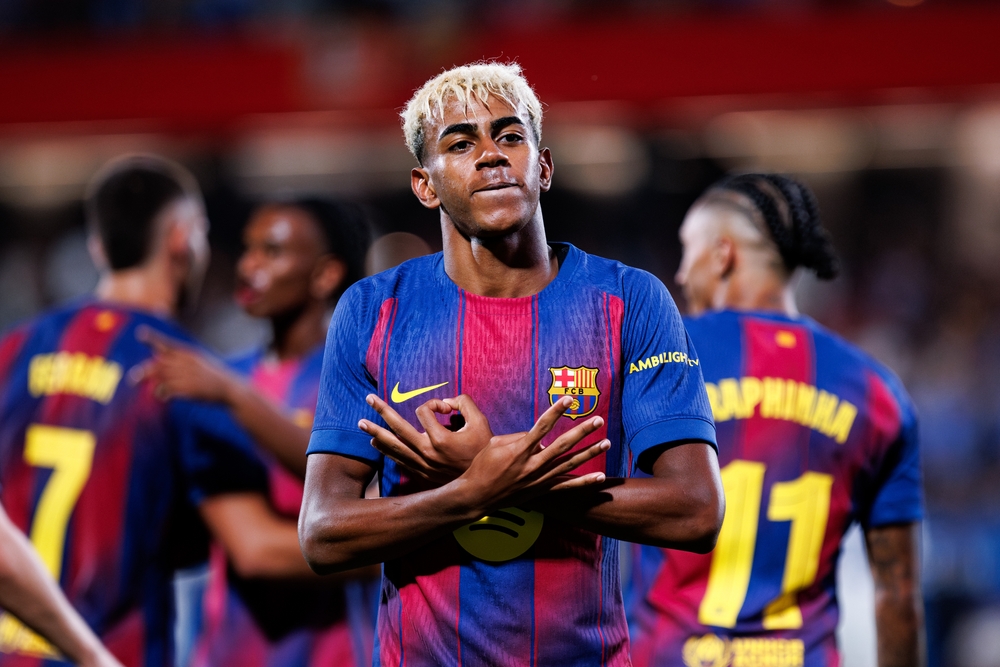 The most intriguing non-traditional Golden Boot candidate. Yamal is a right winger rather than a central striker, and wingers rarely win the Golden Boot in the modern era – but two factors make his candidacy genuinely compelling. First, his form: 15 La Liga goals and 11 assists in 27 appearances for Barcelona in 2025-26, plus five goals and four assists in the Champions League – an output that rivals any forward in European football. Second, Spain’s group: Cape Verde, Saudi Arabia and Uruguay represent three opponents against whom Yamal will be isolated in one-versus-one situations with a licence to cut inside and shoot – the specific scenario in which his goal-scoring has flourished all season. At 16/1, the implied probability is approximately 5.9%. Our assessment is that Yamal is underpriced relative to his Spain-wide involvement and the opportunity his group provides.
Ousmane Dembélé – 20/1 (France, Group I)
Dembélé at 20/1 is the most interesting mid-market value in the Golden Boot market. He played a key creative role in France’s March wins – assisting Mbappé’s opener against Brazil with a precise through ball – and is confirmed in the predicted France XI alongside Mbappé and Olise. If Mbappé manages his workload in group fixtures, as Deschamps has suggested he might against weaker opponents, Dembélé may start those games as the primary attacking threat. France’s Group I contains Iraq, against whom a Dembélé hat-trick in a group-stage mismatch is entirely plausible. As a second France player to Mbappé, he provides portfolio coverage at excellent value.
Cristiano Ronaldo – 20/1 (Portugal, Group K)
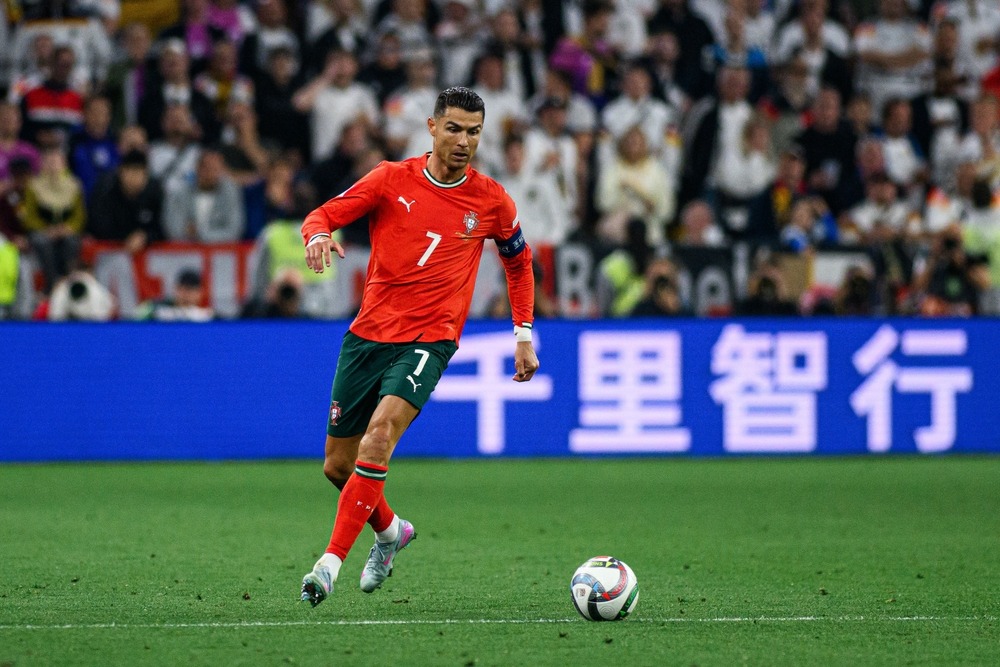
At 41, Ronaldo arrives at his sixth World Cup and Portugal’s Group K (Colombia, DR Congo, Uzbekistan) offers legitimate goal-scoring opportunities, particularly against the latter two. His tournament record – with Portugal playing four games maximum – limits the arithmetic ceiling, but Ronaldo’s continued relevance as Roberto Martínez’s primary focal point means the 20/1 price reflects more opportunity than most assume. His role as Portugal’s penalty taker adds further goal-ceiling clarity. An each-way position at 20/1 is defensible based purely on the group fixture opportunity against Uzbekistan and DR Congo.
Vinicius Júnior – 25/1 (Brazil, Group C)
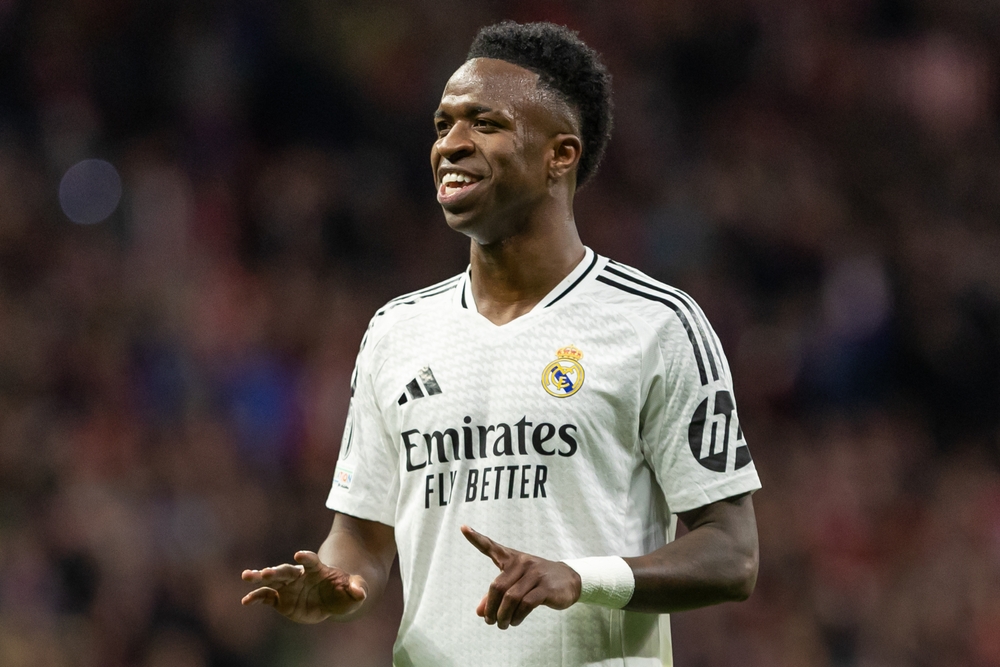 Brazil’s group – Morocco, Haiti and Scotland – offers Vinicius, now operating as Brazil’s most dangerous wide forward under Carlo Ancelotti, genuine chances for a goal haul against two beatable opponents. With Rodrygo absent through ACL injury, Vinicius carries more of the attacking burden than at any previous tournament. He scored seven La Liga goals for Real Madrid before the January window and his directness – running at defenders, inviting fouls and converting set-pieces – suits the specific challenges of knockout-round opponents. At 25/1, he offers some value as a speculative selection in a strong group for Brazil’s wingers.
Bukayo Saka 🏴 – 33/1 (England, Group L)
Saka scored three goals in four appearances at Qatar 2022 and arrives in 2026 at the peak of his career with Arsenal, where he has been one of the Premier League’s most consistent performers. He is not England’s designated penalty taker (that role belongs to Kane) but his directness from wide positions, his ability to cut inside and shoot, and his involvement in every England attacking combination make him a legitimate dark-horse consideration for Golden Boot betting. At 33/1, the implied probability is approximately 2.9%. Should England progress to the semi-finals – which is entirely plausible given their draw and bracket – Saka will have played seven matches, many against opponents that he has the specific technical qualities to exploit. For bettors who want England exposure beyond Kane, Saka at 33/1 is the most defensible secondary selection.
Mikel Oyarzabal – 33/1 (Spain, Group H)
Spain’s designated penalty taker and first-choice centre-forward. Oyarzabal scored six goals in UEFA qualifying and has been in the form of his career for Real Sociedad, arriving at the World Cup as the player through whom Spain’s attacking patterns most directly flow. Spain’s group (Cape Verde, Saudi Arabia, Uruguay) is among the most exploitable for group-stage goal accumulation, and penalty takers in tournaments with regular mismatch fixtures have a statistical advantage that is consistently underpriced in pre-tournament markets. At 33/1, Oyarzabal represents genuine each-way value for bettors who believe Spain will run through their group games with comfort and goals.
World Cup 2026 Golden Boot Odds: Full Comparison
The table below shows approximate current odds from leading UK bookmakers. Always compare prices before placing, as variations between can be significant on this market – particularly at the mid-range prices between 12/1 and 33/1 where the difference between bookmakers can translate to meaningful additional return on a winning bet.
| Player | Nation | Group | Jettbet | Velobet | Zizobet | Palm Slots | Implied Prob. |
| Kylian Mbappé | France | I | 6/1 | 6/1 | 6/1 | 13/2 | 14.3% |
| Harry Kane 🏴 | England | L | 7/1 | 7/1 | 7/1 | 8/1 | 12.5% |
| Lionel Messi | Argentina | J | 12/1 | 12/1 | 11/1 | 12/1 | 7.7% |
| Erling Haaland | Norway | I | 14/1 | 14/1 | 14/1 | 16/1 | 6.7% |
| Lamine Yamal | Spain | H | 16/1 | 16/1 | 16/1 | 20/1 | 5.9% |
| Ousmane Dembélé | France | I | 20/1 | 20/1 | 20/1 | 22/1 | 4.8% |
| Cristiano Ronaldo | Portugal | K | 20/1 | 18/1 | 20/1 | 20/1 | 4.8% |
| Vinicius Júnior | Brazil | C | 25/1 | 25/1 | 25/1 | 28/1 | 3.8% |
| Bukayo Saka 🏴 | England | L | 33/1 | 33/1 | 28/1 | 33/1 | 3% |
| Mikel Oyarzabal | Spain | H | 33/1 | 33/1 | 33/1 | 40/1 | 3% |
Odds approximate from major UK bookmakers. Correct at time of writing – always before placing. 18+. Please gamble responsibly. GambleAware.org.
World Cup Golden Boot History: Every Winner Since 1930
The Golden Boot has been awarded officially since 1982 – when it was introduced as the Golden Shoe by Adidas and renamed the Golden Boot in 2010 – but FIFA retroactively recognises top scorers back to the inaugural 1930 tournament. The historical data tells a clear story: six goals has been sufficient to win the award at 10 of the 22 completed tournaments, and no player has ever won the Golden Boot at two separate World Cups. The tiebreaker system (assists, then minutes played) has determined the winner on at least two occasions – 2010 being the most notable, when Thomas Müller’s three assists gave him the award over four players all tied on five goals. The single-tournament record of 13 goals, set by Just Fontaine in 1958, has never been threatened in the 66 years since. Kylian Mbappé’s eight goals in 2022 was the highest total since Ronaldo’s eight in 2002.
| Year | Winner | Nation | Goals |
| 1930 | Guillermo Stábile | Argentina | 8 |
| 1934 | Oldřich Nejedlý | Czechoslovakia | 5 |
| 1938 | Leônidas | Brazil | 7 |
| 1950 | Ademir | Brazil | 9 |
| 1954 | Sándor Kocsis | Hungary | 11 |
| 1958 | Just Fontaine | France | 13 (all-time record) |
| 1962 | Shared (6 players) | Various | 4 |
| 1966 | Eusébio | Portugal | 9 |
| 1970 | Gerd Müller | West Germany | 10 |
| 1974 | Grzegorz Lato | Poland | 7 |
| 1978 | Mario Kempes | Argentina | 6 |
| 1982 | Paolo Rossi | Italy | 6 |
| 1986 | Gary Lineker 🏴 | England | 6 |
| 1990 | Salvatore Schillaci | Italy | 6 |
| 1994 | Oleg Salenko / Hristo Stoichkov | Russia / Bulgaria | 6 (shared) |
| 1998 | Davor Šuker | Croatia | 6 |
| 2002 | Ronaldo (R9) | Brazil | 8 |
| 2006 | Miroslav Klose | Germany | 5 |
| 2010 | Thomas Müller | Germany | 5 (won via assists) |
| 2014 | James Rodríguez | Colombia | 6 |
| 2018 | Harry Kane 🏴 | England | 6 |
| 2022 | Kylian Mbappé | France | 8 |
England have produced two Golden Boot winners in the tournament’s history: Gary Lineker in Mexico 1986 with six goals, and Harry Kane in Russia 2018 – also with six. Only two nations, Brazil and Germany, have produced more Golden Boot winners than England. The expanded 2026 format suggests the winning total will rise – expect nine or ten goals to be required to claim the award for the first time since Gerd Müller’s record-setting performance in 1970.
The World Cup 2026 Golden Boot race is a genuine open market and one of the most rewarding pre-tournament betting opportunities available. Our primary selection is Harry Kane at 7/1 – the structural case (Group L, bracket, England’s attacking system, Kane’s form, penalty taker status) is the strongest among the top candidates. As an each-way complement, Mikel Oyarzabal at 33/1 and Ousmane Dembélé at 20/1 offer portfolio exposure to the tournament’s two deepest teams. For all the latest odds across every World Cup market, visit our World Cup 2026 odds guide. All selections are for entertainment and analysis purposes only. 18+. Please gamble responsibly. For everything you need ahead of the tournament, visit the World Cup 2026 hub.